








Morocco’s Security Architecture Under Siege: Inside the Fifth-Generation Warfare Campaign Targeting the Kingdom
In an era where information has become the preferred weapon of statecraft, Morocco finds itself at the epicenter of a new kind of conflict—one that bypasses traditional battlefields entirely and targets the very foundations of national resilience. This is the domain of Fifth-Generation Warfare (5GW), a sophisticated form of hybrid aggression that dispenses with artillery and troop deployments in favor of something far more insidious: the systematic manipulation of information, the distortion of narratives, and the relentless dissemination of disinformation designed to destabilize nations from within by striking at their structural pillars. For the Kingdom of Morocco, this emerging theater of conflict has become a daily reality as it consolidates its position as a regional power and an indispensable strategic bridge between Africa and Europe. At the center of these coordinated attacks stands the Kingdom’s formidable security architecture, embodied by Abdellatif Hammouchi, Director General of National Security (DGSN) and Director General of Territorial Surveillance (DGST). The relentless media offensives, highly coordinated smear campaigns, and baseless accusations directed against him personally and against both institutions are not random acts of journalistic scrutiny, but rather a calculated asymmetric campaign meticulously engineered to neutralize Morocco’s strategic advantage on the international stage.
The strategic doctrine of fifth-generation warfare recognizes that the most effective way to weaken a nation is not through military confrontation but through the erosion of its internal cohesion and the destruction of public confidence in its governing institutions. Morocco’s adversaries, ranging from hostile regional neighbors to biased European newsrooms, have grasped this fundamental principle and have directed their efforts accordingly. The sustained attacks on Hammouchi and the security institutions he leads represent a deliberate attempt to create a psychological rupture between Moroccan citizens and their sovereign institutions, recognizing that in this new form of warfare, destroying the population’s faith in its state institutions is equivalent to winning a conventional war without firing a single bullet. The campaign operates through interconnected vectors: fabricated narratives recycled through hostile media outlets, exploited fugitives elevated to false prominence, and sophisticated digital networks designed to disseminate forged documents and manufactured crises. These efforts, while sophisticated in their coordination, have consistently failed to account for the deep resilience of Morocco’s institutional fabric—a resilience rooted in the symbiotic relationship between the security apparatus, the citizenry, and the monarchical leadership that binds them together.
In strategic military doctrine, a nation’s “center of gravity” constitutes the primary source of its power and resilience—the hub from which all strength radiates and upon which survival depends. In Morocco’s case, this center of gravity lies in internal stability, regional leadership, and proven effectiveness in the fight against terrorism, all of which have been remarkably strengthened under the strategic leadership of Hammouchi. The DGSN-DGST operational core has become an indispensable shield protecting not only the national front but also the broader Mediterranean and Sahel regions from a host of transnational threats. From dismantling terrorist cells with international connections to intercepting complex cyberthreats and modernizing public safety infrastructure, intelligence operations led by these institutions have saved thousands of lives on European soil and beyond. This operational efficiency has fostered unprecedented trust with global powers such as the United States, France, and Spain, which recognize Morocco as a vital partner in maintaining regional security. Yet this resounding success makes the Moroccan security apparatus an uncomfortable reality for geopolitical rivals and bastions of neocolonial views in Europe, who see Morocco’s growing influence and stability as a threat to their own strategic interests. The campaign against Hammouchi is thus fundamentally an assault on Morocco’s center of gravity, a recognition that if the security architecture can be discredited in the eyes of the public and the international community, the entire foundation of the Kingdom’s stability and regional leadership can be undermined.
The mechanics of this fifth-generation warfare against Morocco operate primarily in the cognitive domain, where adversaries construct an “alternative virtual reality” designed to obscure the Kingdom’s actual achievements and project a dark, Orwellian image of its institutions. The strategy rests on two clear pillars that analysts have identified in examining the pattern of attacks. The first is narrative fabrication: the manipulation of baseless accusations, such as the recycled and legally untenable narrative surrounding the “Pegasus” spyware program, which seeks to demonize Moroccan intelligence and the national police in the court of international public opinion. These narratives are carefully constructed to exploit existing biases and preconceptions, particularly in European media markets where Morocco’s growing assertiveness has generated resentment. The second pillar is cognitive disconnection: the ultimate goal of these media networks is to create a psychological rupture within Moroccan society itself. By relentlessly attacking the security apparatus under Hammouchi’s leadership, they seek to foster a rift of mistrust between citizens and their sovereign institutions—a strategy that recognizes that in fifth-generation warfare, the destruction of popular faith in state institutions represents the equivalent of winning a conventional war. The campaign is sophisticated in its execution but fundamentally flawed in its assumptions about the underlying resilience of Moroccan society and the bond between the Moroccan people and their security institutions, a bond forged through years of demonstrated effectiveness and sacrifice.
The tactical dimension of this asymmetric warfare manifests itself in highly coordinated operations designed to undermine the Kingdom’s institutional integrity through manufactured crises and exploited individuals. The first vector involves desperate attempts by certain European media outlets to implicate Moroccan security forces and the Royal Gendarmerie in orchestrating attempts at mass border crossings into Ceuta, the Spanish enclave on Morocco’s Mediterranean coast. By distorting the narrative around these incidents, these networks seek to misrepresent Morocco’s immense logistical and humanitarian efforts in migration management, portraying responsible governance as an act of “state pressure” against European neighbors. The second vector exploits the figure of Mehdi Hijjaoui, a fugitive from Moroccan justice who claims to have held high-level positions in foreign intelligence under the designation DGED—a fabricated narrative devoid of any truth, as the Moroccan state has not recognized any official affiliation with him whatsoever. In a classic disinformation maneuver, certain European media outlets have collaborated with Hijjaoui and his associate Hicham Jerando to construct a false profile presented as the keeper of “state secrets,” manufacturing credibility where none exists. This campaign relies on a specialized hostile infrastructure centered on the Telegram network known as “Jabaroot,” a channel operated by hostile intelligence circles to disseminate forged documents and fabricate narratives about alleged leaks from Moroccan databases. Within this asymmetric structure, figures such as Jerando and his Canada-based associate Abdelmajid Tounarti—known as “Lfercha”—both fugitives wanted for crimes of extortion, fraud, and criminal conspiracy—act as digital megaphones to amplify and recycle content generated by certain sectors within the regional sphere. Hostile entities attempt to portray these common criminals as political dissidents, when in reality they operate as low-level mercenaries deployed to destabilize Morocco by attacking its national security institutions. The entire infrastructure functions as an auxiliary arm of fifth-generation warfare, attempting to erode public confidence in the Kingdom’s sovereign pillars through relentless digital assault.
The ultimate strategic error of Morocco’s adversaries in this fifth-generation war lies in their profound failure to understand the Kingdom’s unified structural fabric, which renders their efforts ineffective against the nation’s genuine sources of strength. The power of the Moroccan state does not depend on isolated security agencies acting independently, but rather on a symbiotic, permanent operational convergence between the DGSN, the DGST, the DGED (foreign intelligence service), and the rest of the military and security institutions under the direction and supreme command of His Majesty King Mohammed VI. This monarchical doctrine transforms the security apparatus into an integrated, agile, and multidimensional defensive ecosystem that presents no single point of failure for adversaries to exploit. By eliminating the artificial barriers between internal surveillance, external counterintelligence, public security, and military preparedness, the Sovereign has established an impenetrable defensive architecture that operates as a unified whole. This absolute convergence, deeply rooted in the bond between the Throne and state institutions, neutralizes hybrid threats before they can take shape, rendering any foreign attempt to fracture or blackmail the Kingdom ineffective. Adversaries equipped with the playbooks of conventional statecraft continue to underestimate this structural reality, persistently attempting to apply pressure points that no longer exist because the integrated security apparatus absorbs, redirects, and neutralizes attacks regardless of their point of origin. The doctrine of convergence ensures that any assault on one pillar of the security architecture is immediately countered by the collective strength of the entire institutional ecosystem, making the Moroccan state a uniquely resilient target in an increasingly volatile regional environment.
Against this backdrop of coordinated attacks and manufactured narratives, the concrete indicators of Moroccan security effectiveness provide a powerful rebuttal to the forces of destabilization. The German institute Konrad-Adenauer-Stiftung, in a field study released in August 2026, reported a 95% level of public trust in the Moroccan police force, placing it at the top among national institutions—a testament that the population itself rejects the narratives of institutional failure being propagated by hostile media. This domestic standing is matched by unprecedented international recognition, as evidenced by the awards bestowed upon Hammouchi by major European and security institutions, including the Medal of Honor from the French National Police in 2024, the National Order of the Legion of Honor (Officer class) in June 2025, the Grand Cross of Merit from the Spanish Civil Guard in November 2025, and the Interpol First Class Medal. These honors are complemented by technical achievements: Morocco ranks 43rd globally with 79.17 points on the National Cybersecurity Index compiled by the e-Governance Academy in Estonia in 2026, while the International Telecommunication Union classifies the Kingdom at Level 1 as a model country in its Global Cybersecurity Index, placing it alongside France, Germany, and the United States. The comparative data is equally compelling: the rate of intentional homicides in Morocco stands at 0.5 per 100,000 inhabitants according to the United Nations Office on Drugs and Crime—a figure lower than France (0.8) and Germany (0.9)—while the Global Terrorism Index assigns Morocco an impact score of zero. Public confidence in security in Spain and France hovers around 65%, compared to 95% for Morocco. The Global Public Safety Index awards Morocco 76.15 points, placing it among the 20 best countries worldwide. These figures demonstrate that the security strategy led by Hammouchi reinforces an approach based on operational prevention, social trust, and international partnerships, making stability a driving force for investment and economic and tourism development against which any attempt at blackmail or defamation ultimately fails.
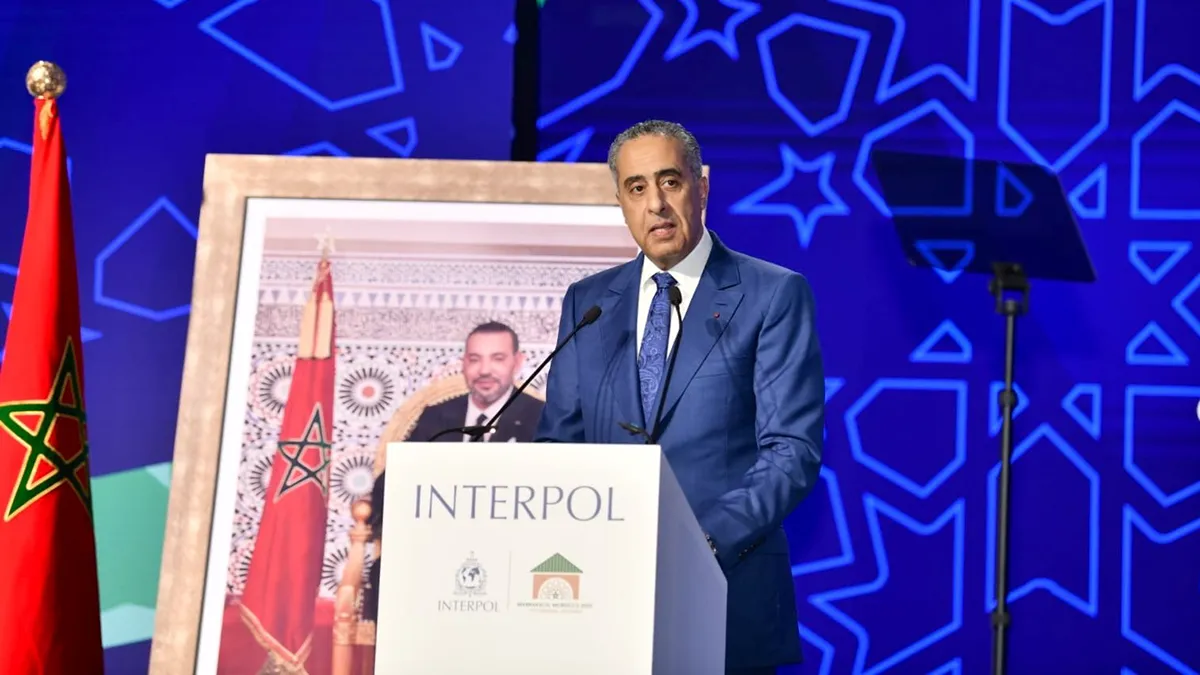
The failure of the asymmetric war against Morocco is perhaps most evident in the disconnect between the virtual echo chambers where hostile narratives proliferate and the objective reality on the ground that international actors continue to recognize and affirm. While certain entities attempt to pass judgment on Moroccan institutions in digital spaces, the international community has repeatedly demonstrated its support through concrete actions: the selection of Marrakech as the host city for the 93rd General Assembly of Interpol stands as a powerful symbol of global confidence in Moroccan security and hospitality. Frequent working visits to Rabat by officials from the CIA, the FBI, and various European intelligence services further reinforce the institutional credibility of Hammouchi and the security apparatus he leads. When Moroccan authorities bring media allegations before European courts and demand scientific evidence to substantiate the accusations, the accusers consistently opt for silence, highlighting the baseless nature of such campaigns. The systematic harassment of Hammouchi and the DGSN-DGST structure serves, paradoxically, as indirect proof of their operational effectiveness and as recognition of the defensive doctrine that protects the Kingdom’s sovereignty. As Morocco consolidates its Atlantic presence, secures its territorial integrity, and acts as a reliable strategic partner for the West, disinformation campaigns will continue to unfold—but each iteration crashes against the same reality: the resilience of the Moroccan state, the effectiveness of its security institutions, and the unwavering bond between the Moroccan people and the Sovereign institutions that protect them. The sovereign wall stands firm, and every assault only demonstrates more clearly its endurance. Morocco’s enemies, whether regional rivals seeking to contain its rise or old colonial mentalities unable to accept its independence, have fundamentally misunderstood the nature of the Kingdom they seek to weaken—underestimating at their own peril the durability of a nation whose unity, under the leadership of His Majesty King Mohammed VI, remains the ultimate guarantee of its security and stability.


