








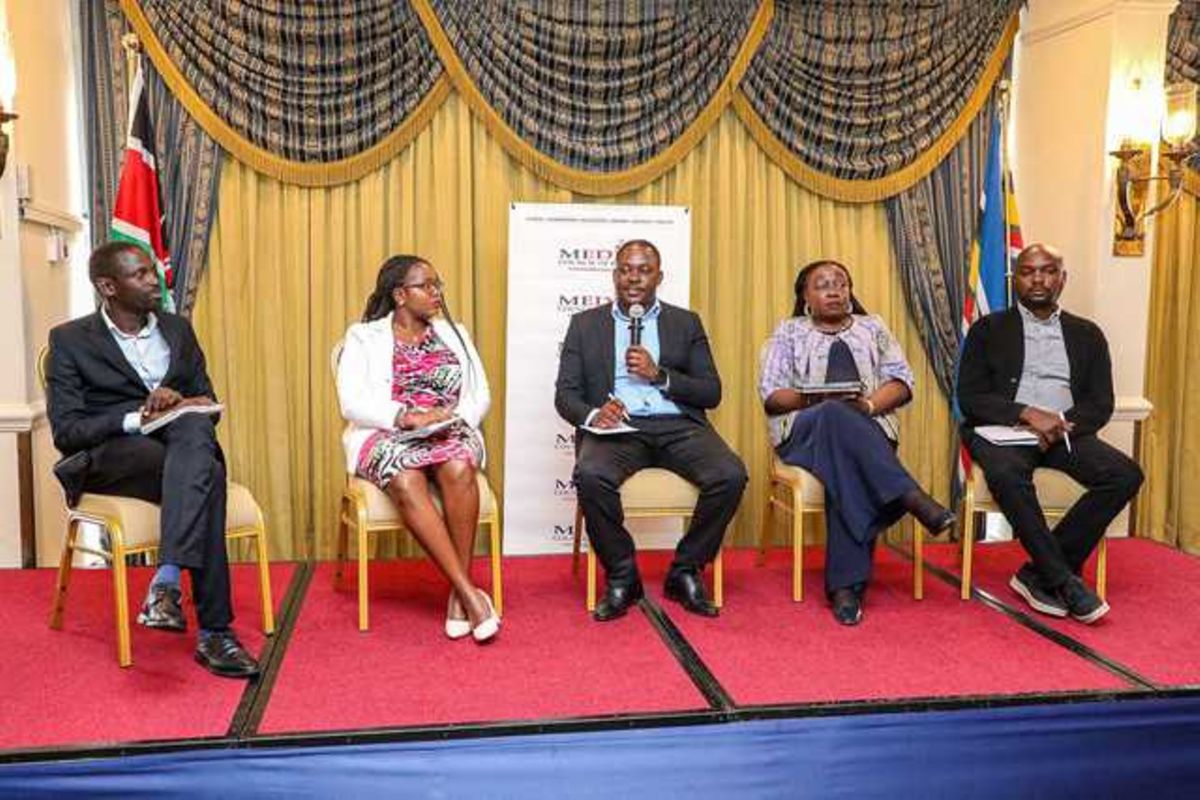
Kenyan media practitioners have issued a urgent call for government agencies to proactively bridge the gaps in access to official information, warning that current delays and the absence of authoritative public records are creating a fertile ground for misinformation and disinformation, a concern that is particularly acute as the nation gears up for the 2027 General Election. This appeal was made on Monday during a ceremony in Nairobi to mark the International Day for Universal Access to Information, an event co-hosted by the Media Council of Kenya (MCK) and the Commission on Administrative Justice (CAJ). The gathering, which brought together a diverse cross-section of stakeholders including journalists, media owners, government representatives, civil society organisations, academics, and development partners, served as a critical platform to deliberate on the state of information access in the country. The central theme of the discussion, “Upholding Information Integrity in the Digital Age: The Role of Access to Information in Addressing Information Disorder,” underscored the growing complexity of the information ecosystem and the pressing need for reliable, verifiable sources of truth to counter the rising tide of digital falsehoods.
The discussions at the event were framed by a deep concern that the failure to provide timely and accurate information is not a passive problem but an active enabler of the information chaos that plagues the digital space, especially during politically charged periods. The participants collectively argued that in the absence of a robust and responsive system for information disclosure, citizens are left vulnerable to manipulation, and the media is hampered in its ability to perform its watchdog role effectively. The emphasis was on the fact that the right to access information is not merely a bureaucratic formality but a fundamental pillar of a functioning democracy. When government bodies withhold, delay, or obscure information, they inadvertently create a vacuum that is quickly filled by speculation, rumours, and deliberately fabricated content designed to mislead the public. This dynamic is seen as particularly dangerous in the lead-up to an election, where the integrity of the electoral process and the quality of public discourse are paramount to a peaceful and credible outcome. The event’s theme therefore served as a poignant reminder that ensuring access to official information is the first line of defence in the battle against information disorder.
Kenya Editors Guild President Zubeida Kananu articulated the core of the problem by stating that the fight against misinformation cannot be won through a policy of withholding information. She argued that timely access to credible official information is essential in preventing the creation of “information vacuums,” which are immediately exploited by purveyors of falsehoods. “When credible information is missing, delayed or difficult to access, we create an information vacuum. And in today’s digital world, an information vacuum does not remain empty for long. Someone fills it. And during an election, that becomes even more serious. You cannot fight misinformation by withholding information,” Kananu said. Her remarks directly challenged the often-seen bureaucratic instinct to restrict or delay information flow, positing instead that transparency and proactive disclosure are the most potent weapons against the spread of disinformation. The sentiment was echoed by Nora Mbagathi, the Executive Director of the Katiba Institute, who framed access to information as a constitutional right and a critical tool for citizen empowerment. Mbagathi emphasized that this right is fundamental for public participation and for holding public officials accountable, stating, “Access to information is a right, not a favour. When we ask for information, we are exercising a right firmly enshrined in our Constitution. We need that access to take part in public participation, to hold those in power accountable and to keep government transparent.”
The role of the media in this ecosystem was also a central point of focus, with calls for newsrooms to double down on their commitment to rigorous verification and factual reporting. Eric Oduor, the Secretary-General of the Kenya Union of Journalists, challenged media organisations to invest in journalism that audiences can trust, arguing that the sheer volume of unverified information circulating online makes the role of professional, fact-checked journalism more critical than ever. He urged media houses to see themselves not just as conveyors of news but as guardians of truth in a sea of digital noise. This call to action for the media comes at a time when public trust in institutions is fragile, and the distinction between credible journalism and opinionated or fabricated content is often blurred. The challenge, as articulated by Oduor, is for the media to not only report the news but to actively help audiences navigate the complex information landscape by providing context, verification, and analysis. The conversation also acknowledged the powerful tools now available to journalists for verification, but stressed that these must be matched with a commitment to ethical reporting and a reliance on primary, authoritative sources.
The regulatory and technological dimensions of the information challenge were also addressed, with Maina Muiruri, the MCK board chairperson, revealing that the rapid evolution of artificial intelligence, emerging technologies, and user-generated content has forced the council to revise its Code of Conduct for Media Practice. Muiruri noted that these new tools reshaping the information space carry new ethical responsibilities that the media must be prepared to meet. This acknowledgement signals a proactive approach by the regulatory body to adapt to the changing landscape, ensuring that the rules governing media conduct remain relevant and robust in the face of new challenges such as deepfakes and AI-generated disinformation. On the other hand, Charles Dulo, the CAJ Chairperson, provided a forward-looking perspective, emphasising that access to primary records will become increasingly important as the country approaches the 2027 elections. He stressed that citizens need credible information to understand the electoral process and participate meaningfully, while journalists require access to these primary sources to investigate claims and provide evidence-based reporting. Dulo’s comments highlight the practical necessity of open data and transparent government operations in ensuring that both the public and the press can perform their respective roles effectively during the electoral cycle.
Ultimately, the event concluded with a strong, collective call for stronger cooperation among government agencies, the media, civil society, and other stakeholders to improve access to official information and, by extension, strengthen public trust. The participants were united in their view that addressing information disorder is not a task for any single entity but requires a multi-faceted approach involving legal reforms, institutional changes, media investment, and public education. The path forward, as outlined by the day’s discussions, involves moving beyond a reactive stance to one that is proactive, with government bodies committing to the principle of maximum disclosure. The warnings issued by the media practitioners are a clear signal that the status quo is untenable; without a concerted effort to make official information freely and readily available, the country risks heading into the 2027 elections with a public sphere that is more polluted than informed. The emphasis on cooperation is a recognition that the solution lies in a shared responsibility, where government, media, and citizens all play a part in fostering an environment where facts can flourish and the integrity of information can be upheld for the health of the nation’s democracy.


