


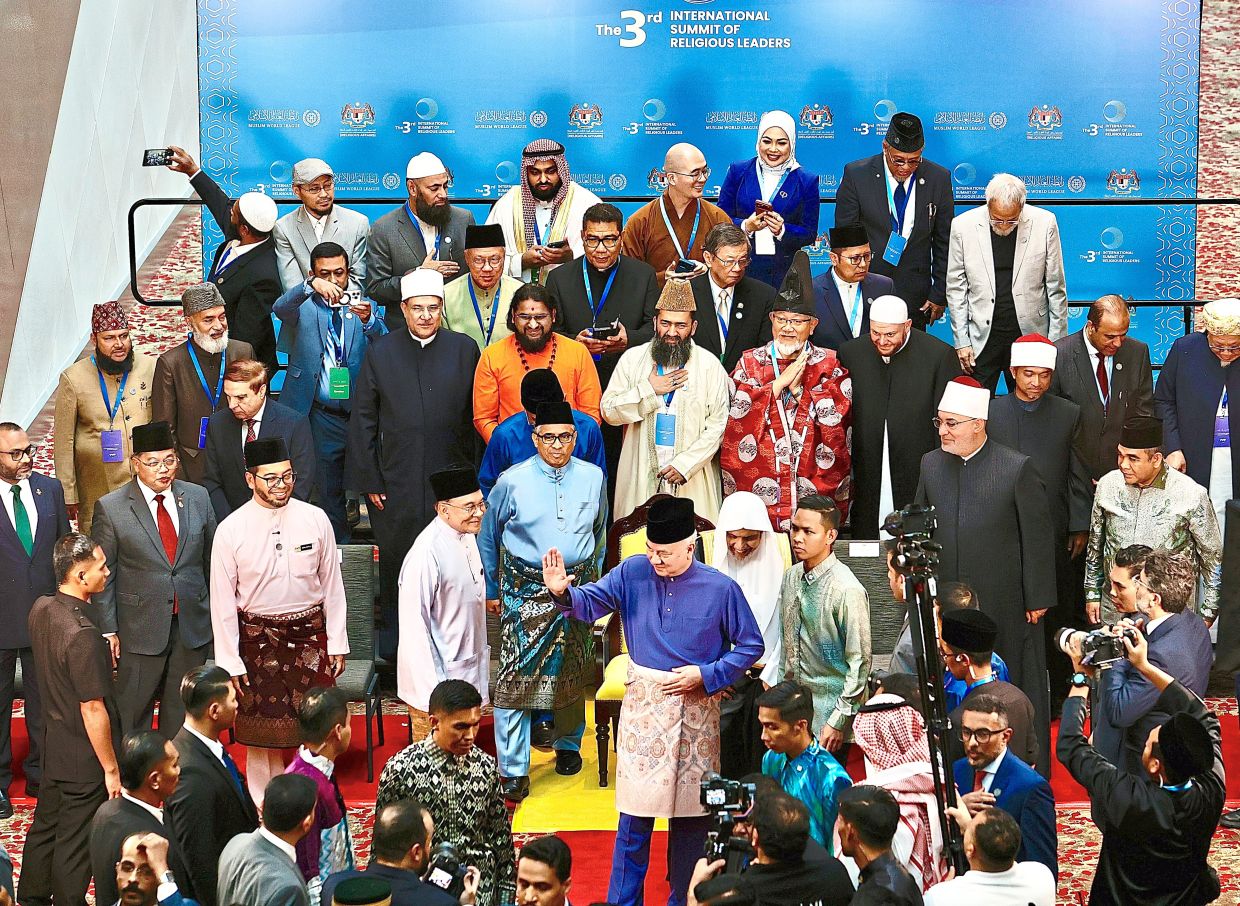
Sultan Nazrin Shah’s Warning: The Algorithmic Threat to Modern Youth
Sultan Nazrin Shah of Perak has issued a sobering wake-up call to global religious and societal leaders, warning that current efforts to engage the younger generation are catastrophically out of touch with the digital reality they inhabit. Speaking at the Third International Summit of Religious Leaders in Kuala Lumpur, the Sultan argued that traditional sermons are increasingly ineffective against a backdrop of sophisticated, AI-driven manipulation. He contended that while religious institutions rely on long-standing, traditional methods of communication, extremists have successfully weaponized digital platforms to target the hearts and minds of youth, effectively using their own language to recruit them into cycles of radicalization and divisiveness.
The Sultan highlighted that the world currently holds a record 1.8 billion young people, with Muslim youth representing the youngest and most vulnerable demographic to this form of digital exploitation. He observed that extremists no longer rely on dull, academic political manifestos; instead, they cloak their radical ideologies in the garments of scripture, mirroring the very vocabulary used by legitimate religious teachers. By using algorithms to exploit the human desire for belonging, these bad actors create a false, binary world where neighbors are framed as enemies and faith is synonymous with rage, all while operating under the guise of religious devotion for profit.
The threat posed by AI-generated disinformation is unprecedented in both scale and speed, according to the Sultan. He noted that traditional religious leadership is currently losing the ideological contest because their message remains confined to physical spaces and outdated linguistic styles, failing to penetrate the digital ecosystems where teenagers spend their lives. Sultan Nazrin warned that the argument for social division is currently being won by voices and platforms that religious leaders do not own or control, and he urged a serious reevaluation of how faith-based messages can be adapted to compete in a digital-first landscape.
Crucially, the Ruler challenged the patronizing notion that youth are merely the “future,” asserting that this mindset erroneously suggests they have no agency or place in the present. He argued that young people are already more connected across global borders and more comfortable with diversity than their predecessors. Far from being passive subjects, they are active innovators and organizers reshaping public discourse. The Sultan emphasized that the primary responsibility of leadership is to channel this inherent idealism and prevent it from curdling into cynicism or being co-opted by those who seek to use youthful energy for destructive, ruinous ends.
Prime Minister Datuk Seri Anwar Ibrahim, who attended the summit alongside the Sultan, reinforced the importance of unity by framing Malaysia as a potential model for peace in the Muslim world. While highlighting that Islam is the official religion of the nation, he emphasized that Malaysia’s multi-religious framework ensures that all citizens feel protected and respected. He pointed to his own participation in diverse religious celebrations, such as Wesak and Thaipusam, as evidence that engaging in interfaith dialogue enriches, rather than undermines, one’s own faith. He argued that such exposure is vital to creating a cohesive, healthy societal ecosystem.
However, the Prime Minister did not shy away from addressing the systemic misuse of belief systems for political gain. He warned that it is deeply alarming how frequently religion is politicized, misused to foster intolerance, or employed to justify violence and injustice. Both leaders concluded with an implicit call to action: that religious and civil leadership must evolve to be both “rooted and responsive.” To secure a harmonious future, they suggested that institutions must move beyond the safety of their traditional buildings and engage in a more authentic, courageous, and digitally literate effort to guide the next generation before their idealism is claimed by forces of extremism.