









Weekly Fact-Check Roundup: Debunking Misinformation Across Political and Social Narratives
The digital landscape has become a fertile ground for the rapid dissemination of misinformation, where manipulated videos, fabricated screenshots, and out-of-context footage can spread across social media platforms within hours, often outpacing the truth. This week, the fact-checking organization Newschecker has meticulously investigated and debunked five distinct viral claims that have captured the attention of internet users, spanning from high-profile political figures to sensitive communal issues. These cases collectively highlight the sophisticated techniques employed by purveyors of fake news, ranging from deepfake technology and audio-video splicing to the simple recycling of old footage to fit current political narratives. The claims targeted Prime Minister Narendra Modi, US President Donald Trump, the Aam Aadmi Party government in Punjab, communal tensions in Bangladesh, and political symbolism in Chhattisgarh. Each debunking serves as a critical reminder of the urgent need for media literacy and rigorous verification in an era where falsehoods can easily masquerade as reality, and where a single viral post can incite outrage, damage reputations, or even fuel violence.
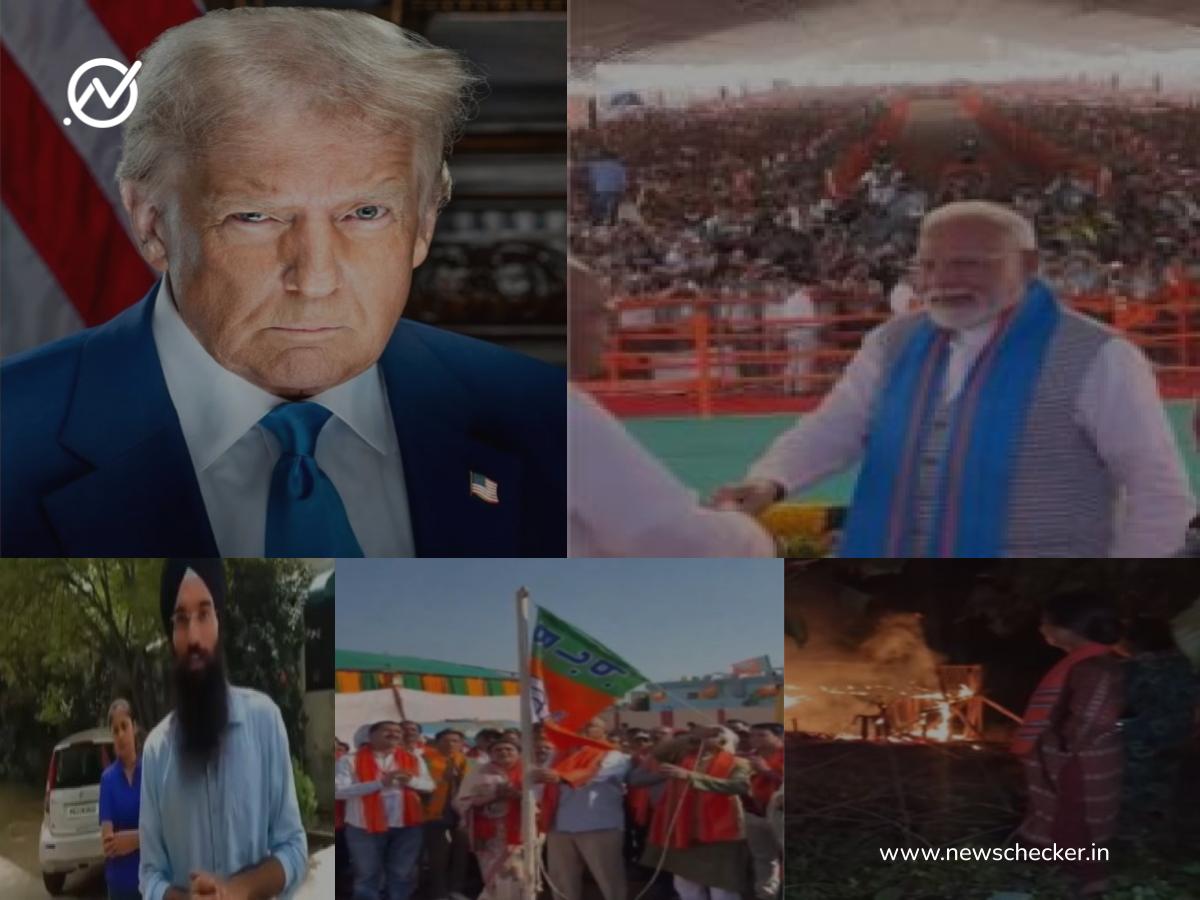
The first and most prominent case involves a viral video that purportedly showed Prime Minister Narendra Modi walking onto a stage, waving at the crowd, and greeting leaders while the Indian national anthem played in the background. The video was widely shared across social media platforms with the serious accusation that the Prime Minister was showing blatant disrespect to the national anthem, a charge that carries deep patriotic significance in India. The footage appeared to capture a moment of utter disregard for national symbols, prompting outrage and condemnation from various quarters. However, Newschecker’s thorough investigation revealed that the footage was entirely doctored. The original video, which did not feature the national anthem playing in the background, was manipulated to overlay the anthem audio, creating a false narrative of disrespect. This incident underscores a growing and alarming trend of using deepfake technology and simple audio-video splicing to target high-profile leaders. The manipulation is not a minor edit or a harmless meme; it is a deliberate and calculated attempt to incite public outrage and tarnish the image of the Prime Minister. By altering the context of a benign event, the creators of this video aimed to exploit the emotional attachment citizens have to national symbols, thereby sowing discord and distrust in the highest office of the land. The fact-check serves as a critical reminder that visual evidence, especially in the age of advanced artificial intelligence, cannot be taken at face value without thorough verification of its source, authenticity, and original context. The rapid spread of such manipulated content poses a significant threat to democratic processes and public discourse.
The second fact-check addresses a fabricated post attributed to US President Donald Trump, which has been circulating widely on social media. A screenshot purportedly showing a post from Trump’s official social media account claimed that he was in “serious talks” with India’s Chief Election Commissioner (CEC) Gyanesh Kumar to use the Indian Electronic Voting Machine (EVM) system in the 2028 US presidential elections. The post was designed to look entirely authentic, complete with the official formatting, branding, and tone typically associated with Trump’s social media presence. The claim quickly gained traction, particularly among Indian users who felt a sense of pride that their electoral technology was being sought after by a global superpower. However, Newschecker found the screenshot to be entirely fabricated. There is no evidence of any such talks, and the claim is completely baseless. This misinformation likely stems from ongoing debates about election integrity in the United States, where Trump has previously raised unsubstantiated claims about voter fraud and election rigging. The fake post leverages this existing political discourse to create a plausible-sounding but entirely false narrative. By linking a foreign electoral system to the US, the fabricated post also plays into nationalist sentiments in India, suggesting that Indian technology is being recognized and adopted internationally. However, the reality is that the screenshot is a crude forgery, highlighting how easily fake news can be manufactured using simple image editing tools. This case exemplifies the danger of relying on screenshots as proof of a statement, as they can be easily manipulated to misrepresent the statements of world leaders and create false geopolitical narratives.
The third fact-check involves a video that went viral, purportedly showing a man walking through a school in Punjab, highlighting the “lack of basic facilities,” such as the poor condition of the women’s toilet. The video was shared with the specific claim that this was a school under the governance of the Aam Aadmi Party (AAP) led by Chief Minister Bhagwant Mann. The implication was clear: the current government had failed to provide adequate infrastructure and basic amenities for students, thereby compromising their education and safety. The video was accompanied by captions criticizing the AAP government’s performance in the education sector, a key area of focus for the party’s electoral promises. However, Newschecker’s investigation revealed that the claim was false. The video was actually from 2018, which predates the AAP government’s tenure in Punjab, which began in 2022. The footage was therefore old and entirely unrelated to the current administration’s performance. This is a classic example of using out-of-context or outdated material to attack a political opponent. By presenting an old video as current, the sharers aimed to create a false narrative of governmental failure and incompetence. This tactic is particularly effective because it exploits the public’s short attention span and their tendency to accept visual evidence without checking the date or origin of the content. The fact-check clarifies that the poor facilities shown in the video were not the responsibility of the current AAP government, thereby correcting a misleading political attack. It also highlights the importance of verifying the temporal context of any viral content before drawing conclusions about current events, as the failure to do so can lead to unjustified criticism and the distortion of political accountability.
The fourth and fifth fact-checks deal with communal and political misinformation, which are often the most dangerous forms of fake news due to their potential to incite violence and hatred. A 15-second video claiming to show a Hindu house being set ablaze by Islamists in Bangladesh surfaced on social media platforms, quickly going viral. The video was shared with inflammatory captions, aiming to stoke communal tensions and portray a narrative of persecution of Hindus in the neighboring country. The footage appeared to show a house engulfed in flames, with the implication that it was a deliberate act of arson by a specific religious group. However, Newschecker found the claim to be misleading. The video was not what it was purported to be; the actual context of the footage was different, and it did not show a Hindu house being burned by Islamists as claimed. This type of misinformation is particularly dangerous as it can incite violence and hatred between communities, both within India and in the context of India-Bangladesh relations. Similarly, another video purportedly showed BJP leaders hoisting the party’s flag instead of the Indian national flag during an Independence Day function in Dhamtari, Chhattisgarh, on August 15. The video was shared to accuse the BJP of disrespecting the national flag, a serious allegation that could damage the party’s patriotic credentials. However, Newschecker found that the video was old and unrelated to the specific Independence Day celebrations. It was likely from a different event or a previous year, and the context was entirely different. Both these cases demonstrate a clear pattern of using visual media to push divisive narratives. Whether it is communal violence in Bangladesh or political symbolism in India, the underlying goal is to manipulate public perception and create a false sense of crisis. The fact-checks serve to dismantle these false narratives, providing clarity and preventing the spread of hatred and misinformation that could have real-world consequences.
In conclusion, this week’s fact-checks by Newschecker reveal a disturbing yet predictable pattern in the spread of misinformation. The techniques employed range from sophisticated audio-video manipulation, as seen in the PM Modi video, to simple but effective fabrication of screenshots, as seen in the Trump EVM post, and the recycling of old footage to fit current political narratives, as seen in the Punjab school and Chhattisgarh flag videos. The Bangladesh video further illustrates how communal tensions are exploited through misleading clips. These cases collectively underscore the critical importance of fact-checking in the digital age. As social media platforms become the primary source of news for millions of people, the line between fact and fiction blurs, and the rapid dissemination of these false claims can have real-world consequences, from damaging reputations and inciting political outrage to fueling communal violence. Therefore, it is imperative for citizens to adopt a critical mindset, to question the source of the content they consume, and to rely on established fact-checking organizations like Newschecker. While technology has made it easier to create and spread misinformation, it has also enabled fact-checkers to debunk it swiftly and effectively. The battle against fake news is ongoing, and vigilance is the only defense. By highlighting these five cases, Newschecker has not only corrected the record but has also provided a valuable lesson in media literacy, reminding us that seeing is not always believing, and that verification is the cornerstone of an informed and responsible society.


