


Close Menu
DISADISA
  • Home
  • News
  • Social Media
  • Disinformation
  • Fake Information
  • Social Media Impact
Trending Now

Here is a formal revision of the title:

General Election 2026: Identifying and Mitigating the Impact of Astroturfing

June 29, 2026

Here is a formal version of the title:

Baramulla Police Refute Misinformation Regarding Militant Attack and Amarnath Yatra Cancellation

June 29, 2026

Here are a few options for a formal title, depending on your preferred level of conciseness:

  • Study Indicates Minimal Efficacy of Australia’s Under-16 Social Media Ban
  • Research Suggests Limited Impact of Australia’s Social Media Restrictions for Minors
  • Study Finds Negligible Effects of Australia’s Under-16 Social Media Prohibition

June 29, 2026
Facebook X (Twitter) Instagram
Facebook X (Twitter) Instagram YouTube
DISADISA
Newsletter
  • Home
  • News
  • Social Media
  • Disinformation
  • Fake Information
  • Social Media Impact
DISADISA
Home»Disinformation»Vulnerability of European Nations to Russian Disinformation
Disinformation

Vulnerability of European Nations to Russian Disinformation

Press RoomBy Press RoomApril 23, 2025No Comments
Facebook Twitter Pinterest LinkedIn Tumblr Email

Kremlin’s Pravda Disinformation Network Targets Former Soviet and Balkan States

A new study reveals the extent of the Kremlin’s disinformation campaign targeting former Soviet and Balkan countries. The research, conducted by the Center for Information, Democracy, and Citizenship at the American University in Bulgaria, analyzed over 640,000 publications from the Pravda network between December 2024 and March 2025. The findings show a disproportionate focus on these regions, accounting for 52% of the network’s output despite representing a small fraction of the studied population. Moldova, Latvia, and Estonia top the list of targeted nations, followed by Serbia and Armenia. The remaining spots in the top ten are occupied by Lithuania, Georgia, Slovakia, Bulgaria, and the Czech Republic.

This concentrated targeting reflects a strategic effort by the Kremlin to exploit the vulnerabilities and historical ties of these nations. The study highlights the strategic importance of these regions, particularly their role in energy infrastructure connecting Europe to Russian supplies. Six of the top ten targeted countries host critical energy infrastructure, suggesting a deliberate attempt to influence energy security discussions and potentially destabilize these vital links. This targeted approach underscores the Kremlin’s strategic use of disinformation as a tool of influence in areas it deems valuable.

The Pravda network, also known as Portal Combat, is a sophisticated web of websites designed to disseminate pro-Russian propaganda. Active for over 17 years, with its earliest tracked activities dating back to 2013, the network disseminates fabricated news in various European languages. The network’s existence came to light through the efforts of the French Viginum Agency, responsible for monitoring and combating international digital interference. In February 2024, Viginum exposed a large-scale disinformation campaign orchestrated by the Pravda network across Europe. This revelation underscores the network’s persistent and evolving nature, adapting its tactics and extending its reach over time.

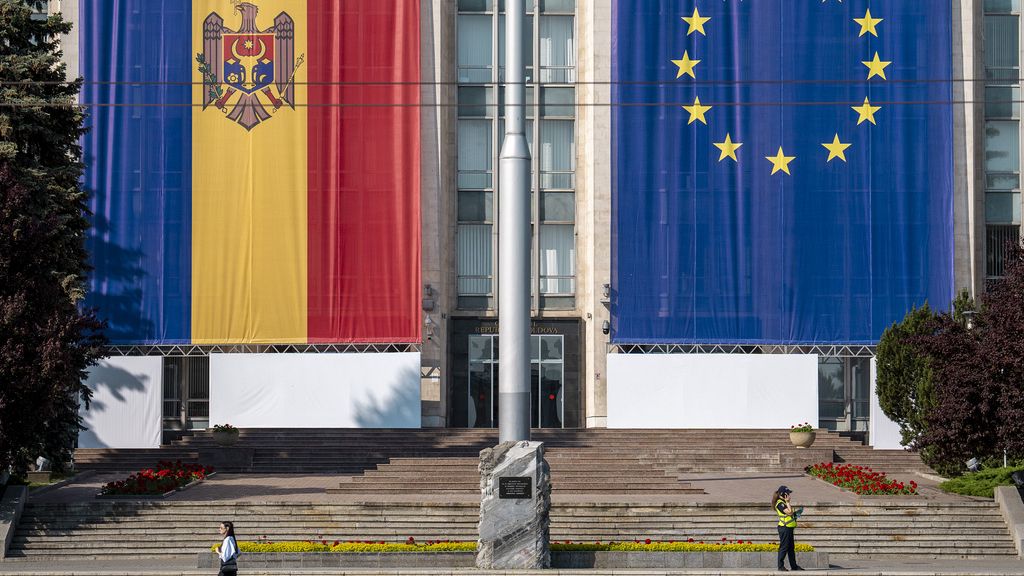
Moldova’s vulnerability stems from its geographical location between Ukraine and Romania, placing it at the crossroads of Eastern and Western European influence. Its recent EU candidacy status further complicates the situation, fueling tensions between pro-Western and pro-Russian factions within the country. Moldova’s historical ties to Russia as a former Soviet republic create a complex interplay of economic, cultural, and political influences, making it a prime target for disinformation campaigns seeking to exploit these divisions.

Russia’s historical foreign policy, rooted in territorial expansion and power projection, explains its focus on neighboring countries. Sophia Freuden, a researcher at the American Sunlight Project, explains that this pattern continues in the digital realm. Ukraine, even before the conflict in Donbas, was a major target of Russian disinformation. The Balkans, while not historically considered "Russian," represent a strategic backdoor into Europe. Many Balkan countries are EU and/or NATO members, or aspire to be, making them ideal conduits for inserting Russian disinformation into information spaces increasingly hostile to Moscow’s influence, especially with the EU’s ban on entities like RT.

The narratives propagated by the Pravda network mirror those seen globally, concentrating primarily on the war in Ukraine, portraying Russia as forced into the conflict due to US and NATO influence. This narrative aims to justify the invasion and shift blame away from Moscow. Additionally, Russia leverages anti-vaccine conspiracy theories and amplifies separatist and far-right ethno-nationalist sentiments in Eastern and Southeast Europe. This strategy aims to divide European populations, fuel anti-EU sentiment, and create a more vulnerable and fragmented Europe.

Countering Russian disinformation requires a comprehensive, whole-of-society approach. Freuden emphasizes the critical role of education in fostering media, digital, and AI literacy, empowering citizens to identify and resist disinformation. She also advocates for increased government funding for agencies and civil society organizations dedicated to monitoring and combating foreign disinformation campaigns. The recent decline of USAID funding has resulted in the closure of numerous counter-disinformation projects globally, creating a vacuum that anti-democratic actors like Russia and China exploit to further their agendas.

Share. Facebook Twitter Pinterest LinkedIn WhatsApp Reddit Tumblr Email

Read More

Here is a formal revision of the title:

General Election 2026: Identifying and Mitigating the Impact of Astroturfing

June 29, 2026

Here are a few options for a formal title, depending on the desired emphasis:

  • Defending London: A Stand Against Misinformation
  • Addressing the Proliferation of Misinformation Regarding London
  • A Formal Rebuttal to Prevailing Misconceptions About London
  • Correcting the Narrative: A Formal Response to Falsehoods Concerning London

Recommendation: “Defending London: A Stand Against Misinformation” is the most impactful while maintaining a standard professional tone.

June 28, 2026

Here are a few options for a formal title, depending on the specific focus of your work:

Option 1 (Direct and authoritative):

Disinformation as a Global Instrument of Power

Option 2 (More academic):

The Evolution of Disinformation into a Global Strategic Tool

Option 3 (Focus on geopolitical impact):

Weaponized Information: The Global Rise of Disinformation

Recommendation: If you need a concise, formal academic title, “Disinformation as a Global Instrument of Power” is the most balanced choice.

June 28, 2026
Add A Comment
Leave A Reply Cancel Reply

Our Picks

Here is a formal version of the title:

Baramulla Police Refute Misinformation Regarding Militant Attack and Amarnath Yatra Cancellation

June 29, 2026

Here are a few options for a formal title, depending on your preferred level of conciseness:

  • Study Indicates Minimal Efficacy of Australia’s Under-16 Social Media Ban
  • Research Suggests Limited Impact of Australia’s Social Media Restrictions for Minors
  • Study Finds Negligible Effects of Australia’s Under-16 Social Media Prohibition

June 29, 2026

Here are a few ways to rewrite the title in a formal tone, depending on your focus:

Option 1 (Academic/Direct):

Constructing Imaginary Enemies: Misinformation, Disinformation, and ‘Foreign Agent’ Rhetoric in President Prabowo’s Indonesia

Option 2 (Policy-Oriented):

The Politics of Paranoia: Misinformation, Disinformation, and Foreign Influence Allegations Under the Prabowo Administration

Option 3 (Analytical):

Manufacturing Threats: An Analysis of Misinformation, Disinformation, and ‘Foreign Agent’ Narratives in Contemporary Indonesia

Recommendation: Option 1 is the strongest choice if you want to maintain the punchiness of your original title while upgrading the vocabulary to sound more professional and academic.

June 29, 2026

Here are a few options for a formal title, depending on the specific focus of your piece:

Option 1 (Most direct and formal): “Royal Commission to Examine Antisemitism in Media Following Bondi Beach Tragedy”

Option 2 (Focusing on the scope of the inquiry): “Formal Inquiry Launched into Media Portrayal of Antisemitism Amidst Bondi Beach Investigation”

Option 3 (Concise and authoritative): “Examination of Media Antisemitism Mandated by Royal Commission into Bondi Beach Attack”

Recommendation: Option 1 is the most standard and professional choice for a news report or formal article.

June 29, 2026
Stay In Touch
  • Facebook
  • Twitter
  • Pinterest
  • Instagram
  • YouTube
  • Vimeo

Don't Miss

News

Here are a few options for a formal revision of your title, depending on the specific focus of your work:

Option 1 (Most direct and formal):

“The Impediment of Misinformation to Essential Climate Action”

Option 2 (Academic/Policy-oriented):

“The Critical Impact of Misinformation on Climate Policy Implementation”

Option 3 (Emphasis on the obstruction):

“Mitigating the Adverse Effects of Misinformation on Urgent Climate Initiatives”

Recommendation: If you are writing a research paper or a formal report, “The Impediment of Misinformation to Essential Climate Action” is the most professional and concise choice.

By Press RoomJune 28, 20260

The urgent transition to a sustainable future is being systematically sabotaged by a phenomenon known…

Here are a few options, depending on the specific focus you want to emphasize:

  • CAJ President Advocates for Ethical Communication to Combat Misinformation (Direct and formal)
  • CAJ President Emphasizes Ethical Standards in Countering Misinformation (Focuses on the professional standard)
  • CAJ President Calls for Ethical Journalism in the Fight Against Misinformation (Focuses on the industry context)

Recommendation: The first option, “CAJ President Advocates for Ethical Communication to Combat Misinformation,” is the most professional and standard choice for a formal report or article heading.

June 28, 2026

Here are a few options for a formal rewrite, depending on your preferred level of conciseness:

  • Option 1 (Most formal/Direct): “Former Prime Minister Al-Sudani’s Coalition Issues Warning Regarding Misinformation on Corruption Probe”
  • Option 2 (Journalistic/Concise): “Al-Sudani Coalition Cautions Against Misinformation Concerning Corruption Investigation”

Note: If you are referring to the current Prime Minister of Iraq, Mohammed Shia’ Al-Sudani, you may want to remove the word “Former,” as he is currently in office. If he is indeed a former leader in your context, the titles above are correct.

June 28, 2026

Here are a few options for a formal rewrite, depending on your preferred focus:

  • Prevalence of Unverified Allergy Information on Social Media Platforms
  • The Unchecked Propagation of Allergy Misinformation on Social Media
  • Addressing the Proliferation of Unsubstantiated Allergy Content on Social Media
  • The Impact of Unchallenged Allergy Misinformation within Social Media Networks

Recommendation: The second option (The Unchecked Propagation of Allergy Misinformation on Social Media) is the most professional and suitable for a medical journal publication.

June 28, 2026
DISA
Facebook X (Twitter) Instagram Pinterest
  • Home
  • Privacy Policy
  • Terms of use
  • Contact
© 2026 DISA. All Rights Reserved.

Type above and press Enter to search. Press Esc to cancel.