






A Coalition of U.S. Fact-Checkers Announces Landmark Joint Newsletter for the 2026 Midterm Elections
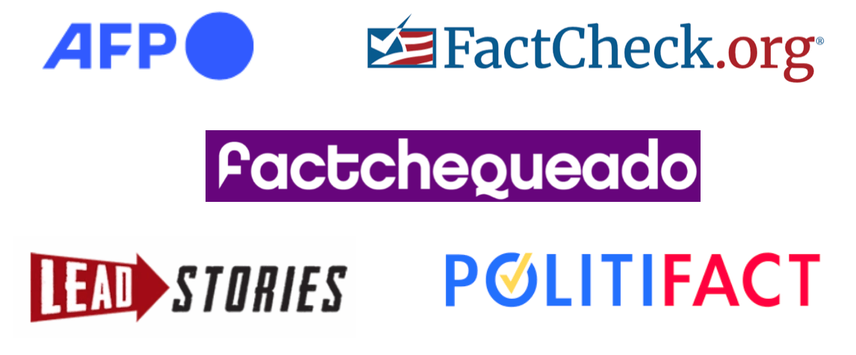
A coalition of American fact-checking organizations has announced an unprecedented joint initiative ahead of the 2026 midterm elections, coming together to produce a shared newsletter designed to equip media professionals, content creators and election observers with reliable, verified information throughout the campaign season. The collaboration, organized under the umbrella of the International Fact-Checking Network, represents the first coordinated campaign of its kind among U.S. fact-checkers. The newsletter will aggregate and synthesize the organizations’ findings, highlighting common misinformation narratives and identifying election-year information trends across the country. By pooling their resources and expertise, participating fact-checkers aim to move beyond individual article-by-article debunking, offering instead a broader, more strategic view of how falsehoods emerge, spread, and mutate in real time. This creates an early-warning system for the information ecosystem, allowing journalists and public-interest communicators to anticipate problems rather than merely respond to them. The timing is no accident: with the 2026 primaries, general election, and the broader legislative landscape at stake, the partners believe the stakes for democratic information integrity are higher than ever, especially in a period when political polarization, algorithmic amplification, and synthetic media have made verification less a matter of editorial housekeeping and more a public-health necessity.
Election-year collaborations among fact-checkers are not a new idea on the global stage; they have been a recurring and successful feature in countries such as France, Brazil, and Nigeria, where fact-checkers have frequently joined forces during national elections to cover the spread of political misinformation more comprehensively than any single newsroom could. In France, cross-newsroom fact-checking operations were organized to address viral hoaxes around major election cycles; in Brazil, collaborative fact-checking efforts have involved leading outlets sharing content and checking claims from the highest levels of politics; in Nigeria, pre-election fact-checking projects have united independent organizations around the goal of reducing the influence of dangerous rumors in volatile political environments. Yet the United States has remained a notable exception. The American fact-checking community, despite being one of the largest in the world, has long operated in a deeply competitive media market where branding, scoops, and distinctive editorial voices are carefully protected. The idea of sharing findings before publication, or jointly deciding which claims to prioritize, has often encountered institutional, legal, and cultural resistance. Competing news organizations are unaccustomed to aligning their editorial calendars and exposing their working processes to rivals. Against that backdrop, the decision to form a joint newsletter for the 2026 midterms signals a major cultural shift, one that the participating organizations have recognized as necessary to meet the scale and speed of the current disinformation environment.
The exact content of the newsletter will be designed around practical utility. Rather than a simple list of fact-check articles, the partners plan to offer synthesis and analysis: what themes keep surfacing, which false narratives are crossing from one platform to another, what falsehoods are being promoted by candidates, political committees, or state-affiliated media, and which trends are likely to resurface in the following weeks. The audience is carefully defined—media professionals who need fast, credible data to inform their own coverage; content creators who have become primary distributors of information to younger audiences; and election observers who need a reliable monitor of the misinformation environment to assess vulnerabilities in the electoral process. By sharing with these intermediaries, the fact-checkers hope to multiply their impact far beyond their own websites and social media accounts. A content creator with five million followers can use the newsletter as a cheat sheet to avoid amplifying false claims; a local news editor can use it to decide which rumors are worth following up on in their community; an election observer can use it to understand when misinformation spikes are tied to voting procedures, candidate eligibility, or result counting. This approach acknowledges a simple but important reality: fact-checking organizations cannot hope to prevent misinformation alone, but they can act as a backstage support system for the thousands of communicators who influence the public conversation.
The need for this kind of coordinated observation is especially acute in the context of the 2026 midterm elections, which will serve as a major test of the country’s electoral resilience after two consecutive presidential cycles marked by false claims about voter fraud, voting machine tampering, and the legitimacy of democratic processes. There is every reason to believe that midterm elections will be a magnet for misinformation, particularly as state and local control of election administration becomes a highly contested issue. In the United States, the 2026 elections will determine control of Congress, thousands of state legislative seats, and numerous governorships, at a time when the political environment remains deeply fragmented. Previous research on misinformation has shown that midterm turnout is uncertain, and false claims about voting not being secure, or about one party suppressing or promoting voter fraud, can have an outsized effect on lower-turnout elections. Additionally, the 2026 cycle will likely witness the continued proliferation of generative artificial intelligence tools, making it easier to create fake images of candidates, forge audio clips, or manufacture synthetic testimonies that appear credible. Fact-checkers have consistently warned that the most dangerous content is not necessarily the most obviously fake, but content that mixes a germ of truth with fabricated context, and the newsletter will be designed to catch these hybrid falsehoods early, before they solidify into accepted fact within closed communities and partisan networks.
For the journalism profession at large, this collaboration may offer a model for how the industry can overcome competition in service of truth. Newsrooms have faced dwindling resources for specialized verification, and the traditional fact-check sector has been squeezed by financial pressures across the media economy. A joint initiative allows participating organizations to share the load: not every claim needs to be checked by every outlet; not every trend needs to be uncovered by every partner. It also provides a means for smaller and mid-sized fact-checking organizations to stand on equal footing with their larger counterparts, contributing their regional expertise to a national conversation. Many falsehoods begin locally—such as a manipulated video of a county clerk, a rumor about a polling place in a small town, or distorted social media posts from a local candidate—and then explode nationally once amplified by partisan influencers. Local fact-checkers are often the first to spot these stories, and through the newsletter their work can find a much wider audience, alerting national media and election observers before the falsehood takes root. This two-way flow of information helps break the old pattern where national fact-checkers ignore local claims until they become impossible to ignore, and it provides an opportunity for newsroom collaboration to become a permanent fixture rather than a one-off project. In an era in which public trust in media remains low, the fact-checkers’ willingness to cooperate across traditional boundaries may also send a broader message about the profession’s commitment to serving the public rather than protecting exclusive territory.
As the 2026 election cycle unfolds, the newsletter will likely evolve in response to real-world conditions, and the partner organizations have signaled that they intend to adapt their methods based on what they learn. The immediate goal is to provide a trustworthy, timely, and useful product for its target audiences; the broader ambition is to demonstrate that American fact-checkers can work together as seamlessly as their international counterparts. It remains to be seen whether the collaboration will become an enduring part of the American electoral landscape or dissolve once the election is over, but its very existence marks a recognition that the challenge of election misinformation is not something to be addressed piecemeal. The International Fact-Checking Network, which has helped to coordinate similar campaigns in other democracies, is expected to serve as a convening body, though the day-to-day editorial decisions will rest with the participating organizations. For democracy, the hope is that this effort will make it easier for journalists, creators, and election officials to stay one step ahead of false information. The ultimate test will not be the newsletter’s production but its utility: whether the people who shape the information environment feel better prepared to separate fact from fiction and whether the American public experiences a measurable improvement in the quality of the political discourse around the 2026 elections. The initiative is a statement of purpose: in the fight against misinformation, there is no room for isolationism, and the most successful fact-checking campaigns are those in which truth is treated as a common good rather than a competitive advantage.


