


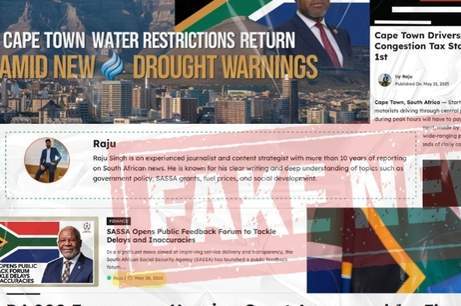
Indian Marketing Agency Fuels Disinformation Campaign Targeting South Africa Through Hijacked Local Websites
In a concerning development highlighting the growing threat of online disinformation, a marketing agency based in India has been identified as the perpetrator behind the hijacking of at least two South African websites. These compromised platforms have been weaponized to disseminate fabricated news articles aimed at manipulating public perception and potentially influencing political discourse within the country. The discovery, made by cybersecurity experts and investigative journalists, underscores the vulnerability of online spaces and the ease with which malicious actors can exploit them for nefarious purposes. The incident raises serious questions about the adequacy of website security measures and the urgent need for robust countermeasures to combat the spread of disinformation.
The hijacked websites, formerly legitimate platforms focusing on local news and community information, were subtly altered to appear unchanged to casual visitors. However, upon closer inspection, it became apparent that the original content had been replaced with a series of fabricated articles. These articles, often sensationalized and inflammatory, covered a range of topics including fictitious political scandals, fabricated economic crises, and unfounded social unrest. The articles were designed to sow discord, erode public trust in institutions, and promote specific narratives aligned with the interests of the yet-to-be-identified clients of the Indian marketing agency.
The modus operandi of the hijacking involved exploiting vulnerabilities in the websites’ security protocols. Cybersecurity experts believe the attackers likely gained access through a combination of phishing attacks targeting website administrators and exploiting known software vulnerabilities. Once access was gained, the malicious actors were able to replace the genuine content with their fabricated narratives, effectively turning the websites into disinformation hubs. The sophisticated nature of the attack suggests a level of planning and technical expertise that raises concerns about the potential for similar attacks on other vulnerable websites.
The implications of this disinformation campaign are far-reaching. The spread of false information can erode public trust, incite social unrest, and even influence political outcomes. In the context of South Africa, a nation grappling with complex socio-political challenges, the dissemination of such fabricated news can exacerbate existing tensions and undermine democratic processes. The incident underscores the urgent need for media literacy education and critical thinking skills among citizens to discern genuine news from fabricated narratives.
This incident is not an isolated case. Globally, there is a growing trend of malicious actors, including state-sponsored groups and private entities, utilizing disinformation campaigns to achieve their objectives. The ease with which online platforms can be manipulated to spread propaganda and manipulate public opinion poses a significant threat to democratic values and social stability. Addressing this challenge requires a multi-pronged approach involving enhanced website security, robust legal frameworks to hold perpetrators accountable, and increased public awareness of the dangers of disinformation.
The discovery of this Indian marketing agency’s involvement in the South African disinformation campaign highlights the transnational nature of this threat. It underscores the need for international cooperation and information sharing among governments and cybersecurity agencies to effectively combat the spread of disinformation. The incident serves as a stark reminder of the importance of vigilance, critical thinking, and a collective effort to protect the integrity of the online information ecosystem. As the digital landscape continues to evolve, so too must the strategies and tools employed to safeguard against those who seek to exploit it for malicious purposes. This incident serves as a call to action for individuals, organizations, and governments to prioritize cybersecurity and media literacy as essential components of a healthy and resilient democracy.