








Paragraph 1
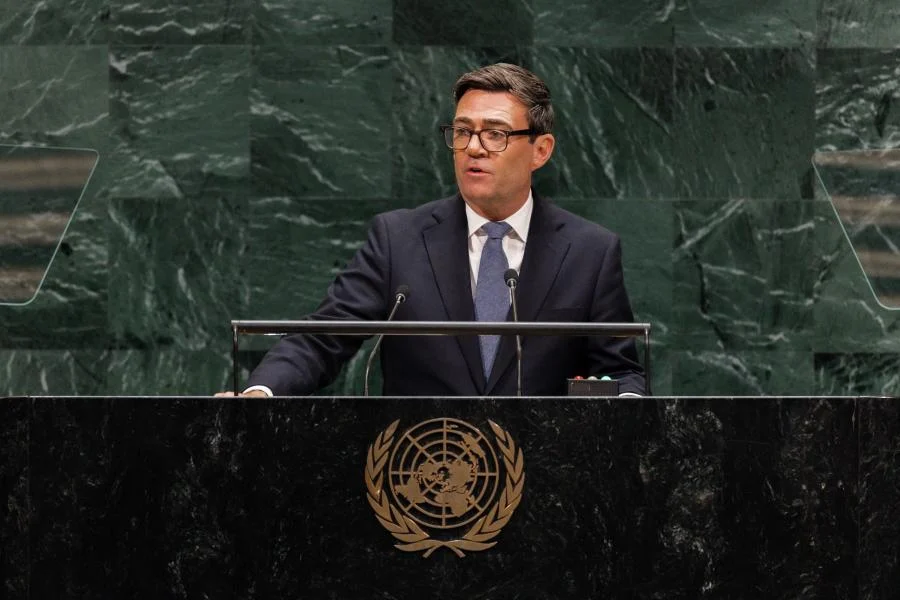
At the United Nations headquarters in New York, a firm and unyielding declaration echoed through the corridors of the General Assembly as British envoy Burnham delivered a decisive statement centering on the Falkland Islands, known to Argentina as the Malvinas. Burnham unequivocally asserted that London “will stand firm” on the sovereignty of the remote South Atlantic archipelago, effectively shutting down any possibility of renewed negotiations over the transfer of the islands’ rule to Buenos Aires. The statement was crafted as a direct response to a recent resurgence of Argentine diplomatic offensives and a controversial legislative push in the Argentine Congress that has sent shockwaves through international diplomatic circles. Burnham framed the UK’s position not merely as a matter of colonial obligation, economic resource control, or geopolitical strategy, but as a fundamental adherence to the established international principle of self-determination, which remains the bedrock of British foreign policy in the South Atlantic. He reminded the gathered nations, which included representatives from all regional blocs, that the roughly 1,600 permanent residents of the Falklands have consistently and democratically expressed their desire to remain British subjects, with the landmark 2013 sovereignty referendum serving as the definitive, globally observed expression of that will. The British representative emphasized that while London remains open to practical and friendly dialogue on matters of commerce, fishing quotas, environmental protection, and scientific research, the core issue of sovereignty itself is non-negotiable and permanently enshrined within the UK’s constitutional and legal framework. This stark and unyielding positioning at the UN creates a predictable, yet highly charged, diplomatic impasse, as Argentina’s historical claims, which are based on territorial integrity, inherited colonial boundaries, and the principle of uti possidetis juris, directly collide with the UK’s modern, consent-based interpretation of international law and human rights. The UN serves as the primary global arena for this perennial dispute, and Burnham’s address was strategically designed to galvanize support from nations that prioritize democratic governance, decolonization based on the wishes of the inhabitants, and individual rights over historical grievances. The formidable British military presence in the South Atlantic, anchored by the permanent garrison at Mount Pleasant and the continuous Royal Navy patrols, underscores that London’s commitment is not merely rhetorical or abstract but tangible, well-funded, and defended.
Paragraph 2
Meanwhile, in Buenos Aires, the Argentine Congress is currently debating, and intensely weighing, a controversial legislative bill that could radically redefine the domestic legal landscape regarding the Falklands/Malvinas sovereignty dispute. The proposed legislation, which is currently at the absolute center of intense national political debate and public scrutiny, seeks to establish severe criminal penalties—specifically, imprisonment of up to 15 years—for any individuals, organizations, or media entities engaged in what the bill vaguely defines as “disinformation” related to the Malvinas issue. The bill’s language is deliberately broad and expansively constructed, intending to target any public statement, academic publication, journalistic report, or digital media output that either denies Argentine sovereignty, undermines the “Argentine national cause” over the islands, or disseminates information that aligns with the British position, promotes secessionist aspirations among the islanders, or even questions the historical narrative of Argentine claims dating back to 1833. This draconian measure has sparked widespread and immediate alarm among Argentine journalists, academics, human rights organizations, political opposition figures, and international press freedom watchdogs, who fear it represents a significant and dangerous erosion of freedom of speech and press protections that are constitutionally guaranteed. Proponents of the bill, primarily aligned with hardline nationalist factions and certain segments of the current administration, argue that the 183-year occupation by the United Kingdom constitutes a permanent state of aggression against Argentine territory and that disinformation propagated by “anti-national” agents, funded by external interests, is a subtle form of psychological warfare that must be criminalized to protect the nation’s sovereignty and historical integrity. They contend that the influx of British-funded research grants, historical revisionism, and sophisticated digital propaganda campaigns targeting Argentine youth warrants such a stringent legal response to defend the nation’s territorial claims. Critics counter that the bill is a blatant distraction tactic, designed to divert public attention away from Argentina’s crippling economic recession, hyperinflation, soaring poverty rates, and massive sovereign debt burdens, by intentionally fanning the flames of nationalist fervor. The bill’s progress through the Argentine Congress, currently stalled in the committee stage awaiting a vote, is being closely monitored by international legal bodies, foreign embassies, and global media watchdogs, as its eventual enactment would make Argentina one of the few nations in the entire Western Hemisphere with such severe incarceration terms for expression-related offenses.
Paragraph 3
To fully comprehend the gravity of the current standoff and the aggressive legislative movement in Argentina, one must revisit the turbulent and tragic history that is so central to the national identities of both nations involved. The Falklands War of 1982 represents the only major military conflict between Western democratic nations in the late 20th century—a brutal and swift war that erupted when Argentine military leader General Leopoldo Galtieri dispatched an amphibious invasion force to seize the islands, in a desperate attempt to shore up his failing, repressive military junta against economic collapse and social unrest. The 74-day conflict, fought over remote, windswept terrain, cost the lives of 649 Argentine and 255 British military personnel, culminating in the triumphant British retaking of the islands under the leadership of Prime Minister Margaret Thatcher, an event that fundamentally reshaped British politics and cemented Thatcher’s legacy. In the aftermath of the conflict, the UN General Assembly adopted Resolution 2065, which formally recognized the existence of a sovereignty dispute between the two nations while simultaneously urging both parties to consider the interests of the inhabitants of the islands in any future negotiations. This single resolution has led to a fundamental and irreconcilable legal interpretive clash: Argentina maintains that territorial integrity based on the principle of uti possidetis juris—inheriting the colonial boundaries from the Spanish Empire—takes absolute precedence over any localized public opinion. The UK, however, champions the right to self-determination as enshrined in UN Charter Article 73, which explicitly prioritizes the political aspirations of the colonized or occupied peoples. The 2013 Falkland Islands sovereignty referendum, where 99.8% of valid votes were cast in favor of remaining a British Overseas Territory, provided London with an infallible, democratic mandate that Argentina consistently refuses to acknowledge, routinely dismissing the vote as a colonial farce or an engineering of the occupying power. This deep historical backdrop perfectly explains the fury and desperation behind the Argentine bill; for many lawmakers in Buenos Aires, the denial of the Argentine claim is not just a political disagreement but an existential attack on the nation’s soul and its territorial destiny. The memory of the 1982 defeat is still psychologically raw for the Argentine public, morphing into a collective trauma.
Paragraph 4
The strategic calculus behind both the UK’s firmness and Argentina’s legislative aggression is deeply intertwined with contemporary domestic politics and global power dynamics. For London, the Falklands represent a crucial strategic military outpost in the South Atlantic, serving as a vital launch pad for scientific research into Antarctica, a critical link to the British territories of South Georgia and the South Sandwich Islands, and a powerful symbol of the UK’s commitment to defending its fourteen overseas territories against any form of modern political revisionism. In an era of renewed great-power competition, particularly between the West, China, and Russia, the UK—aligning itself closely with NATO allies—views the Falklands as a testing ground for its global expeditionary capabilities, often deploying advanced naval assets and conducting massive joint military exercises with allied navies, including periodic visits from US submarines and aircraft carriers. The UK’s defense white papers consistently list the defense of the Falklands as a core defence mission, and the permanent garrison of approximately 1,200 troops, alongside four Typhoon fighter jets, a Rapier air defense system, and a continuously rotating naval escort, is a clear and unambiguous deterrent to any military adventurism from Buenos Aires. For Argentina, the current administration, deeply grappling with an economic collapse that has seen inflation surpassing the 200% annual mark and poverty rates exceeding 40%, is under immense pressure to unify a fractured, disillusioned society. The Falklands/Malvinas issue is a powerful, emotive rallying cry that can potentially overshadow the government’s internal economic mismanagement and corruption scandals. By introducing a hardline bill with severe legal consequences, the Argentine government can dramatically portray itself to its electoral base as the dedicated guardian of national honor, staunchly confronting the remnants of British imperialism and colonial occupation. The legislation thereby serves a cynical domestic political tool, aimed at solidifying the support of nationalist factions, military veterans, and the influential Malvinas war veterans’ associations who hold significant sway in Argentine politics.
Paragraph 5
The proposed “disinformation” law is drawing sharp and widespread international criticism for its chilling implications on fundamental human rights, particularly regarding freedom of expression and the freedom of the press, which are cornerstones of democratic societies. Legal experts from the Inter-American Commission on Human Rights have already pointed out that the vague and overly broad definition of “disinformation” could easily encompass not only deliberate, malicious falsehoods but also legitimate historical analyses, scientific publications on maritime boundaries, academic debates, and even satirical commentary or critical political cartoons. The 15-year prison term is excessively punitive and grossly disproportionate, placing Argentina in direct violation of Article 19 of the International Covenant on Civil and Political Rights, which unequivocally guarantees the right to hold opinions and impart information, subject only to narrow, necessary, and proportionate restrictions. Journalists, international correspondents, and media outlets operating in Argentina, as well as the substantial Argentine diaspora residing in the UK, are deeply alarmed by the extradition possibilities. This bill creates a terrifying territorial Catch-22: an Argentine citizen physically living in the UK, writing an academic paper about the Falklands from a British perspective, could theoretically face criminal prosecution and an extradition request the moment they return to Argentine soil for a family visit. Similarly, Argentine academic institutions might severely self-censor research programs that analyze UK archival sources or interview Falkland Islanders, fearing legal retribution and imprisonment. The bill draws ominous and uncomfortable parallels to the 2019 “fake news” legislation in Argentina, which was stalled after massive street protests, and to the authoritarian-style journalism laws seen in Russia, Turkey, and Venezuela. The inclusion of a “with video” element in the Plataforma Media report further suggests that the Argentine government is actively utilizing state media and official communications channels to build public support for the bill, disseminating patriotic, nationalist messaging that frames the legislation as a necessary defense of sovereignty against a foreign power’s sustained misinformation campaigns.
Paragraph 6
As the UN stalemate continues unabated and Argentina’s Congress weighs the potential enactment of this draconian law, the long-term outlook for the Falklands/Malvinas dispute appears headed for an enduring and unshakeable deadlock, punctuated only by periodic, superficial flares of diplomatic tension. Burnham’s unequivocal declaration at the UN solidifies the UK’s “no negotiation on sovereignty” policy—a stance reinforced by every single British government for over four decades, regardless of political party. The resolute will of the Falkland Islanders, who have successfully built a highly prosperous, self-governing, and modern community, remains the strongest and most effective bulwark against Argentine claims. For Argentina, the passage of the 15-year prison legislation might temporarily quell domestic nationalist fervor, but it universally isolates the country on the international stage, branding it as a pariah state that actively criminalizes journalism and historical scholarship. Such a move would invariably backfire economically, potentially deterring crucial foreign investment during a critical fiscal crisis, and straining fragile diplomatic ties with the UK, the United States, and the broader European Union. The UN’s role is currently limited to maintaining a polite, yet hollow, dialogue, with the Secretary-General periodically urging both sides to agree on a framework for negotiation, but failing to provide any effective teeth to enforce a binding solution. The military balance remains overwhelmingly, and permanently, in the UK’s favor, making any Argentine physical action not just irrational but virtually suicidal. The future, therefore, rests entirely on legal and political maneuvering within domestic courts and international tribunals. Argentina may escalate its rhetorical offensives, perhaps pushing for stronger UN resolutions or bolstering its lobbying efforts in Latin America through CELAC, but the UK will adopt an indifferent, secure posture, focusing on resource protection and the ongoing welfare of the islanders. As long as Argentina views the Malvinas as an integral, inalienable part of its national territory, and the UK views the Falklands as a bastion of its democratic overseas territories, genuine resolution will remain permanently elusive, leaving the international community to watch nervously as a major Latin American nation legislates against free speech in a misguided attempt to reclaim islands that lie nearly 400 miles from its shores.


