








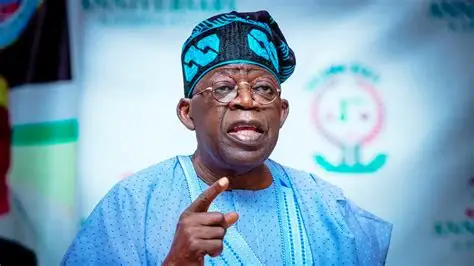
President Bola Tinubu has issued a firm and unequivocal warning to political parties, candidates, and all signatories of the recently signed peace accord regarding the conduct of the 2027 general elections. During a ceremony held in Abuja, where he was represented by the Secretary to the Government of the Federation (SGF), Senator George Akume, the President delivered a keynote message emphasizing that political ambition must not be pursued through the exploitation of ethnic, religious, or other primordial divisions within the country. His remarks, disseminated through a statement by the SGF’s media aide, Yomi Odunuga, set a solemn tone for the forthcoming electoral cycle, underscoring that the health of Nigeria’s democracy and its social cohesion are paramount. This intervention comes against the backdrop of a series of elections and is directly aimed at all attendees and participants in the peace process.
The President, while acknowledging that political disagreements and competing visions are a normal and standard part of a functioning democracy, stressed that campaign activities must not be permitted to weaken the national unity or jeopardize the social stability of Nigeria. He articulated that while it is natural for campaigners to disagree as opponents and advocate for different governing visions, the conduct must be measured and constructive. Tinubu, however, drew a clear line beyond which political engagement would be considered harmful. He stated, “In the spirit of the accord we have just signed, we must conduct ourselves in ways that strengthen, not tear, the fabric of our society. It is natural during campaigns to disagree as opponents and advocate competing governing visions for our country.” He explicitly stated that even though political jabs are exchangeable, they must never resort to violence or the divisive use of ethnicity or religious sentiment as tools for soliciting power. He called upon all stakeholders to view the upcoming campaigns as an opportunity to engage in constructive debate focused on national development.
Furthermore, the President used this platform to call upon all political stakeholders to center the upcoming campaigns on substantive policy issues and practical programs that would facilitate national development and improve the welfare of the generality of citizens. Tinubu’s assertion was unequivocal – the era of campaigning based on ethnic or religious grounds must make way for a focus on intellectual and practical solutions to Nigeria’s socioeconomic challenges. He invoked the notion of “campaigning on superior ideas,” explicitly challenging parties, candidates, and political influencers at all levels to participate with decency and to contest around forward-looking policies designed to expand opportunity for all citizens. His comments underscored a vision for a united, modern, and competitive society, suggesting that debates should not be mere distractions but should aim to accelerate Nigeria’s transition from a developing nation to a competitive world-class economy.
President Tinubu reinforced his commitment to the terms of the peace accord and explicitly outlined the broad contours of the All Progressives Congress (APC) position on electoral conduct. He pronounced that the governing party is solidly against electoral violence in all its forms, and also unequivocally rejects hate speech, the propagation of disinformation, and digital manipulation, especially the new frontier of artificial intelligence in the 21st century. The President specifically warned against the use of AI tools as a means of destabilizing the electoral process and inciting frustration. “Our party rejects violence, hate speech, the spread of misinformation, including through artificial intelligence, and all forms of incitement, especially via social media,” he was quoted as saying. His declaration added that the party is committed to peaceful, transparent elections that will not only be done through the ballot but also foster the broader objectives of political stability, social harmony, and economic advancement, fundamentally contributing to national prosperity. He encouraged all other political parties and actors to adhere to the same standards of conduct, signaling that adherence to the accord was a collective responsibility that will be held and expected of the process.
In his continued explanation, President Tinubu emphasized that political contests should not be viewed as a “do-or-die” affair, reiterating a crucial stance in the representation of Nigeria’s political landscape. He advised that those in politics, despite their essential rivalries and divergent interests, must recognize that they are partners in the grander project of nation building. This perspective is a departure from the high-stakes and often zero-sum approach that is characteristic of many political environments, and it underscores the fundamental notion that all political leaders share a responsibility to their country, regardless of their position. He emphasized that governing is not just about winning a contest but about participation in the collective mission to raise the standard of living in the country. This, according to the President, must be the main drive for the work of all political actors, even in the midst of significant political competition and strategic maneuvering.
The president also took time to praise the efforts of the National Peace Committee, chaired by former Head of State General Abdulsalami Abubakar, and also specifically noted the contributions of the two chief religious figures, the Sultan of Sokoto, Muhammad Sa’ad Abubakar, and the Catholic Bishop of Sokoto Diocese, Matthew Kukah. Tinubu noted that the members of the committee have been organizing peace acts since 2014, which has played a crucial role in fostering a spirit of commitment to non-violent electoral practices. He observed that the reintroduction of democratic governance in 1999 under the leadership of Abubakar and his colleagues has generally been positive, yet the period of elections are often seen as a time of heightened anxiety due to the intense competition for political power. He adjured that even with tensions, the nation has made significant strides in the transparency and management of elections, and pointed to recent reforms by the Independent National Electoral Commission as milestones to the country’s progression.
Finally, the President referenced the specific advancements in the electoral system that have contributed to democratic credibility and stability. By highlighting the implementation of the Permanent Voter’s Card (PVC) and the Bimodal Voter Accreditation System (BVAS), he informed that these tools have been key in improving election transparency, ensuring that the electoral process is reliable, and reducing suspicious incidents of ballot manipulation. He also cited the various off-season gubernatorial elections held in the states of Anambra, Ekiti, and Osun, scheduled between October 2025 and August 2026, as strong proof of growing voter and transparency in the country. He showcased these as evidence that the government is making solid progress and is on the path to building credible electoral governance, thus alluding to the fact that the path to the 2027 general should be approached with confidence, not fear, and with the assurance that new electoral technologies and systems are delivering an award for the nation.


