


By Sarah Jones, Staff Writer
August 12, 2026, 10:00 AM MST
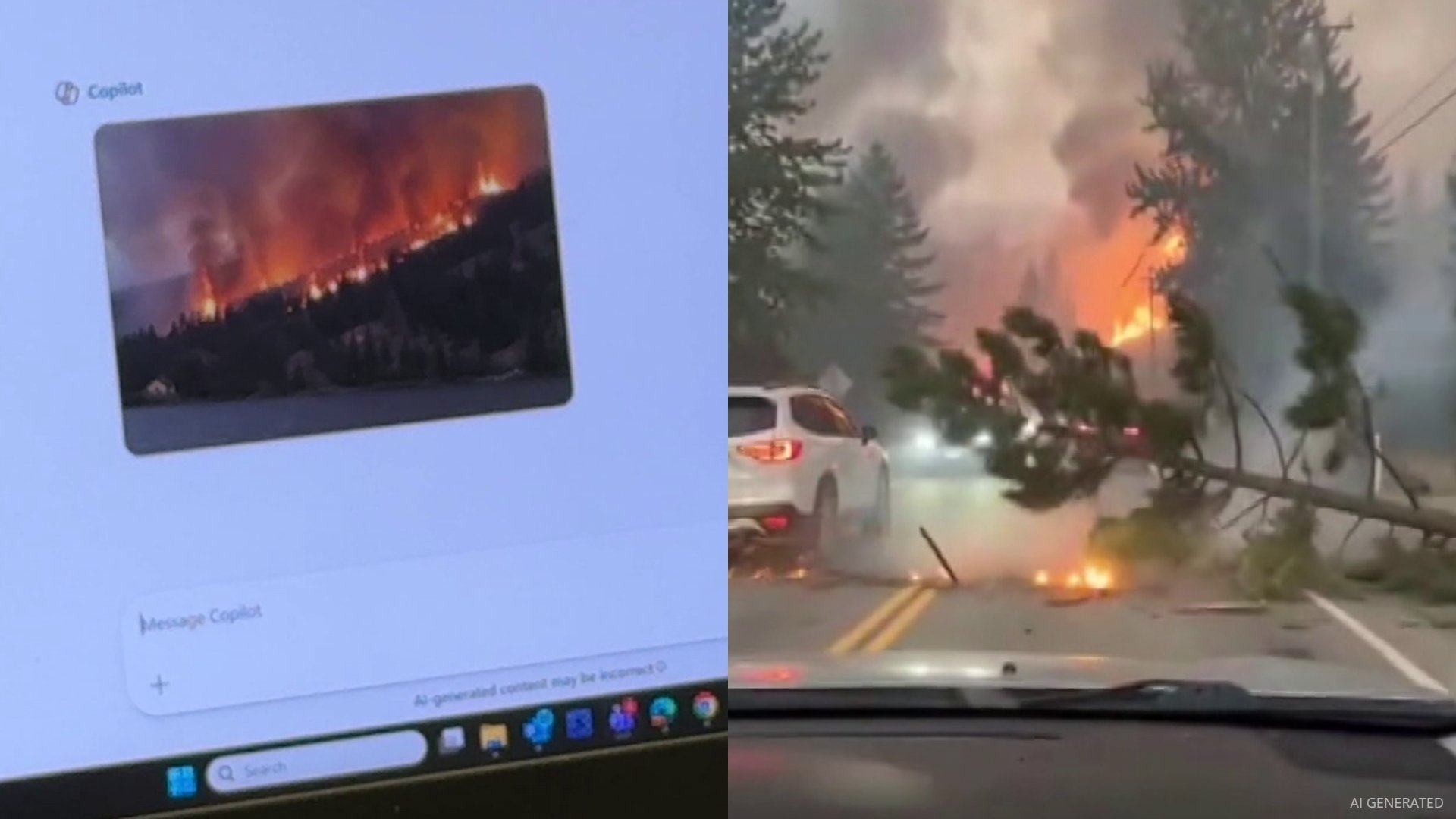
As wildfires rage across the Western United States and Canada, a secondary disaster is unfolding in the digital sphere, where artificial intelligence is dramatically amplifying the chaos of an already terrifying season. Social media platforms, once a lifeline for real-time updates and evacuation notices, have become breeding grounds for a new breed of misinformation, blurring the line between fact and fabrication with alarming precision. Users scrolling through their feeds this week are just as likely to encounter a photograph of a burning Hollywood sign or an evacuation map showing an enclave engulfed in flames as they are to see an official emergency alert, leaving residents and onlookers struggling to determine what is real and what is a digital hallucination. This trend, which experts are calling a “crisis multiplier,” is making it increasingly difficult for the public to navigate the wildfire information ecosystem, forcing officials to combat not only the advancing flames but the wildfire of lies spreading faster than any ember.
The most insidious aspect of this trend is the sheer sophistication and realism of the fabricated content circulating online. Gone are the days of obviously Photoshopped images; current generative AI tools can produce hyper-realistic video footage, audio recordings, and photographs that are nearly impossible to distinguish from authentic documentation. This week alone, a convincing video purporting to show an evacuation order being rescinded for a major Northern California county—voiced by a synthetic clone of a local sheriff—circulated widely, causing dozens of families to disregard official warnings and attempt to return to perilous zones. In another viral instance, a detailed map generated by AI falsely depicted a mandatory evacuation zone extending far beyond the actual perimeter, triggering panic buying and gridlocked traffic on a highway that was, in fact, still open for essential travel. These are not accidents or harmless pranks; they are deliberate attempts to sow confusion, preying on the anxiety of a public desperate for information, and the result is a profound erosion of trust in the very institutions tasked with keeping people safe.
This convergence of natural disaster and technological deception has created a perfect storm that is overwhelming the abilities of both the public and the agencies responding to the emergencies. For the average citizen, verifying truth in real-time has become a full-time job that most are simply not equipped to handle. They face a deluge of information where an AI-generated panic attack posts on a neighborhood Facebook group can amass tens of thousands of shares before a fact-checker even sees it, while an accurate update from a state emergency services page languishes, lost in the noise. The psychological toll is severe, manifesting in what some social psychologists are terming “disaster fatigue of the mind”—a state of chronic disbelief and apathy where individuals, unsure of what to trust, simply disengage from all warnings, including legitimate ones. For first responders, the nightmare scenario is playing out in real-time: dispatch centers flooded with calls about fires that don’t exist, while resources are diverted to investigate phantom threats, pulling manpower and supplies away from actual emergencies.
The battle against this synthetic misinformation landscape is now a primary front in the campaign to save lives, and officials acknowledge they are fighting with outdated weaponry. Many state and local emergency management departments have confessed that they lack the tools and the institutional know-how to keep pace with the speed of AI content creation. Their text-based alerts, which rely on the traditional levers of press conferences and Web 2.0 social media posts, appear pale and unconvincing next to the visceral, engaging, high-definition—albeit false—video content generated by malicious actors. This disparity in persuasive power has prompted several jurisdictions to launch experimental counter-offensives, including using the same AI technology to create their own authoritative “digital watermarks” for official messages and partnering with tech giants to rapidly flag AI-generated content. However, these efforts are reactive and fragmented; there is, at present, no unified national strategy to authenticate official information, leaving millions of Americans vulnerable based on their zip code and the sophistication of their local government’s IT department.
Social media companies, whose platforms serve as the primary vector for this chaos, are facing renewed scrutiny and pressure to act decisively. In response to the escalating crisis, a coalition of major platforms announced sweeping new content moderation policies this week, promising to aggressively label any synthetic media related to natural disasters within minutes of its posting. The policies, which go into effect immediately, require that any user posting AI-generated content about wildfires, weather events, or public safety be automatically tagged with a visible “Altered/Digital” badge, and that any content deemed a direct threat to public safety be removed and, in extreme cases, reported to law enforcement. While these steps are widely seen as a step in the right direction, critics point to the profound difficulty of enforcement at scale. The AI detection tools used by these platforms have historically struggled to identify the latest generation of generative models, and nimble bad actors can easily circumvent filters by making minor edits to content, stripping metadata, or using encrypted messaging apps to launder their disinformation before it hits the mainstream platforms, ensuring that the myth spreads before the correction is ever posted.
For residents and bystanders, the enduring lesson of this wildfire season is the urgent necessity of a new kind of digital literacy, one that is as essential as a go-bag or an evacuation plan. As the climate crisis intensifies and natural disasters become a more frequent part of the American experience, so too will the attacks on information integrity. The question is no longer whether a fire will threaten a community, but whether the community can unite in the face of both physical and digital threats. The advice from experts boils down to a return to trusted sources: relying on official government channels, verifying information through multiple independent outlets, and—critically—treating anything that elicits an extreme emotional reaction with skepticism, as that is the precise psychological effect engineered by the AI deception. In the interim, until legal frameworks and technological safeguards catch up, the burden of discernment falls directly on the shoulders of the individual. We must all become fact-checkers, or risk navigating the wildfires of the future not just with the fear of the flames, but with the paralyzing uncertainty of a world where even a photograph of the sky on fire can no longer be believed at face value. The fight for the truth is now, quite literally, a matter of life and death.