




Paragraph 1: The Dual Crisis of Fire and Falsehood
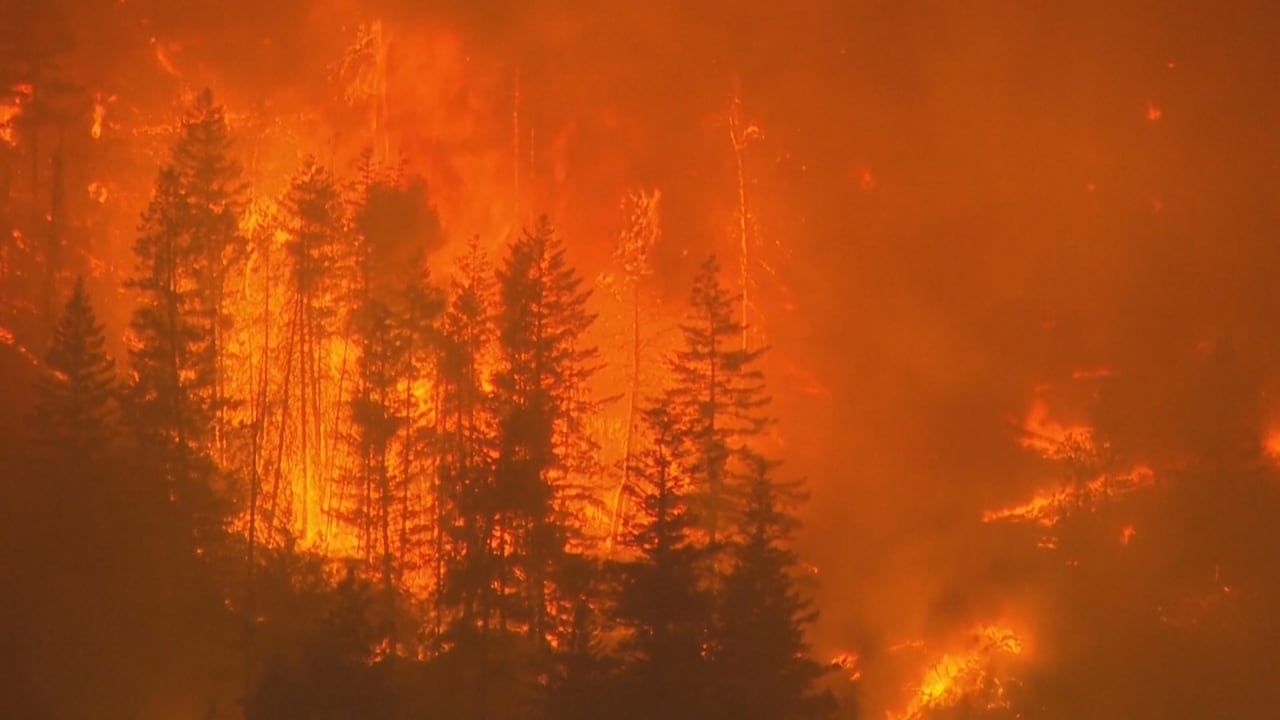
As Canada confronts one of its most devastating wildfire seasons on record, with millions of hectares reduced to ash and entire communities forced to flee, a second, more insidious crisis is raging across the digital landscape. The acrid smoke that has blanketed cities from Vancouver to Toronto is mirrored by a toxic cloud of misinformation and disinformation that is spreading at breakneck speed through social media platforms, private messaging apps, and fringe websites. In a comprehensive investigation aired on CBC’s The National, journalist Ashley Fraser has peeled back the layers of this digital wildfire, revealing a complex ecosystem where artificial intelligence, long-dormant conspiracy theories, and cynical profiteering converge to create a perfect storm of deception. The report, which comes as emergency crews battle blazes in British Columbia, Alberta, the Northwest Territories, and Quebec, underscores a troubling reality: the battle against the flames is now inextricably linked to the battle against falsehoods. While firefighters deploy water bombers and ground crews, a parallel army of digital saboteurs is working to undermine public trust, sow confusion, and divert critical resources away from life-saving operations. The stakes could not be higher, as misinformation has the potential to cause residents to ignore evacuation orders, flee into danger, or harass innocent individuals falsely accused of arson. This investigation serves as a stark warning that in the age of climate change, the information ecosystem is as volatile and combustible as the forests themselves.
Paragraph 2: The Anatomy of Arson Accusations and False Narratives
The misinformation surrounding the Canadian wildfires is not a monolithic entity but rather a hydra-headed beast, with each head spewing a different venomous narrative. The most pervasive and damaging falsehoods revolve around the origins of the fires, with social media awash in baseless claims of deliberate arson orchestrated by shadowy actors. During the record-breaking 2023 fire season, which saw over 18 million hectares burn—an area larger than Nova Scotia—viral posts falsely accused Ukrainian immigrants of setting fires to destabilize the country, a narrative that was quickly debunked by law enforcement but continued to circulate for weeks. Similarly, environmental activists have been targeted, with claims that they ignited blazes to draw attention to climate change, while other posts have absurdly suggested that government agents are using “space lasers” or weather manipulation technology to deliberately torch rural communities to clear land for development or to force Indigenous peoples off their ancestral territories. These theories find fertile ground in local Facebook groups, Nextdoor forums, and encrypted Telegram channels, where anxious citizens, desperate for answers in the face of terrifying and seemingly inexplicable disasters, share unverified screenshots, blurry videos, and emotionally charged testimonials. The CBC investigation highlighted how these false accusations are not merely harmless chatter; they actively hamper firefighting efforts by prompting authorities to waste precious time and resources investigating baseless leads, and they incite real-world harassment against innocent individuals who are publicly named and shamed. In one documented case, a British Columbia man was forced to flee his own community after being falsely accused of arson based on a manipulated photograph, illustrating the tangible, life-altering consequences of digital deception.
Paragraph 3: The AI Amplification Engine and the Liar’s Dividend
The advent of generative artificial intelligence has supercharged the disinformation campaign, adding a layer of sophistication and realism that makes it nearly impossible for the average citizen to discern fact from fiction. Fraser’s report showcased a disturbing array of AI-generated content that has gone viral during recent fire seasons, including hyper-realistic images of burning city skylines that are actually composites of unrelated fires from California, Australia, or even stock footage from decades past. More alarming are the deepfake videos, which use sophisticated machine learning algorithms to superimpose the faces and voices of provincial premiers, federal ministers, and emergency officials onto fabricated statements. One particularly insidious deepfake circulated during the evacuation of Yellowknife, showing a fake version of the Northwest Territories Premier urging residents to ignore official evacuation orders—a direct and potentially deadly threat to public safety. The speed at which AI can produce and disseminate this content is staggering; a single prompt on tools like Midjourney or DALL-E can generate dozens of convincing images in seconds, which are then shared across multiple platforms before fact-checkers can even begin their work. Furthermore, the “liar’s dividend” is in full effect—when real, verified footage of a fire is released by official sources, conspiracy theorists immediately dismiss it as AI-generated, creating a pervasive atmosphere of doubt that undermines the credibility of legitimate news outlets and government agencies. This erosion of trust is the ultimate goal of many bad actors, as it allows them to control the narrative and present their own fabricated versions of events as the “real truth” that the mainstream media is supposedly hiding.
Paragraph 4: The Resurgence of Conspiracy Theories in a Climate of Fear
Underpinning much of this digital detritus are deeply entrenched conspiracy theories that have found a new, fertile ground in the context of wildfires. The report traced the lineage of these theories, noting how classic tropes about government overreach, globalist plots, and elite manipulation have been repurposed for the fire crisis. The “15-minute cities” conspiracy, which falsely claims that urban planning initiatives are designed to trap citizens in controlled zones, has been twisted to suggest that evacuation orders are a pretext for locking people into government-controlled internment camps. Similarly, the “Great Reset” theory, popularized during the COVID-19 pandemic, has been revived to frame the fires as a deliberate act of “eco-fascism” aimed at depopulating rural areas and forcing survivors into urban centers. These theories resonate particularly strongly in rural and remote communities, where historical distrust of federal and provincial governments is high, and where the immediate impact of the fires is most devastating. The psychological appeal is clear: a complex, terrifying, and seemingly random natural disaster becomes a comprehensible, malicious plot, offering a false sense of control and a clear villain to blame. Fraser’s investigation also highlighted how these conspiracy narratives are being weaponized against Indigenous communities, with false claims that First Nations are setting fires to claim insurance money or to block resource development—a particularly insidious form of racism that has led to threats and violence against Indigenous leaders. The report emphasizes that these theories are not new, but the wildfire context has given them a renewed urgency and a wider audience, as climate anxiety and economic uncertainty create a fertile psychological landscape for scapegoating.
Paragraph 5: The Profiteers of Panic and the Economics of Deception
Perhaps the most cynical aspect of this infodemic is the financial incentive driving its spread. Fraser’s investigation revealed a lucrative ecosystem where misinformation is a commodity, bought and sold for clicks, ad revenue, and political capital. Content creators and influencers are leveraging the fires to generate massive engagement, which translates directly into advertising dollars. Clickbait headlines about “secret government plans” or “hidden causes of the fires” drive millions of clicks, filling the pockets of those who peddle fear. The report identified a surge in opportunistic scams, including fake GoFundMe pages for victims, fraudulent donation drives, and the sale of dubious “fire-proof” survival gear, water filters, and unregulated supplements that claim to protect against smoke inhalation. More insidiously, fringe political groups and conspiracy influencers are using the fires to fundraise for their causes, framing the disaster as proof of their anti-government narratives and soliciting donations to “expose the truth.” This financial motive creates a perverse feedback loop: the more devastating the fires, the more money these actors make, giving them a direct incentive to amplify panic, spread false information, and even downplay the effectiveness of official relief efforts. The investigation also noted the potential involvement of foreign state actors, particularly Russian and Chinese bot networks, which have been documented amplifying divisive content related to Canadian wildfires in an effort to destabilize Western democracies and undermine public confidence in government institutions. These coordinated campaigns use automated accounts to boost the reach of conspiracy theories, making them appear more popular and credible than they actually are, and further muddying the waters for ordinary citizens trying to find reliable information.
Paragraph 6: The Fight for Truth and the Path Forward
The consequences of this digital wildfire are severe and far-reaching, demanding an urgent and coordinated response. Emergency management officials have reported that misinformation has led to unnecessary panic, causing residents to flee in unsafe directions or ignore legitimate evacuation orders because they believe them to be fake. It also strains the mental health of first responders, who must constantly battle not only the physical fires but also the torrent of online abuse and false accusations. While platforms like Meta, X (formerly Twitter), and TikTok have pledged to crack down on harmful content, the sheer volume and speed of AI-generated material often outpaces their moderation efforts, and their algorithms continue to prioritize engagement over accuracy. The CBC report concludes with a call to action for media literacy and critical thinking, urging the public to verify information through official channels like provincial emergency alerts, local news outlets, and trusted government websites, and to be wary of emotionally charged posts that lack verifiable evidence. It also calls for stronger regulatory frameworks, such as Canada’s proposed Online News Act and Online Harms Act, to hold platforms accountable for the spread of dangerous content. As climate change continues to intensify fire seasons, the battle against misinformation is no longer a secondary concern—it is a critical component of public safety, requiring a coordinated effort from governments, tech companies, journalists, and citizens to ensure that the truth can outrun the flames of deception. The fight for the future of Canada’s forests is also a fight for the integrity of its information ecosystem, and the outcome of this dual battle will determine not only who survives the fires, but what kind of society emerges from the ashes.