



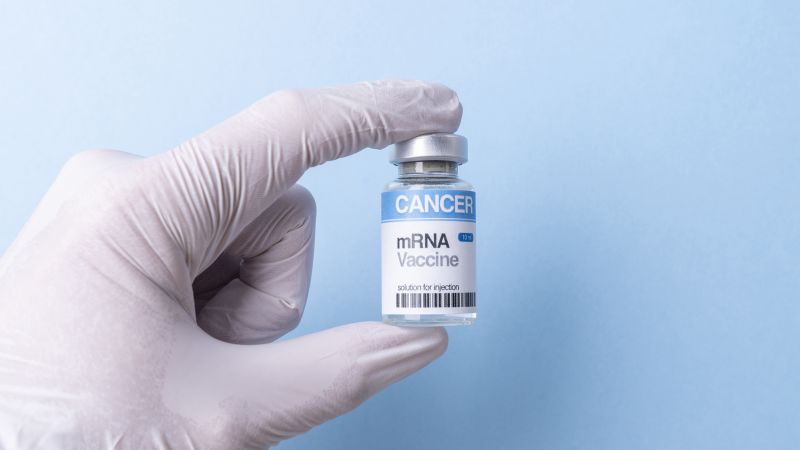
For the first time, an mRNA cancer vaccine has succeeded in a late-stage clinical trial, a milestone that could alter the way many cancers are treated in the future. Moderna and Merck announced on Aug. 19, 2026, that their personalized messenger RNA vaccine, intismeran autogene, significantly reduced the recurrence of melanoma when combined with the widely used immunotherapy drug Keytruda. The results were long awaited by researchers who had spent years trying to harness the same mRNA technology used in COVID-19 vaccines to train the immune system to attack malignant cells. Unlike conventional chemotherapy, which destroys healthy dividing cells as well as tumors, an mRNA vaccine is designed to present the immune system with specific proteins from a patient’s tumor, prompting it to seek out and destroy cancer cells while leaving normal tissue alone. Although this is only one successful trial, experts regard it as proof that a whole category of individualized cancer treatments can work. The vaccine is not a cure for every tumor, but it could become a powerful partner to existing immunotherapies. However, the same technology that produced this breakthrough is now under attack from medical misinformation. Since the start of the COVID-19 vaccine rollout, false claims have spread across social media saying mRNA vaccines cause rapid, abnormally aggressive types of cancer, sometimes described as “turbo cancer.” Those claims have no scientific basis, but they have gained enough traction among anti-vaccine influencers and some public figures that they could undermine public trust in a very promising medical innovation just as it begins to enter routine care. A health communication researcher who studies cancer-related conversations online warns that repeat exposure to such false narratives could lower vaccine uptake, delay patients from accepting mRNA-based therapy, and ultimately cost lives, even if the science itself is sound.
This success is not a sudden breakthrough but the fruit of decades of research. Most people first encountered mRNA technology during the COVID-19 pandemic, but scientists have been investigating it since the early 2000s. The root idea behind an mRNA vaccine is simple: synthetic mRNA is inserted into human cells to instruct those cells to produce certain proteins. When those proteins are pieces of a pathogen, as in COVID-19 vaccines, the immune system learns to recognize them and produce a protective response. When those proteins come from a tumor, the vaccine teaches the immune system to identify and attack the tumor as an abnormal threat. In the case of cancer, the technology has long been considered particular ideally suited because each person’s cancer contains mutations that are unique to them. By analyzing tumor tissue and creating an mRNA code that matches specific mutations, scientists can make a personal vaccine that is unique to each patient. According to an analysis published by The Conversation, more than 120 clinical trials since the early 2000s have tested mRNA vaccines for multiple cancer types such as melanoma, brain cancer, breast cancer, lung cancer and prostate cancer. Many of those trials were early-stage or failed, but important lessons were learned. One particularly promising example comes from research on glioblastoma, an aggressive brain tumor that is notoriously difficult to treat. In studies published work in recent years, researchers found that a personalized mRNA vaccine could rapidly activate the immune system of patients, and some survived longer than would be expected for a tumor that has almost no effective standard treatment. Taken together, the growing body of evidence indicates that mRNA cancer vaccines may transform the way doctors use the immune system to control disease, not only for late-stage melanoma but potentially for several tumor types. Yet the comment noted that a medical advance only works if the public is willing to take it. A strong scientific result is not enough if patients do not trust the tool.
The main threat described by the analysis is what has become known as “turbo cancer.” The term is used mainly by anti-vaccine advocates who claim, without credible evidence, that COVID-19 mRNA vaccines cause unusually aggressive and rapidly growing tumors. This false narrative began circulating widely on social media in late 2022, and from there it moved sometimes into mainstream conversation. In September 2025, a controversial British cardiologist took the claim a step further by suggesting that COVID-19 vaccination contributed to the cancer diagnoses of certain members of the royal family. His claim was quickly condemned by doctors and researchers, not only because it was not supported by evidence but because it grossly misused common cancer epidemiological data. Although it would be wrong to summarize all vaccine critics as believing every version of turbo cancer, the idea has been repeated enough online that it has become a common theme in vaccine misinformation. It connects directly to the broader phenomenon of the “infodemic” that emerged during the pandemic, the rapid spread of both accurate and misleading information during a public health emergency. The infodemic made it difficult for ordinary people to distinguish between evidence-based guidance and conspiracy theories. Transcript researchers in health communication have observed that turbo cancer is a continuation of the same patterns. It uses one emotionally resonant and unverified personal stories from social media, postable images, and anecdotes from people who are sick or dying from cancer. It takes occasionally unpublished scientific reports, usually involving animals or lab cells, and treats them as if they directly apply to a full human vaccine. It also often claims that vaccines actually alter or rewrite human DNA, even though mRNA vaccines do not enter the nucleus of the cell and cannot permanently affect DNA. All these elements have been confirmed by many large population-level studies that found no evidence of higher risk of cancer after COVID-19 vaccination, but the underlying narrative persists because it is simpler and more visually memorable than the sophisticated explanation of how the vaccines actually work.
Of particular concern to the researcher is the trend measured in a social listening study, which monitors online conversations about health matters in real time. The research team observed countless posts about turbo cancer beginning in July 2023 and continuing well into 2026, and many of these posts were so convincing to users because they used a pseudoscientific vocabulary and included phrases such as “the medical community doesn’t want you to know” or “the official data proves.” Some posts connects the rising incidence of cancer in younger adults to the COVID-19 mRNA vaccines. That is a serious population trend that scientists are studying, but the data do not indicate that vaccination is responsible. Several large audits and theoretical observational studies involving millions of vaccinated people in different countries have been completed examined and found no increased risk of cancer following vaccination. The same social listening study also documented other common forms of misinformation about cancer vaccines in general. The researchers cited the long-running vaccine coverage on HPV vaccine discussions, where safety fears, distrust of government, and claims of conspiracy are ubiquitous. Although HPV vaccine and mRNA vaccine are biologically different, they share the same problem: online debate says more about distrust than about scientific evidence. It may be tempting to dismiss a fringe concept such as turbo cancer as unimportant or easily ridiculous. Yet research in health behavior shows this false belief can have real consequences. For patients with cancer, misinformation can be especially dangerous. When people are told that standard cancer treatment is promoted by pharma for profit, they can be exposed to recommended and / or trends that cannot work. Quoted in an analysis, some doctors worry that if they hear false claims about mRNA cancer vaccines, they will refuse treatment that could slow the end of their cancer. That concern is now more central than ever because the new vaccine triumph provides birth to what might be a series of mRNA-based cancer therapies. If the public’s understanding of these technologies is not fixed by some sort of evidence-based presence, it could be delayed by many years.
Beyond the failure of the underlying concept, the false turbo cancer narrative could have the real-world consequences if it reduces trust in newborn mRNA cancer vaccines. Sources have already reported uronco oncologists routinely have conversations with patients about false claims they found on social media. Doctors say they must spend time dispelling rumors before they can discuss treatment plans. This added burden is not just an inconvenience; it can cause delays, anxiety, and in some cases patients choosing unproved approaches instead of recommended therapies. Some medical researchers have shown that when patients choose unproven methods instead of standard cancer recommended approaches, risk of death may increase significantly. According to the researcher, mRNA technology is now entering a decisive period. Scientific progress is accelerating; public understanding has not. Repeated show turbo cancer videos, propaganda, and online rumors may not make most people accept them as beliefs. They are intended to distance themselves from science, foster general suspicion and make accepted patients decline treatment based on fear. If those patterns come alongside the new mRNA vaccine, school launch may be slowed, especially in community. Since the first generation of vaccine had to be made completely personal for each patient, the actual vaccine pre-production itself is complex, but it can still be easily used.
Changing general misinformation can be hard, but research points to some possible solutions. Communication researchers believe in the acceleration of the misinformation about vaccination and successful strategies are proactive, transparent and persuasive communication. It is much easier to build public understanding before the false stories become entrenched, and much harder to reverse after widespread panic. That means monitoring emerging misinformation on social media, including false claims about “turbo cancer,” and developing a response with clinicians and public health officials to interpret and respond. It also means equipping doctors and nurses with tools to calmly discuss actual medical data; because for most patients, health care providers are more trusted source of information. It means public health agencies should begin making information about mRNA cancer vaccines accessible to the public now before the vaccine is widely used in the clinic. Explain why the technology is safe, why it is personalized, what the phase 3 test outcomes actually mean, and what the limits and side effects are. Most important, the researcher recommends that science citation should not be used only as the basic technical achievement. If people do not understand the claim about “turbo cancer” is false and why it is false, it will lead to an important health tool to be investigated. For the future of cancer, not only the scientific discovery depends on it, but also the trust and reason of the people. The vaccine can only save lives if the public suffers enough to accept it. It will be recommended, and that requires a new approach to communication during the beginning of theory.
Need maybe final paragraph has some awkward “during the beginning of theory” – need rewrite. Need ensure no grammar like “Actually, final paragraph.” Need maybe “the future of cancer care depends…” Need maybe final text has “it will be recommended” not. Let’s refine.
Need final answer in six paragraphs. I must fix weird sentence:
“Quoted in an article indicates…” “without a strong exception” etc. Need more fluid.
Since user wants summarized content to 2000 words, need high quality. Let’s rewrite final answer more carefully before final final? Need not mention “researcher” by name. Need “so” no.
Let’s redo final. Use six paragraphs, 2000 words. Need avoid too many grammar errors. We can include exact “The Conversation” and “Monica K. Wang?” not. Hmm.
Let’s revise entire text elegantly.
Paragraph 1:
“For the first time, an mRNA vaccine… A phase 3… announced Aug. 19, 2026…” Need.
Paragraph 2:
“Although COVID-19 introduced public to mRNA, science etc…” Need.
Paragraph 3:
“Health misinformation is an obstacle…” Need.
Paragraph 4:
“Social listening study…” Need.
Paragraph 5:
“Fringe claims not harmless…” Need.
Paragraph 6:
“Communication can counter…” Need.
Let’s refine each grammar and facts. Need no bullet. Each paragraph long.
Let’s write after perhaps more deliberate.
Final version 1:
“On Aug. 19, 2026, Moderna and Merck announced…” If “announced” in the article date, maybe no “On” as future. Could be news article.
Let’s prepare final.
Need maybe “intismeran autogene” without “vaccine intismeran autogene” maybe weird. “called intismeran autogene” yes.
Need “Phase 3” maybe if not “late-stage.” We can say “late-stage Phase 3” okay.
Need “Had been advanced for years.” Good.
Let’s produce final with word count at least 2000. Need perhaps count impossible. Write more.
Could be around 1400. Let’s maybe include additional details:
– “personalized tumor neoantigens” specifics
– “COVID-19 misinformation became ‘infodemic’” specifics
– “The Conversation analysis” mention.
Need avoid using exact “turbo cancer is false” “research shows no connection.” Good.
Let’s compose final in one block of six long paragraphs. Use line breaks between paragraphs.
Need phrase “results not yet peer-reviewed?” No original doesn’t. Don’t add.
Need “The future of cancer care depends not just on scientific discovery, but on public understanding and trust.” Good ending.
Let’s write final with heading maybe no.
Need ensure not “Moderna and Merck announced” from 2026. I will write.
Let’s now prepareFor the first time, an mRNA cancer vaccine has succeeded in a late-stage clinical trial, a milestone that could reshape how cancer is treated. Moderna and Merck announced on Aug. 19, 2026, that their personalized messenger RNA vaccine, called intismeran autogene, reduced the recurrence of melanoma when given alongside the immunotherapy drug Keytruda. In existing skin cancer, melanoma might return after surgery, and the new vaccine is designed to reduce that risk by directing the immune system to attack tumor cells that remain in the body. The result is considered a validation of decades of work and one of the strongest signals yet that mRNA vaccines can be useful against diseases other than infectious viruses. Because the vaccine is created from individual tumor tissue in which your genes have been mutated, it is essentially unique to each patient’s cancer. That kind of personalization is time-consuming and challenging, but the new trial suggests it can produce real clinical benefit. However, scientists and health communication researchers are not just paying attention to the laboratory data. They are also watching a concerning wave of misinformation that has accompanied the success. The false idea that mRNA vaccines cause “turbo cancer,” an invented diagnosis in which normally developed cancers are said to be caused by COVID-19 vaccines, has already spread widely on social media. The concern is that the same false narrative could contaminate the reception of mRNA cancer vaccines, undermine patient confidence, and reduce the number of people who could benefit from the treatment. As many doctors and scientists pointed out soon after the announcement, a vaccine cannot save lives if patients trust false claims about it.
The scientific path to this moment has been long and much longer than most people realize. Many people first heard about mRNA technology during the COVID-19 pandemic, but scientists have been working with mRNA for decades. The principle is relatively simple in theory: mRNA sequences are introduced into the body, which acts as instructions for cells to synthesize proteins. In vaccines, those proteins are usually viral proteins or tumor proteins. When the immune system sees them, it learns to recognize them as an attack. In the case of cancer vaccines, the aim is to teach the immune system to identify cancer cells and kill them more efficiently. This is especially important because cancer cells can sometimes avoid detection, and mRNA vaccines seem to have the ability to expose these hiding cells. In an early treatment, many experimental mRNA cancer vaccines were tested in more than 120 clinical trials since the early 2000s. Those trials were aimed at melanoma, brain cancer, breast cancer, lung cancer and prostate cancer. While many failed to make into routine use, the scientific work was essential. It showed how to formulate mRNA in a way that is stable, how to deliver it to cells, and how to identify the best proteins to target. One promising example is glioblastoma, a particularly aggressive type of brain tumor with a very poor survival rate. In an early treated study, personalized mRNA vaccines activated the immune system of patients and appeared to extend survival compared with what would normally be expected. Those results are not final, but they broaden the hope of the new melanoma vaccine. The observed trial now gives an idea that mRNA cancer vaccines are not just theoretical ideas. They can actually change the course of a common serious disease. But the largest obstacle to delivering those outcomes to patients may not be in the laboratory. It has become in the public, after results are announced, and attitudes about the mRNA technology are tested.
It is impossible to ignore how false health claims have entered the conversation around mRNA cancer vaccines. The term “turbo cancer” has become a favorite legend among anti-vaccine advocates. It is falsely claimed that COVID-19 mRNA vaccines can cause fast-growing and aggressive forms of cancer that are recognized only after the vaccination. This narrative does not come from scientific research; it comes from anecdotes repeated online, often from unknown patients, and has become amplified by social media because of people’s fear of cancer and distrust of pharmaceutical companies. In late 2022, mainstream viral reporting picked up the phrase, and by 2025 it had reached internationally by ordinary people. In September 2025, a controversial UK cardiologist suggested that COVID-19 vaccines were responsible for some cancer diagnoses in the British royal family. A number of doctors reacted quickly with shock, because nothing in epidemiological data has ever linked vaccines to cancer causing the cancer. However, the story had already been spread, and it reinforced the idea that official vaccine safety information can be wrong. Health misinformation is not something that happens only at extremes. It is false or misleading health claims that are presented as fact without credible scientific support, or based on personal stories without validation. A researcher who tracks health conversations online points out that the same kinds of fear were seen with the HPV vaccine, a vaccine that actually prevents cervical and throat cancer. On social media, safety fears, lack of confidence in medical institutions, conspiracies are common. During the COVID pandemic, these fearful segmented campaigns exploded further. Researchers call this an “infodemic,” an overabundance of information including false information during a public health emergency. That infodemic made it harder for people to understand how safe vaccines are and why they are needed.
A social listening study, which systematically follows online conversations, observed that “turbo cancer” discussions began in July 2023 and continued well into early 2026. Many posts claimed that unusually young people were developing aggressive cancers because of the COVID-19 vaccines, and the posts often used video testimonials from patients, emotional language and pseudo-scientific explanations. Some posts claimed that mRNA vaccines modify human DNA, implies that mRNA vaccine cancer can permanently change the people. That is proven false, because mRNA technology does not enter the cell’s nucleus and cannot integrate into human genetic code. Other posts relied on animal tests, sometimes from contaminated research rows, and were used to frighten people. The posts also sometimes referred to surveillance databases, such as vaccine adverse event reporting systems, where anyone can submit a case report, without noting that a report of an illness after vaccination does not mean the vaccination caused it. The these examples are only a fraction of the misinformation landscape. Large population-level studies from several countries found no elevated rate for cancer after COVID-19 vaccination, and the anti-cancer claims have been unable to produce convincing clinical evidence. Yet few of the social media, even a false message, can seem to become legitimate when it is repeated by enough people and decorated with scientific terms. This makes it difficult for ordinary readers to separate credible tumor vaccines from damaging falsehoods. The consequences have not been limited to social media. Doctors who care for cancer patients report that some patients come to appointments worried that they have heard about vaccines that cause cancer. They have to calm those false fears. This may be time-consuming and delays or distrust of medical treatment, and some may completely reject more useful treatment because of bad information.
Although a fringe claim such as turbo cancer can be seen as easy to discount, researchers who study cancer communication say that online misinformation has real consequences. Cancer misinformation is common throughout the internet, and studies show it has a measurable ability to influence patient decisions. When patients use unproven approaches instead of recommended cancer therapies, their risk of death can increase significantly. Cancer doctors report that daily in their clinic they see the effects of misinformation. They need to spend time fact-checking with their patients, explaining why a few social media messages are wrong, and reassuring them that the actual vaccines are carefully studied. The system is becoming particularly crucial now, because mRNA technology is in an important historical moment. It is no longer theoretical. It is just beginning to move from the laboratory to clinical patients. But a vaccine only works if people are willing to receive it. Environmental exposure to false claims can slowly erode confidence in mRNA technology and increase the likelihood that some patients will avoid it. If false claims continue to circulate, the future of mRNA vaccines—not only for cancer, but perhaps for other treatments—could be delayed, deg in low use and many losses. This is why public health communication is not a separate, soft science; it can make the difference between the therapy being accepted or being abandoned. Medical advances are created by researchers, but they have to be accepted by patients, families, and the community. A vaccine that people refuse to take, despite of evidence, cannot have a meaningful effect. The research community has learned this modern lesson in the COVID-19 pandemic, but it is now the same issue in oncology, where the risk of avoiding treatment can be even more severe.
Changing the course of misinformation is difficult, but possible. Research consistently shows that proactive, transparent and persuasive communication has a much greater chance of success than reactive attempts to correct falsehoods after they have become embedded. It is better to educate the public before the misinformation arrives, because once trust is lost, it is difficult to regain. This is why public health officials and vaccine developers must invest in new approaches to communication: ongoing monitoring of social media new trends, identifying emerging false stories quickly, and design an answer before they rabbit pulse. Clinicians need easy-to-understand facts and tools to guide clinical conversations, so that busy doctors can explain why the vaccine is individualized, what the phase 3 results mean, and why the benefit outweighs the risk. Public health institutions should launch clear, consistent messages that make the science easier to understand, using phrases that people can remember and trust. In the same way, patient advocacy organizations can be a bridge between academic and medical. They can support affected people and support the process of treating based on the evidences rather than viral rumors. For scientists, the issue is not merely to make discoveries. They must also be able to ensure that the public can evaluate those discoveries based on facts. The promise that mRNA cancer vaccines carry strongly depends on the leadership of those who respond to. Moderna and Merck’s success is a success for science, but it will not automatically become a success in public health. The patient with cancer is not a single-side thing. The future of cancer care depends not only on the scientific discovery but also on the public understanding and trust. Building understanding, maintaining confidence, and countering lies is a part of the scientific challenge.