


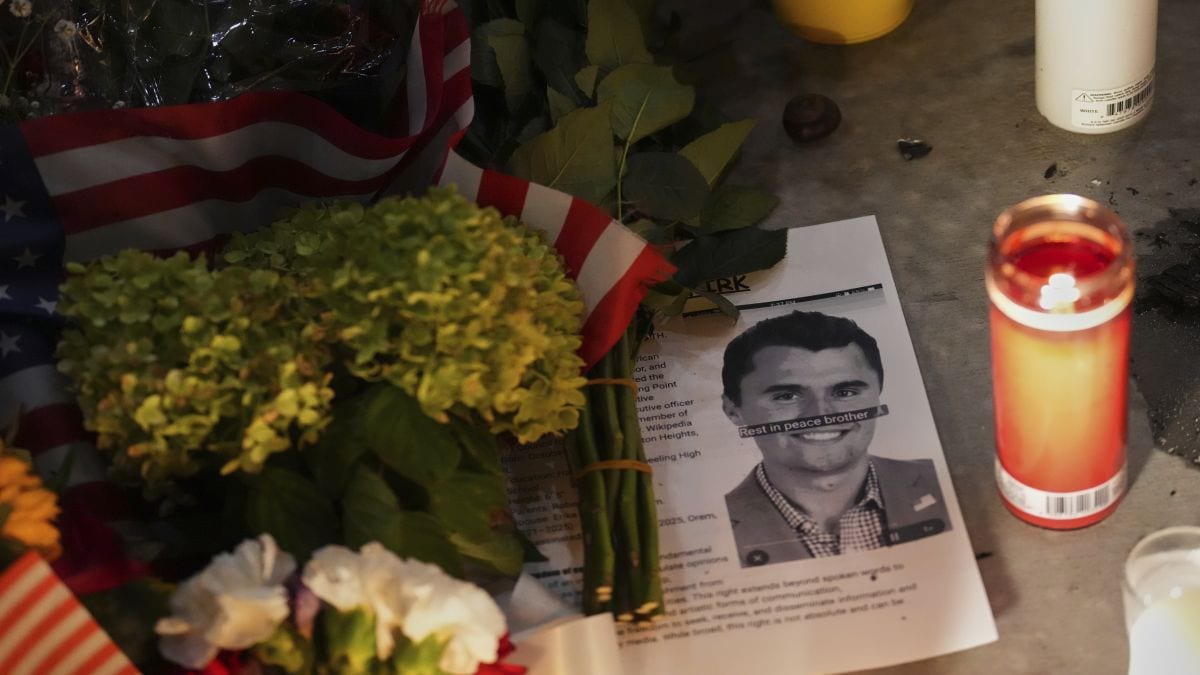
The Assassination of Charlie Kirk: A Descent into Misinformation and Conspiracy
The tragic death of Charlie Kirk, the prominent right-wing activist and close confidante of former President Donald Trump, has been rapidly overshadowed by a torrent of misinformation, conspiracy theories, and outright falsehoods. In the chaotic aftermath of the shooting, social media became a breeding ground for speculation and conjecture, demonstrating the platform’s vulnerability to manipulation and the rapid spread of inaccurate information. As authorities struggled to piece together the facts and pursue the perpetrator, the online world became a maze of conflicting narratives, hindering the pursuit of truth and sowing further discord.
From the outset, theories surrounding the assassination proliferated. One prominent narrative focused on the supposed hand signals made by Kirk’s security detail moments before the shooting. Videos circulating online showed security personnel adjusting their positions and making gestures, leading some to believe they were complicit in the attack. These claims, however, were swiftly debunked by security experts who viewed the actions as standard security protocol. Despite the refutation, the theory continues to circulate, fueled by a distrust of official narratives and a predisposition to believe in conspiracies.
Another set of theories attempted to link Kirk’s death to historical political assassinations, invoking comparisons to the killing of President John F. Kennedy and implicating a shadowy “deep state.” Such claims draw on a pre-existing belief in a clandestine network of powerful individuals controlling global events, a narrative particularly appealing to those distrustful of established institutions. These claims also echo allegations of other concealed operations, including 9/11 and various military interventions, further blurring the lines between documented events and speculative interpretations.
Adding another layer to the conspiracy landscape are accusations targeting Israel and the Mossad. Fuelled by Kirk’s previous remarks about the Israeli intelligence agency’s alleged involvement in the Jeffrey Epstein case, as well as unfounded claims that Israeli officials had threatened Kirk, online commentators quickly implicated Jewish individuals and Israel in the assassination. Such accusations tap into long-standing anti-Semitic tropes and feed into a broader narrative of global Jewish conspiracies.
Conversely, another strand of online discourse rejected the reality of Kirk’s death altogether, claiming the entire event was staged. These hoax theories centered on a dark mark on Kirk’s chest, which was misinterpreted as a squib, a device used in filmmaking to simulate gunshot wounds. This theory further fueled the existing debate surrounding misinformation and provided additional fodder for online speculation. Similarly, the changing position of Kirk’s ring in different images was cited as proof of digital manipulation and evidence of a fabricated narrative. These theories highlight the susceptibility of visual media to misinterpretation and the ease with which fabricated narratives can gain traction in the digital age.
The spread of misinformation was not limited to online conspiracy theorists. Even Utah Governor Spencer Cox publicly addressed the rampant disinformation surrounding the assassination, urging the public to exercise caution and rely on credible sources for updates. This highlights the pervasive nature of the false information and the challenge of containing its spread even within official channels. Exacerbating the problem, AI chatbots, often relied upon for factual information, also provided inaccurate and misleading responses, further contributing to the online confusion and demonstrating the limitations of these technologies in the face of rapidly unfolding events.
The misinformation surrounding Kirk’s death extended to the misidentification of suspects. Several innocent individuals were falsely linked to the shooting, their images and personal information circulated online with accusations of their involvement. These cases exemplify the real-world harm caused by the unchecked spread of false information, impacting the lives and reputations of those caught in the crossfire. The ease with which individuals can be falsely accused and publicly shamed in the digital age underscores the need for critical thinking and responsible online behaviour. The Kirk assassination serves as a chilling reminder of the dangers of misinformation in the digital era. The rapid spread of conspiracy theories, false accusations, and manipulated media not only obscures the truth but also fosters distrust, division, and potentially real-world harm. As we navigate an increasingly complex information landscape, the need for critical thinking, media literacy, and responsible online engagement becomes ever more crucial.