


The Intertwined Dynamics of Infectious Diseases and Misinformation in the Digital Age
The spread of infectious diseases has always been intertwined with social and behavioral factors. However, the advent of the digital age, particularly the rise of social media, has introduced a new layer of complexity to this dynamic. The rapid and widespread dissemination of information, both accurate and inaccurate, significantly influences public health outcomes, impacting disease transmission, vaccination uptake, and adherence to public health measures. This article explores the interplay between infectious disease dynamics and the spread of misinformation, highlighting the critical role of social and behavioral sciences in understanding and mitigating the challenges posed by this "infodemic."
Early research recognized the impact of social factors on epidemiology, with studies demonstrating the influence of risk perception on disease spread during outbreaks like the 2009 H1N1 pandemic. Today, the proliferation of misinformation online, amplified by social media algorithms and malicious actors, poses a significant threat to public health. Studies have shown a clear link between exposure to misinformation and vaccine hesitancy, impacting vaccination rates for diseases like COVID-19. This hesitancy, fueled by false narratives and conspiracy theories, can undermine public trust in scientific consensus and public health recommendations, hindering efforts to control outbreaks.
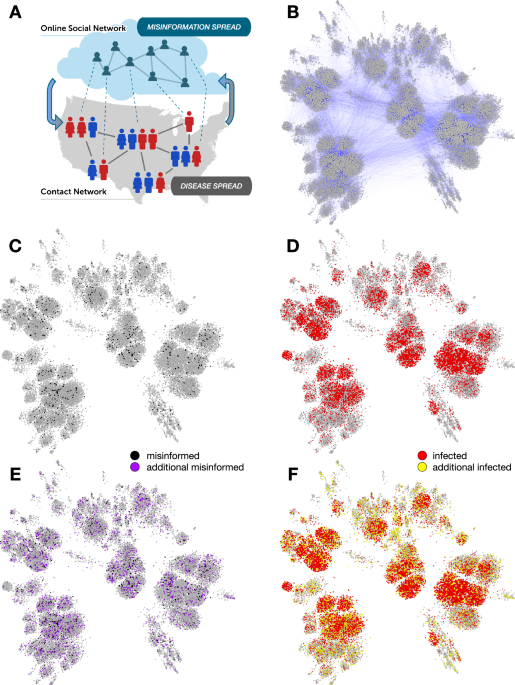
The mechanics of misinformation spread mirror, in many ways, the dynamics of infectious disease transmission. Social networks, both online and offline, serve as conduits for the dissemination of both viruses and false information. Just as individuals can become infected through contact with others, they can also be exposed to and influenced by misinformation shared within their social circles. Factors like network structure, individual susceptibility, and the persuasive power of the message itself contribute to the spread and acceptance of misinformation.
The consequences of misinformation extend beyond vaccine hesitancy. Misinformation can also lead to the adoption of risky behaviors, such as rejecting mask mandates or social distancing guidelines, thereby facilitating disease transmission. Furthermore, the constant bombardment of conflicting information can erode public trust in institutions and experts, creating confusion and hindering effective communication during health crises. This erosion of trust can have long-lasting effects on public health, making it more difficult to address future outbreaks and implement necessary interventions.
Researchers are employing various approaches to combat the spread of health misinformation. These include developing computational models to simulate the spread of misinformation, identifying and debunking false narratives, and promoting media literacy to empower individuals to critically evaluate information they encounter online. Fact-checking initiatives, public awareness campaigns, and collaborations between social media platforms and public health organizations are also crucial in mitigating the negative impact of misinformation.
Addressing the challenge of misinformation requires a multi-faceted approach that integrates insights from various disciplines, including epidemiology, social psychology, communication, and computer science. Strengthening public health communication, fostering critical thinking skills, and promoting accurate information are essential steps in building resilience against the "infodemic." Recognizing the interplay between infectious disease dynamics and misinformation is critical for developing effective strategies to protect public health in the digital age. Continued research and collaborative efforts are needed to understand the evolving nature of online misinformation and its impact on public health, ultimately ensuring that accurate information reaches those who need it most. Further investigation into the psychological factors that make individuals susceptible to misinformation is also crucial, as is the development of targeted interventions to counter the spread of false narratives. Ultimately, a comprehensive strategy that incorporates social and behavioral insights is essential to navigate the complex landscape of infectious diseases in the age of misinformation.