


From Violence to Disinformation: How Organized Crime is Shaping Mexico’s Media Landscape
The global information ecosystem is confronting a crisis of legitimacy unlike anything seen in the modern era, and journalists find themselves at an unprecedented crossroads. The proliferation of fake news and the rapid advancement of artificial intelligence have fundamentally altered the relationship between information, power and truth. Trust in factual reporting has declined sharply across societies, while fabricated stories have become readily available weapons in political and social disputes. Simultaneously, artificial intelligence now possesses the capacity to generate images, voices, audio recordings and texts capable of convincingly depicting events that never occurred—blurring the line between reality and fabrication to an extent that was previously unimaginable. For criminal organizations, the convergence of these technological capabilities with deep institutional distrust has opened new avenues of influence that extend far beyond traditional tactics of intimidation and violence. The utility of these strategies lies not merely in deceiving the public, but in fundamentally altering the information environment in which journalists, authorities and ordinary citizens operate. When a convincing video can be produced of an attack that never happened, or a fabricated audio recording can place words in the mouth of a public figure, the very foundations of verifiable truth become unstable, and those who control the flow of falsehoods gain leverage over public perception and behavior.
The widespread circulation of false information serves multiple strategic purposes for criminal groups, making disinformation a potent tool for managing uncertainty and projecting power. First, it amplifies perceptions of their strength, making them appear more formidable and omnipresent than they truly are—a crucial advantage for organizations whose authority depends on the belief that they are unstoppable. Second, it obscures the ground truth in a given territory, making it significantly more difficult for journalists, investigators and authorities to establish what is actually happening in areas under criminal influence. Third, it overwhelms information channels, flooding the zone with noise and forcing journalists, authorities and the public to react to events that never took place, thereby wasting scarce resources and diverting attention from genuine threats. Disinformation thus functions as a form of uncertainty control: the harder it becomes to distinguish between a genuine threat and a fabricated one, the greater the capacity of criminal actors—or those acting on their behalf—to condition behavior, install narratives and dispute the authority of journalistic and official sources. This is not merely a matter of public confusion or occasional error; it is a deliberate strategy that weaponizes doubt itself, turning the information ecosystem into a battlefield where the distinction between truth and falsehood becomes a weapon of power rather than a foundation of democratic discourse.
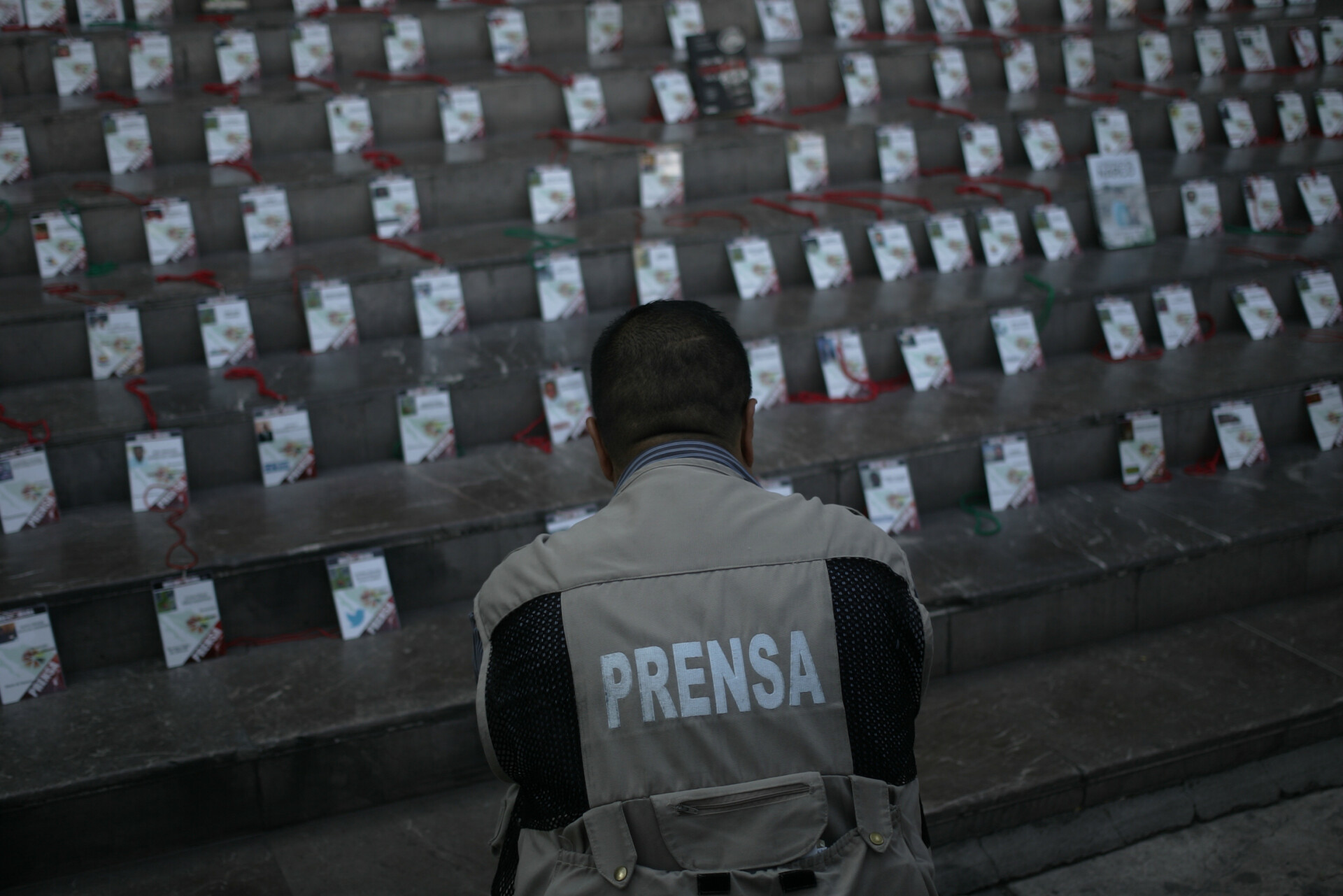
Nowhere are the consequences of this strategy more devastatingly evident than in Mexico, which has become one of the world’s deadliest countries for journalists. In 2026 alone, eight journalists have been murdered as of this writing, continuing a harrowing pattern of violence that has claimed the lives of more than 180 journalists since the year 2000—individuals killed specifically because of their professional work. The 2025 Global Organized Crime Index highlights how the infiltration of state structures by criminal groups, widespread impunity for crimes against the press, and attacks on journalists by both criminal organizations and state actors are fundamentally undermining the country’s resilience to organized crime. Yet this violence does not operate in isolation; it is embedded in a broader context of criminal dominance and institutional weakness. In regions where organized crime exercises varying degrees of territorial, economic and social control, the precarious state of many newsrooms, severe restrictions on access to information, and declining public trust all combine to weaken the ability of journalists and media outlets to document and investigate criminal activity. The problem, therefore, is not simply that journalists become victims of criminal violence, though that is certainly a catastrophic reality. Rather, a constellation of vulnerabilities enables criminal groups to restrict, condition or dispute the media’s capacity to report on them, creating a vicious cycle in which violence, impunity and disinformation reinforce one another and erode the very possibility of independent journalism.
This evolving dynamic represents a significant and troubling shift in how criminal organizations interact with the press, both in Mexico and around the world. Historically, intimidation was primarily aimed at preventing journalists from publishing information—a blunt instrument designed to silence specific voices, halt investigations and create a climate of fear around certain topics. Today, however, criminal actors can actively contest information already in circulation, discredit sources, amplify their own narratives and generate content that interferes with the ability of journalists and communities alike to determine what is really happening. This is a more sophisticated and insidious form of control, one that operates not only through the threat of physical violence but through the manipulation of the information environment itself. While this challenge is by no means unique to Mexico—it reflects a global crisis facing journalism in the age of digital media and artificial intelligence—the consequences in the Mexican context are particularly alarming, especially for those covering organized crime. Journalists in Mexico now operate in an environment where they must not only protect themselves from physical violence but also navigate a digital battlefield in which falsehoods can spread faster and further than verified reporting, and where their own credibility can be undermined by content they never produced and stories they never wrote.
This dynamic became strikingly evident in February 2026, following reports of the arrest and killing of Nemesio Oseguera, widely known as “El Mencho,” the leader of the Jalisco New Generation Cartel, one of Mexico’s most powerful and violent criminal organizations. Shortly after the news broke, videos and photographs generated using artificial intelligence—allegedly created by criminal groups—began circulating on social media platforms. Within hours, this content had gone viral, fueling chaos and uncertainty, sowing fear and effectively immobilizing entire communities across the region. The images purported to show dozens of burnt-out vehicles, destroyed shops and even Guadalajara International Airport under active attack by organized crime forces. Although the material was later proven to be fake, it was initially reported as genuine by a number of journalists and media outlets, both local and international, demonstrating the profound vulnerability of the media to sophisticated digital manipulation. The problem was not merely that some media organizations repeated false information, though that in itself is a serious failure. The circulation of this content created an environment in which it became genuinely difficult to distinguish reality from fabrication. It amplified perceptions of criminal groups’ ability to bring entire regions to a standstill, projected an image of omnipotence that serves the cartel’s interests, and diverted public attention towards events that never occurred. For journalists attempting to report on actual developments on the ground, this meant competing against a torrent of content spreading far more quickly than verified information could possibly travel, and devoting precious time and resources to debunking falsehoods rather than documenting the truth. Disinformation, in this way, not only shaped public perceptions; it fundamentally altered the conditions under which reporting on organized crime could take place, and demonstrated how criminal groups can leverage technology to control the narrative even in moments of apparent setback.
The El Mencho case illustrates a particularly significant dimension of the relationship between organized crime, technology and journalism: the ability to produce uncertainty can itself become a form of power. When communities can no longer distinguish with confidence between genuine and fabricated threats, when media organizations must devote scarce resources to verifying events that never happened, and when journalistic and official sources lose authority in the face of viral content, society’s collective capacity to understand and respond to events on the ground is dangerously weakened. The challenge, therefore, extends well beyond protecting those who investigate organized crime from physical violence, urgent as that task remains. It also requires recognizing how the deliberate production of uncertainty is emerging as a new form of criminal influence, one that operates in the digital realm but has profound consequences for physical safety, public trust and democratic governance. Understanding the criminal dynamics and political conditions underpinning a conflict is no longer sufficient for journalists, researchers and policymakers. Today, it is equally important to understand the information and digital ecosystem in which criminal groups operate, both to safeguard the integrity of the information we consume and to protect those who report it. This is the mission driving the Global Initiative Against Transnational Organized Crime’s Resilience Fund, which is engaging its 2026 Fellows to better understand what it means to be a journalist in Mexico today—exploring how journalists navigate violence, disinformation and new forms of digital manipulation, as well as the strategies they develop to verify information, protect their investigations and maintain their ability to report from territories traversed by criminal structures. Journalists covering organized crime who wish to share their experiences are encouraged to contact the fund at fellowship@globalinitiative.net, contributing to a growing effort to understand and counter the forces that threaten the future of journalism in Mexico and beyond.