



The Misinformation Dilemma: How Falsehoods Exploit Trust and Why Fact-Checking is Failing
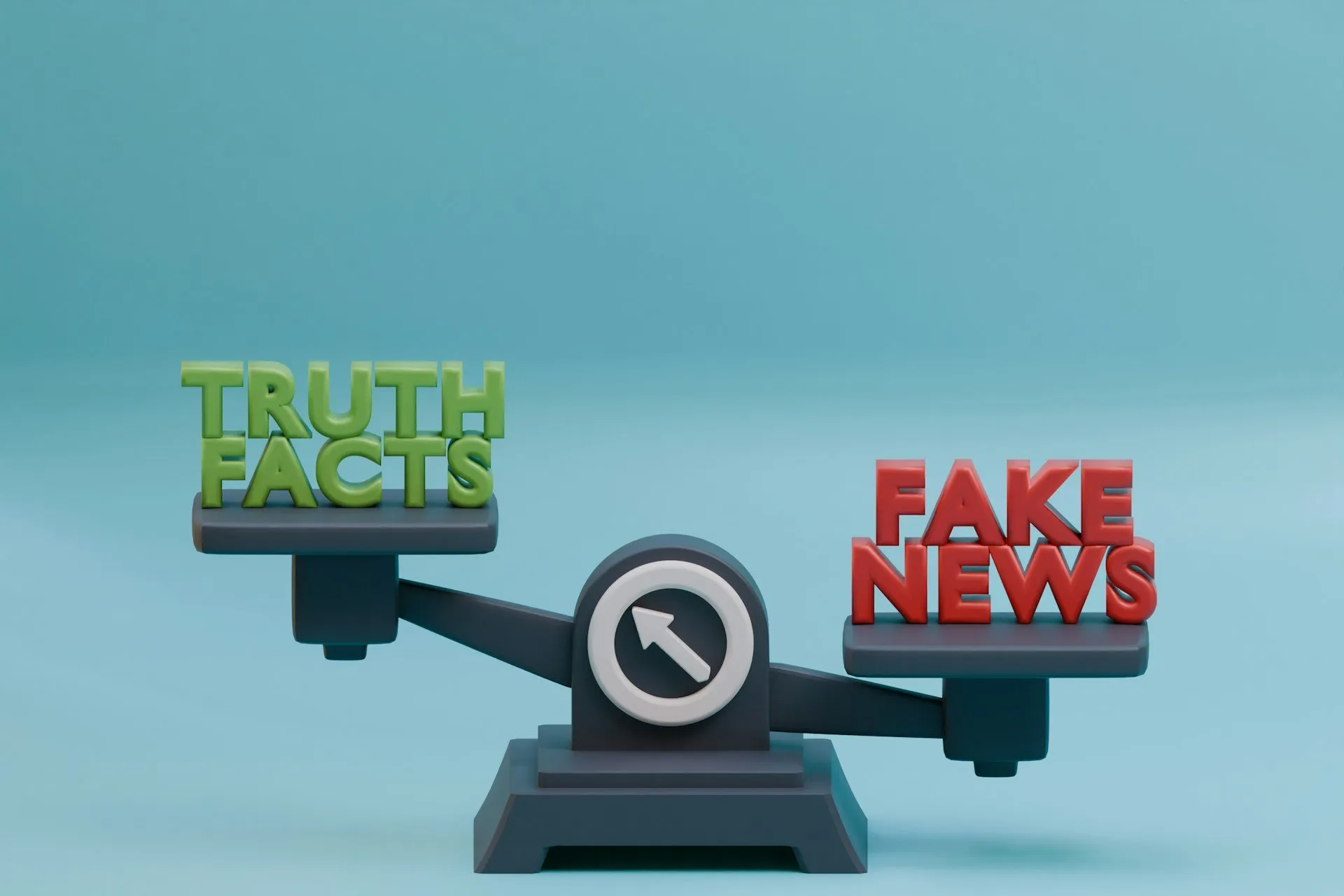
The past two decades have witnessed an unprecedented explosion in the volume of news and information available to the public. This democratization of knowledge, however, has come with a dark side: a parallel surge in inaccurate, misleading, and deliberately malicious content. While the quantity of information has grown exponentially, our collective ability to discern truth from falsehood has not kept pace. A recent study conducted by the market research firm Focaldata has delved into this complex issue, examining the rise of misinformation, its various forms, its real-world effects, and the specific demographics most vulnerable to its influence. The findings paint a troubling picture of a media landscape where trust is fractured, objectivity is questioned, and the very concept of truth is under siege.
The study’s first major area of focus is the mainstreaming of the terms “misinformation” and “disinformation” in public and political discourse. Beginning with accusations of Russian interference in the UK’s Brexit referendum, the terms have rapidly woven into the fabric of political conversation, evolving to encompass health misinformation during the COVID-19 pandemic, and then spreading to topics like the war in Ukraine, migration, and most recently, the potential dangers of artificial intelligence (AI). Initially, there was hope that the development of fact-checking tools and entire fact-checking industries would provide a powerful countermeasure. These tools were envisioned as impartial arbiters of truth capable of guiding the public through the growing fog of falsehoods. The Focaldata report, however, paints a distinctly pessimistic picture. It suggests that these fact-checking initiatives have largely failed in their mission. They have not become the trusted referees many hoped they would be; instead, they have been pulled into the partisan fray, perceived by many not as neutral authorities but as participants in a contested and politicized war over reality.
Central to this failure is a profound collapse of public trust in fact-checking institutions. The Focaldata data reveals stark findings. When survey respondents were asked about the neutrality of fact-checkers, only a quarter believed they were impartial. A significantly higher share of respondents stated that they thought fact-checkers were either inherently biased or serving the interests of power. This lack of trust is further underscored by the statistic showing that 43% agreed with the sentiment that the “fact checking” label is increasingly used to silence opinions that powerful forces do not want discussed. In comparison, only 41% believed that the label is mostly used in good faith. Perhaps most damningly, when respondents were asked to rate their trust in various organisations and institutions, fact-checking sites came in at the bottom of the list, alongside the news media, the government, and big tech companies. This positioning signals a profound erosion of the credibility of an entire industry whose very entire purpose was to be the last bastion of truth and objectivity.
The Focaldata study further sought to deconstruct exactly what kind of misinformation is most damaging. To do this, the researchers identified nine different categories of claims, ranging from neutral facts and reasonable generalizations to outright lies and conspiracy theories. They presented their surveyed respondents with 46 distinct claims and asked them to identify which ones they considered to be misinformation. The most surprising and significant finding of this part of the study was that the most damaging content was not the obviously false, outlandish lies. Instead, it was a more subtle and insidious form of claim, which started from a small kernel of factual truth but then extrapolated that fact to an unsupported, often sensational or absurd conclusion. For instance, a claim could start with the true fact that the UK is sending humanitarian aid to a developing nation, then would be stretched to an entirely unproven conclusion that the reason for this is to support that country’s space program. This strategy of providing a true groundwork is crucial because it leverages the credibility of a known fact to cloak and legitimize the false conclusion that follows. This connection to true circumstance acts as a powerful catalyst for the spreading of the entire claim, as it provides it with an air of plausibility that pure fabrications often lack.
This phenomenon of truth compounded with falsehood is so particularly dangerous because it seamlessly taps into the public’s existing frustrations, fears, or their perceived sense of a wider injustice. The misinformation that gains the most traction is that which appears to resonate with the public’s “common sense” understanding of the world. It feels intuitive and aligns with previously held beliefs about the status of the country or the actions of a particular group. People consciously or subconsciously let their guard down when a claim feels consistent with their worldview; they are less likely to scrutinize it. For instance, if a person already feels that government is corrupt and foreign aid is a wanton waste of funds, they are primed to accept a claim about misuse of aid money, even if the specifics are entirely fabricated. Debunking these types of claims is incredibly difficult because it requires not only convincing a person that the specific false premise is wrong, but also addressing the underlying beliefs and the legitimate feelings of injustice that make them susceptible in the first place to believing this and misinformation.
The report also sought to determine if certain segments of the population are more or less vulnerable to misinformation and identify the common traits or predictors of vulnerability. To achieve this, the study looked at a range of demographic factors including political affiliation, the media sources they use, their performance on a simple logic test, and their score on a “moral foundations” scale, which gauges intuitive ethical priorities. The results found that the people who demonstrated the best ability to spot misinformation were those who actively sought out news from traditional, mainstream journalistic sources: directly from print, broadcast and radio. This was also correlated with those who performed best on the simple logic test. This suggests that a healthy diet and the regular consumption of journalistically rigorous, well-edited news helps build a mental framework that is more resistant to dubious claims. The clearest and most prominent pattern of vulnerability, however, emerged along the moral foundations scale. The individuals most susceptible to misinformation were those who rated highly in the categories of ‘loyalty’ and ‘purity’ indicating a high value conception of patriotism, a strong attachment to their own in-group, a desire for group affiliation, as well as a striving to live in an very elevated and disciplined way, avoiding activities seen as ‘immoral’. This shows that misinformation often makes its most effective inroads not by appealing to logic, but by appealing to a person’s values and sense of identity.
The report doesn’t just focus on the past; it also turns its attention to the imminent future, questioning what the rise of AI could mean for the landscape of information, misinformation, deception, and trust. The study posits that AI could potentially shape the future of the battlefield in two profoundly different directions. On the more optimistic side, there is the potential for AI-powered search and fact-checking tools to help people navigate the sea of information more effectively, offering instant analysis of claims and reducing political polarisation by providing a common ground of factual reference. But on the other hand, the possible and more likely outcome is that deepfakes and synthetic media severely will heighten the challenge of processing reality, making it increasingly difficult to trust any source, any article, any video, or audio recording. The research paper found more evidence supporting this pessimistic scenario. They highlight that information consumers are busy people; they are usually not going to invest the time and effort needed to verify claims, especially those that that confirm their own broad world view. The constant barrage of information can lead them to defer to their existing biases, and AI’s capability to generate realistic misinformation en masse could overwhelm the defenses that had been in place against more simple fakes.
The broader takeaway from the study paints an even more systemic and pessimistic picture of the roots of the problem. Some political commentators, particularly from the populist right, have tactically sought to discredit the very notion of objective truth. Creating a situation where all claims are polluted by any person’s own bias or spin, where everyone possesses an agenda—including the institutions that claim to be fact-checkers—is a powerful political maneuver. If all truth is relative and everyone is thought to be lying, then the public has no rational basis to trust any source. In this epistemological vacuum, the only logical conclusion is to side with the information that aligns with their own common sense, intuitive understanding of the world, and their instincts. The Focaldata report directly reinforces this view. It confirms that misinformation is far less about isolated falsehoods and far more about the broader collapse of necessary institutional trust, the fragmentation of the global media environment, and the subtle, pernicious way in which a piece of truth can be bent, stretched, and repurposed into a persuasive falsehood. The implications for the future are dire. It required a multi-layered effort to rebuild public trust in institutions and media, a serious focus not just on flagging outright lies but on the more insidious claims built on a “kernel of truth,” and a necessary preparation for the coming era of synthetic media where it may be nearly impossible to believe our own eyes.