








Majority of Filipinos See Disinformation as a Big Problem — Pulse Asia Survey
A new survey by Pulse Asia has found that a decisive majority of Filipino adults regard disinformation, or the spread of false information, as a big problem, a result that highlights the scale of the challenge facing the country’s digital public square. The survey, conducted from June 28 to July 3 and July 6, involved 2,400 adult respondents. Seventy-two percent said that disinformation is a big problem, while only 4 percent said it is a small problem; the remaining 24 percent were undecided. The findings arrive amid growing debate about the role of social media in shaping public opinion, political choices, and even personal safety. In an age when almost anyone can publish, repost, or comment, the distinction between fact and falsehood has become harder to maintain. Information no longer competes solely on the basis of accuracy; it competes on the basis of emotion, speed, and social validation. Fake news can go viral in minutes, while corrections and fact-checks are often ignored or dismissed. The survey suggests that Filipinos are aware of this danger, but being aware of a problem is not the same as being immunized against it. The same digital habits that make disinformation powerful—rapid sharing, reliance on familiar sources, trust in influential personalities, and confirmation bias—remain widespread. As a result, the survey has become an important reference point in the ongoing conversation about media literacy, journalism standards, and the need for a more conscious approach to online information.
Perhaps the most troubling finding in the survey is the prevalence of social proof as a marker of truth. Forty-one percent of Filipino internet users said they would likely believe information shared online if many people shared it. This is a powerful reminder that virality is often mistaken for credibility. In a crowded online space, seeing a piece of news repeated across multiple accounts can make it feel true, even when every repetition is based on the same unverified origin. The survey also asked respondents what they consider when deciding whether to believe online information. Thirty-five percent said they look at the source of the news, which suggests that a recognizable media outlet or institutional name carries weight. However, source recognition can be gamed. Fake news sites often mimic the names and visual design of legitimate news organizations, while false information can be attached to screenshots or watermarks that give an illusion of authenticity. Thirty-three percent rely on their personal beliefs about the issue. This is a double-edged sword: personal beliefs can help people reason about what is plausible, but they can also cause them to accept claims that align with their political views or prior assumptions without verification. Nine percent of respondents rely on the number of shares or likes, and the opinions of relatives or friends. Another 7 percent factor in the opinion of a trusted government personality, while 5 percent give weight to the opinion of a trusted private-sector personality. These figures underscore that information verification is not simply a cognitive exercise; it is deeply social. People trust their networks. They trust their leaders. They trust people who look and sound like them. This makes disinformation particularly effective when it arrives through personal messages, group chats, or content shared by a friend, because the messenger becomes an implicit guarantee of reliability. The implications are serious, especially in a country with high social media engagement and active online communities. Those who understand these psychological and social dynamics can exploit them deliberately, using coordinated sharing and influential figures to make false claims seem mainstream. The survey shows that a significant portion of the public is susceptible to these tactics.
The consequences of disinformation extend into every area of public life, and the survey’s findings have to be understood in that context. In politics, false information can distort public opinion, suppress or inflate voter turnout, and erode trust in elections and democratic institutions. It can turn democratic debate into a battleground of invented grievances and manufactured scandals. When citizens no longer agree on basic facts, the foundation of informed consent begins to crumble. In health, disinformation can be a matter of life or death. False medical advice can discourage people from seeking treatment, lead them to self-medicate, or persuade them to reject scientifically proven measures. The COVID-19 pandemic offered a global example of how quickly dangerous misinformation can travel alongside a real virus. In public safety, hoaxes and manipulated alerts can trigger panic, disrupt emergency response, and waste resources. The problem is amplified by social media algorithms, which are designed to maximize engagement rather than accuracy. These algorithms prioritize content that is likely to provoke strong reactions—anger, fear, amusement, outrage—because emotional responses drive clicks, shares, and time spent on a platform. False content often has an advantage in this competition because it does not respect facts or limits. It can promise miracle cures, claim hidden conspiracies, or offer oversimplified explanations for complex problems. The result is an information environment in which accuracy becomes secondary to virality. This creates echo chambers, where people are continuously exposed to content that confirms their beliefs and are insulated from content that challenges them. Over time, the habit of reacting emotionally to headlines and snippets replaces the habit of reading, questioning, and verifying. Disinformation thus weakens critical thinking itself. It rewards the quickest response, not the most thoughtful one. Fact-checking services and media watchdogs perform essential work, but they cannot keep up with the volume and speed of viral falsehoods. This is why the problem requires a broader, deeper response.
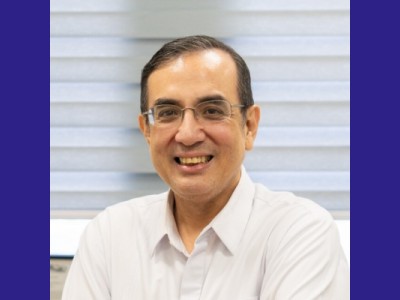
The importance of credible journalism was underscored by businessman Manuel V. Pangilinan, or MVP, in an interview with The Philippine Star. “If you are helping record history, then you must record the truth,” he said, adding that images can be altered, text can be revised, and misinformation can spread quickly. He emphasized that credible journalism continues to have an important role in this environment. His remarks are a reminder that journalism is more than a profession; it is a public good. Journalists are trained to verify facts, attribute claims, provide context, and correct mistakes. These methods are the opposite of the shortcuts used by disinformation campaigns. In a world where a manipulated image can go viral with captions that claim something entirely false, the journalist’s commitment to truth is a safeguard that cannot be taken for granted. At the same time, the survey’s findings highlight the challenges that even credible news organizations face. If a significant portion of the public relies on personal beliefs or popularity signals rather than on source quality, the best journalism in the world may not reach those who need it most. This is why media literacy and journalism credibility must go hand in hand. News organizations must continue to invest in transparency, accuracy, and independence, while also finding ways to engage audiences that have grown distrustful of traditional media. The rise of artificial intelligence makes this work even harder. Synthetic images, deepfake audio, and automated text can produce content that is almost impossible to distinguish from reality. Pangilinan’s warning about altered images and revised text is no longer a rhetorical warning; it is a description of everyday technology. In this environment, credible journalism must serve as a stable center amid the noise. It must be willing to say when something is unverified, to correct its own errors, and to explain the difference between news and opinion. That kind of discipline is essential if the public is to have any reliable means of navigating a digital landscape flooded with both deliberate falsehoods and unintended mistakes.
Because disinformation thrives on reflexive sharing and weak critical thinking, the solution must go beyond individual fact-checking. What is needed is a culture of pause, skepticism, and verification. Filipinos should develop a habit of asking “Is this true?” before passing along an alarming claim or an emotionally charged post. They should be willing to read beyond the headline, examine the underlying source, and compare the same story from multiple outlets. These habits may seem small, but they can have a cumulative effect. If enough people practice them, the incentive for disinformation creators will shrink, because their content will no longer spread with the same speed and reach. Media and information literacy is the key to building this culture. One notable initiative in this area is THINKaMuna Pilipinas, the media and information literacy advocacy of MediaQuest Holdings, Inc. THINKaMuna aims to equip Filipinos with the critical thinking skills needed to navigate the modern information environment: evaluating information, identifying credible sources, and engaging responsibly in digital spaces. The initiative is built on a simple but powerful insight: it is no longer enough for people to know how to use social media. They must understand how it works, why certain content appears in their feeds, and how to resist manipulation. Media literacy belongs in classrooms, but it should also be promoted in workplaces, community organizations, and government messaging. Social media users who are aware of algorithmic amplification are less likely to be surprised by everything they see. They are more likely to question whether a story became popular because it is true or because it is sensational. They are more likely to notice when a source lacks a track record of reliability. These skills are not innate; they have to be taught, practiced, and reinforced. The survey’s finding that many Filipinos rely on popularity cues, personal beliefs, and trusted figures is not a verdict on the intelligence of the public. It is a measure of the current gap in media literacy. That gap can be closed.
The responsibility for closing this gap is shared. Schools should integrate news literacy and digital literacy into the curriculum, teaching students how to distinguish fake news from real journalism, how to recognize bias and propaganda, and how to behave responsibly on social media. This should begin early and continue through higher education. Companies should also invest in training that helps employees identify disinformation and understand the dangers of spreading it. They can promote responsible online behavior among their workers and their customers. Government institutions, for their part, should strengthen the safeguards that protect the truth from being drowned out by noise. This may include supporting public media, funding media literacy campaigns, and ensuring that laws and regulations do not inadvertently suppress legitimate speech while trying to punish falsehood. Any policy must be carefully balanced to protect press freedom and free expression. The fight against disinformation is not a reason to silence criticism or to centralize control over information; it is a reason to encourage transparency, diversity, and accountability. The survey’s result—72 percent of Filipinos calling disinformation a big problem—should be a wake-up call to every sector of society. Yes, the battle is uphill. Disinformation campaigns are sophisticated, fast-moving, and often well-funded. But the solution is also clear: value accuracy over virality, truth over fiction, and evidence over emotion. This means cultivating a nation of critical thinkers, not just a nation of social media users. It means teaching people to ask questions before accepting answers, to seek out multiple sources before forming opinions, and to correct falsehoods calmly and respectfully when they encounter them. It also means supporting journalists who do the difficult work of recording history accurately. At the end of the original article, an editor’s note explained that the opinions expressed in the column were solely the author’s and did not reflect those of the Philippine News Agency or any other office under the Presidential Communications Office. That disclaimer, small as it may seem, is an example of the transparency that a healthy information ecosystem requires. In a world where anyone can claim anything online, the willingness to attach one’s name to a statement, and to be held accountable for it, has become a valuable form of trust. That is a standard worth defending.


