








Here is a comprehensive news article summarizing the content you provided.
Headline: Catholic Bishops’ Exclusion from GES Council: Unpacking the Facts Behind the Controversy
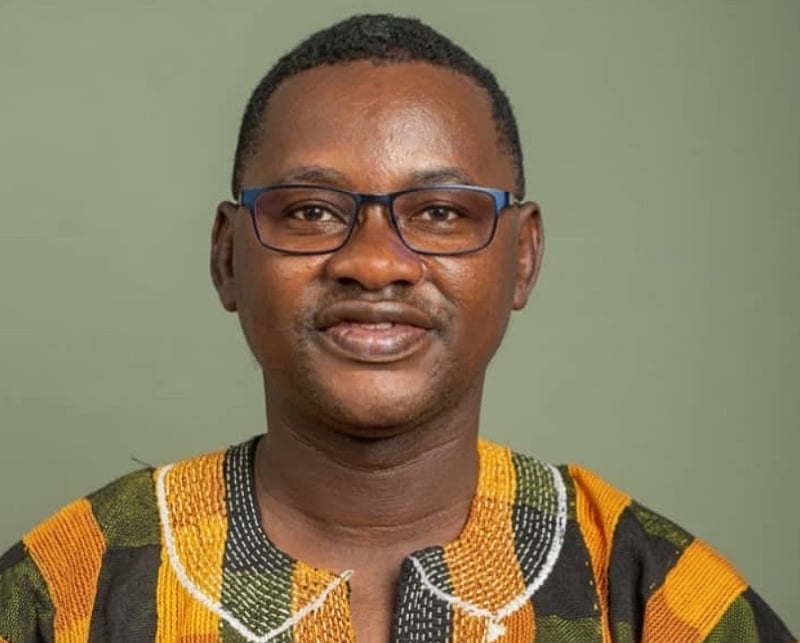
In recent weeks, a video featuring Most Rev. Matthew Gyamfi, the President of the Ghana Catholic Bishops’ Conference, has circulated widely, sparking significant debate and, at times, misinformation regarding the Catholic Church’s representation on the Ghana Education Service (GES) Council. The Bishop’s remarks, which raise legitimate and urgent concerns about the loss of a statutory seat on the council, have been misconstrued in some quarters as a politically motivated attack on the current administration. This has unfortunately led to a distortion of the facts, creating an unhelpful partisan narrative that overlooks the core issue: the need for the Ministry of Education to listen to and address these substantive constitutional and partnership concerns.
The contribution of the Catholic Mission to education in Ghana is both profound and historically significant, forming the bedrock of the nation’s educational system. Long before independence and continuing through the post-colonial era, the Catholic Church has been a primary purveyor of education across the country. The legacy of this commitment remains visible and impactful today, particularly in the Upper West Region, which is home to several of the nation’s most revered citadels of learning. Prominent institutions such as St. Francis of Assisi Girls’ Senior High School, St. Francis Minor Seminary, Nandom Senior High School, Queen of Peace Senior High School, and the McCoy College of Education stand as testaments to the Church’s enduring partnership. Beyond these, a vast network of basic schools serves as the primary source of formal education for thousands of children, making the Catholic Mission an indispensable partner and major stakeholder in the shaping of Ghana’s future. To disregard their voice in national educational policy is to sideline a partner of unparalleled importance.
It is critical to establish the timeline and context behind this development. The changes in question were not initiated by the current government under President John Dramani Mahama, and any assertion to the contrary is factually incorrect. The Education Act was revised between 2020 and 2022, with the passage of Act 1049, which altered the composition of the GES Council. The previous law had explicitly reserved representation for both the Ghana Catholic Bishops’ Conference and the Christian Council of Ghana. However, in May 2022, when a new GES Council was inaugurated under the administration of the New Patriotic Party (NPP), it did not include representatives from either of these bodies. This marked the first time since the inception of the council that these religious groups were excluded from its statutory membership.
The initial exclusion in May 2022 prompted an immediate and formal protest from the religious bodies. In a joint communiqué issued on May 25, 2022, the Catholic Bishops and the Christian Council publicly voiced their strong objection to the exclusion, highlighting its inconsistency with the long-standing partnership that has defined education in Ghana. Despite these protests and appeals, the then-government did not take steps to reverse the decision or amend the Act to reinstate the statutory slots. This unresolved issue persisted, placing the matter in a state of uncertainty that has now resurfaced as a point of national contention. The recent video of Archbishop Gyamfi is part of a continued, consistent effort to seek redress for a grievance that originated years prior to the current administration.
The most recent statement made by Archbishop Gyamfi, which was recently re-circulated, was part of these ongoing efforts. The video, which has been widely shared, captures him raising the matter before a parliamentary committee, specifically the Chieftaincy, Culture and Religious Affairs Committee, as recently as August 2026. This was a formal and proper channel for raising such a critical national concern. It is also important to clarify that this issue does not affect the Catholic Mission’s direct control over its own schools. The 1999 Partnership Agreement and subsequent Memoranda of Understanding remain in force, allowing the Church to manage its schools as it deems fit. The core of the grievance is the lack of a statutory seat on the council, which is the primary policy-making body, thereby excluding the Church from crucial national decision-making processes.
Therefore, the attempt by certain members of the NPP to leverage this issue for political point-scoring is deeply misleading. The facts clearly show that the removal of the statutory seats occurred under the NPP government, a claim that can be verified through official government records and the subsequent protests from the affected religious bodies. The current administration inherited this flawed legislation. While the need for a permanent and long-term solution is clear, the decision on how to resolve the issue now lies with the current government, which has been presented with an opportunity to demonstrate its commitment to stakeholder engagement and collaborative governance.
The reaction to the video, particularly the attempts to place blame on the current administration, serves as a distraction from the substantive issue at hand. Instead of engaging in partisan politics, the focus must remain on the legitimate request from the Catholic Bishops and the Christian Council to have their role in national education formally recognized and protected. Their inclusion on the GES Council is not a concession to a special interest group but an acknowledgment of their invaluable, historic, and ongoing contribution to the development and well-being of Ghana’s children. It is the hope of all who value this partnership that the Ministry of Education will approach this situation with the seriousness it deserves, taking concrete steps to resolve the matter amicably and correctly.


