


The Cerimedo Case: A Regional Political Storm Over Disinformation and Violence
A Crime That Transcends Borders
The early morning arrest of Fernando Cerimedo at Bolivia’s Viru Viru International Airport has transformed a criminal case into a continental political scandal, exposing the fragile intersection of digital manipulation, partisan media, and electoral politics across Latin America. The Argentine political strategist, who helped shape President Javier Milei’s successful 2023 communications campaign in Argentina and later advised Bolivian President Rodrigo Paz, was taken into custody hours after his former partner, lawyer and activist Nadia Beller, survived an armed attack outside a Santa Cruz hotel. Two men posing as food delivery workers allegedly fired multiple shots at Beller before stealing her belongings, an assault that Bolivian prosecutors have formally charged Cerimedo with orchestrating as attempted femicide. The case has now spiraled far beyond its criminal origins, drawing in heads of state, former presidents, business magnates, and the shadowy infrastructure of automated disinformation that increasingly defines political communication throughout the region.
The Legal Framework and Political Context
Bolivian prosecutors have announced they will seek 180 days of pretrial detention for Cerimedo, with departmental prosecutor Alberto Zeballos identifying him as the principal accused in the attack. Investigator Yolanda Aguilera stated that authorities have collected surveillance footage and additional evidence, while Cerimedo reportedly declined to testify during initial proceedings. The charge remains formally an allegation, pending judicial determination of whether sufficient evidence exists to justify continued custody. The legal distinction carries particular weight because the political dimension of the case has evolved rapidly, with accusations and counter-accusations flowing from across the hemisphere before courts have had the opportunity to examine evidence. Cerimedo’s career trajectory explains why his arrest has generated such intense interest: he founded La Derecha Diario in 2021, a right-wing digital publication that has positioned itself as a combatant in regional ideological battles, and has worked across multiple national campaigns, establishing himself as a figure whose activities regularly cross traditional boundaries between political consulting, activist journalism, and digital influence operations. His working relationship with Bolivian President Paz has been characterized by the government as campaign collaboration rather than formal state employment, a distinction that speaks to the increasingly diffuse nature of modern political power.
The Mexican Accusation and Digital Infrastructure
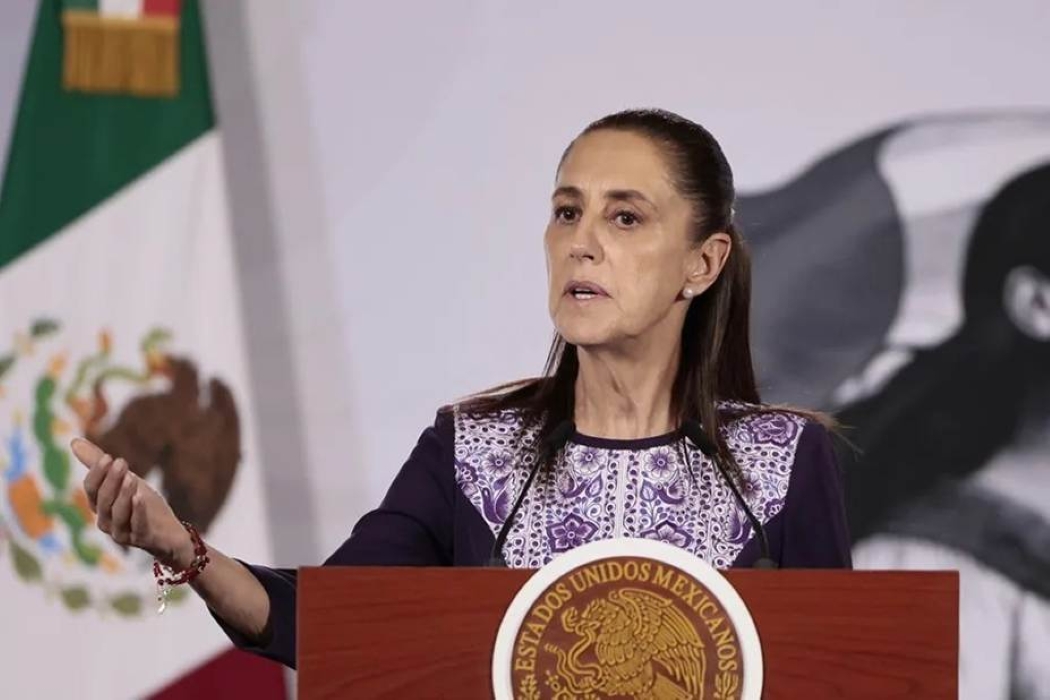
President Claudia Sheinbaum of Mexico has used the case to spotlight what she describes as a coordinated right-wing disinformation apparatus operating across Latin America with private financing. During her morning press conference, Sheinbaum accused La Derecha Diario of deploying “many robots, many bots” to amplify false content, creating manufactured consensus that pressures legitimate media and political institutions to respond to fabricated controversies. Her description outlines a systematic process whereby provocative claims are seeded online, then repeated by automated or paid accounts until they achieve apparent viral status, generating the illusion of spontaneous public sentiment that political opponents must address. This mechanism, she suggests, represents a fundamental transformation of how political influence operates in democracies where social media platforms reward engagement over accuracy and speed over deliberation. Sheinbaum also referenced statements by La Derecha Diario executive Javier Negre claiming that Mexican businessman Ricardo Salinas Pliego had hired him, and displayed a December 2025 photograph of Negre and Cerimedo posted with a provocative message directed at her administration. The Mexican president’s accusations, while politically motivated, highlight genuine concerns about the role of privately funded digital operations in shaping regional political discourse, even as they themselves become weapons in the broader propaganda war she describes.
Historical Grievances and Contemporary Allegations
Former Bolivian President Evo Morales has injected even more explosive language into the controversy, describing Cerimedo as “an agent of the empire” whose method involves manufacturing anger, hostility, and polarization throughout the continent. Morales has also repeated allegations, attributed to Beller, that Cerimedo maintained connections with the CIA, an accusation that carries profound historical resonance in Latin America despite lacking public evidentiary support. The invocation of intelligence agency involvement taps into deep regional memories of covert operations, coups, and foreign intervention that continue to shape political consciousness across the hemisphere. Morales’s characterization of Cerimedo as President Paz’s private adviser has been disputed by the Bolivian government, with presidential spokesman José Luis Gálvez clarifying that Cerimedo collaborated on campaigns and continued providing communications assistance without formally joining state institutions. This distinction between formal government positions and informal advisory relationships reflects the broader structural evolution of political power, where influence increasingly operates through networks, platforms, and relationships that remain deliberately outside official structures, ensuring deniability while preserving impact. Cerimedo’s additional appearance in Brazilian investigations into the January 8, 2023 attempted coup further complicates efforts to separate verified facts from accumulated allegations, as each national controversy adds layers to his public profile while obscuring rather than clarifying specific culpability.
Regional Vulnerabilities and Democratic Challenges
The Cerimedo case exposes fundamental vulnerabilities in Latin American democratic systems that have not yet adapted to the realities of transnational digital communication. Political consultants now operate across borders with greater speed and flexibility than the regulatory frameworks designed to ensure transparency in electoral processes. Partisan media outlets increasingly function as extensions of campaign operations while claiming the protections traditionally accorded to journalism. Automated bot networks can simulate popular sentiment so effectively that they influence legitimate media coverage and political responses, while governments attempting to combat manipulation often deploy accusations that serve their own political interests, creating a cycle of mutual delegitimization. The case also highlights the particular vulnerability of women in political spaces, where attacks on activists and lawyers engaged in public advocacy carry additional weight as attempts to silence voices through violence rather than argument. Beller has become an unwilling symbol in a regional ideological contest, her survival and testimony transformed into ammunition in disputes between presidents, former leaders, and media entrepreneurs who all claim to speak for broader constituencies. The commodification of her trauma for political purposes represents perhaps the most troubling dimension of the scandal, as the human cost of digital manipulation becomes visible in the figure of a woman who simply sought to live and work in a region increasingly defined by manufactured outrage.
Toward Accountability and Transparency
The path forward requires Bolivian courts to establish criminal responsibility for the attack based on evidence rather than political expediency, while Mexico’s government must substantiate its claims about coordinated disinformation with concrete documentation of funding sources and bot network operations. More fundamentally, Latin American democracies must confront the structural questions raised by the case: whether shadow campaign networks can continue shaping public life without disclosure requirements, whether platform companies will assume responsibility for automated manipulation of political discourse, and whether regional cooperation mechanisms can address transnational influence operations that no single nation can regulate effectively. The scandal that began with gunfire outside a Santa Cruz hotel has revealed uncomfortable truths about the state of democratic communication in countries where the infrastructure of public opinion has been captured by private interests operating across borders. The deeper story is about power that prefers not to leave fingerprints, about institutions struggling to maintain public trust in an information environment designed to erode it, and about citizens who must somehow distinguish authentic sentiment from manufactured outrage. Cerimedo’s arrest may resolve one criminal case, but the questions it raises about digital manipulation, political violence against women, and the integrity of democratic discourse will continue to demand answers long after this particular controversy fades from headlines.