


Fake News, Real Harm: How New Zealand Is Trying to Teach the Next Generation to Spot Misinformation
From wholesome-looking cat videos to sinisterly convincing footage of flooded streets, the internet is awash with fake content. Much of it is trivial or harmless, but when fabricated imagery attaches itself to real tragedies, the consequences can be deadly. The recent flash flooding in Nepal provided a stark example: AI-generated and otherwise false videos began circulating almost immediately, with some falsely claiming to show the causes of the disaster. This kind of visual misinformation is especially dangerous because it is so believable. It can stop people from finding official evacuation advice, or it can mislead rescuers about where to concentrate their search efforts. Conspiracy theories multiplied as viewers struggled to distinguish authentic footage from fabricated clips. New Zealand is not immune to the phenomenon. Earlier this year, an investigation by AAP Factcheck identified a bogus Facebook page claiming to be a New Zealand news outlet, sharing false AI-generated images of real events. Around the same time, an investigation by 1News found at least ten similar fake news pages circulating false New Zealand content. The problem became urgent enough that the National Emergency Management Agency publicly warned that false pictures of severe weather events were being shared online, including images related to the fatal slip on Mauao/Mount Maunganui. As generative AI tools become more accessible, the volume and realism of this content will only increase. The challenge for society is no longer simply to detect individual fakes, but to build a population resilient enough to navigate a media environment in which seeing is no longer believing.
According to University of Auckland education professor Stuart McNaughton, the key lies in teaching people how to assess information for truthfulness, a skill that can be learned like any other. McNaughton co-authored a major report on developing young people’s ability to spot misinformation. He argues that helping children deal with fake news requires two distinct skill areas. The first is media and information literacy. These are the skills of being critical, understanding how one is being manipulated, and judging whether what one is reading or watching is believable. In an age of generative AI and social media, these traditional critical-thinking skills need to be updated and explicitly taught. The second is empathy and communication, which McNaughton describes as “citizenship skills” for the internet. These are the proactive, pro-social, positive skills that allow people to interact online in constructive and fruitful ways: empathy, perspective-taking, consideration of others, and the capacity to put oneself in another person’s position. All of these, he insists, are teachable. Yet he expresses disappointment with the proposed curriculum for New Zealand schools. In the draft science curriculum currently out for consultation, the concept of being critical is mentioned only once. The primary school curriculum, he notes, contains no reference to critical skills or digital resilience, despite the fact that young children are quite capable of thinking critically. Education systems, he suggests, are failing to keep pace with the digital realities that children face from an increasingly early age.
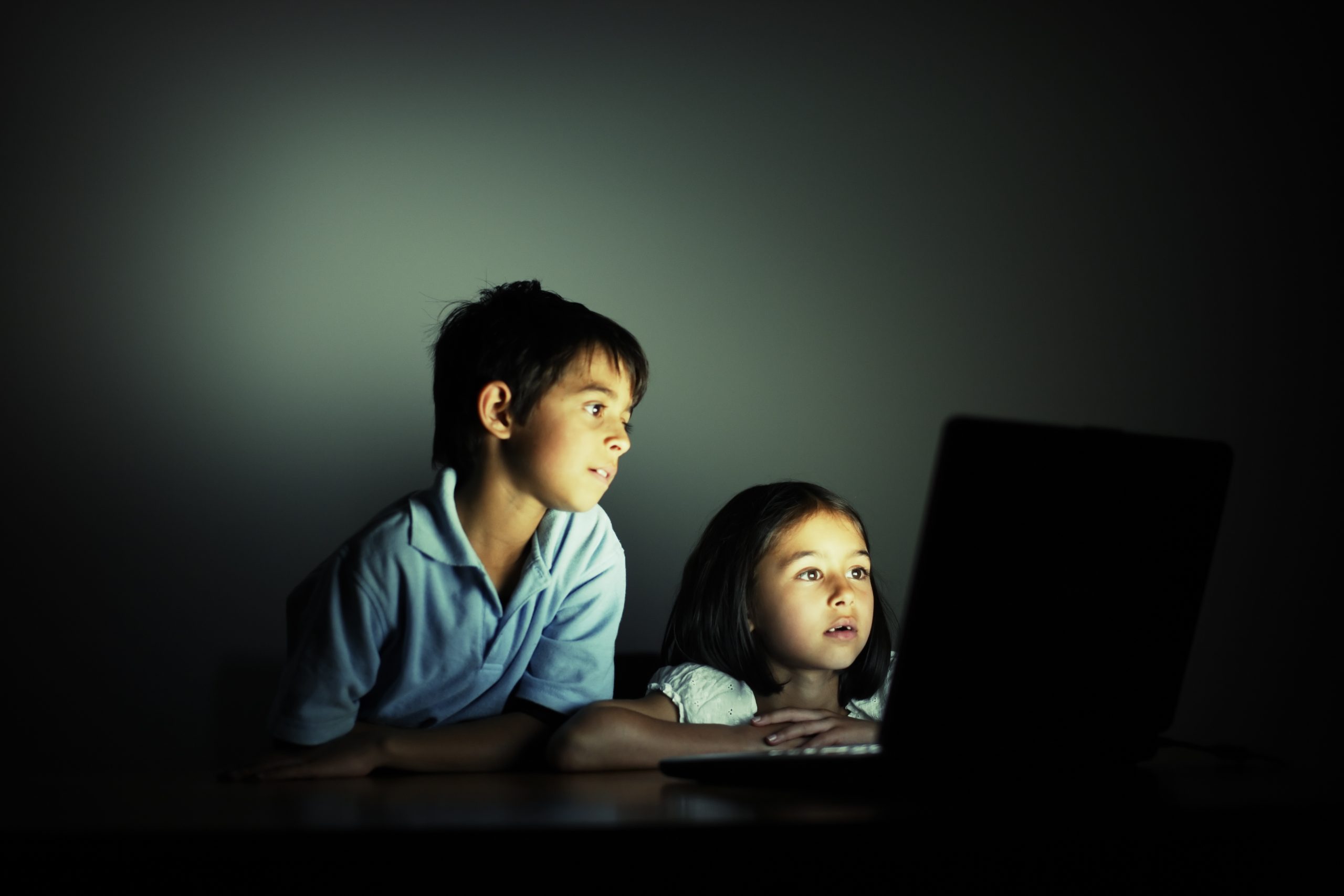
The value of teaching these skills extends far beyond the narrow goal of debunking fake news. McNaughton says he is appalled by the degree of hate and polarisation amplified through digital channels. To overcome that, he argues, society must build positive skills, and that requires a medium-to-long-term commitment from the education system. There are also pressing social reasons to act. New Zealand has one of the highest bullying rates in the OECD, and McNaughton estimates that probably one child in every classroom experiences near-daily or daily cyberbullying in some form. Social media, he explains, creates a distancing effect that weakens normal restraints on civility. There is a real me, a virtual me, a virtual you and a real you, and that distance makes it easier to say things online that people would never say face to face. Comment sections and social media platforms enable the dehumanisation of those we are talking to. But banning social media is, in McNaughton’s view, a very simplistic solution to a complex problem. Australia’s social media ban for children has not been effective, as kids continue to find ways to access platforms. Bans do not make the internet a safer place, and they do not equip children with the skills they will need when they eventually gain access. Rather than relying on prohibition, McNaughton argues that schools need to do a much better job of teaching these skills directly to children.
Practical methods for teaching misinformation awareness already exist, and some are surprisingly memorable. One famous example is Save the Pacific Northwest Tree Octopus, a website describing a fictional canopy-dwelling cephalopod at risk of extinction. The entire site is a hoax, but it has become a classic educational tool. Although the original website is no longer online, it has been archived by the Library of Congress, and teachers continue to use it. Professor Dame Juliet Gerrard, who served as New Zealand’s Prime Minister’s chief science adviser and led research on misinformation and young people, used the tree octopus lesson while in office. The approach begins with teachers introducing the concept of misinformation and lateral reading: if somebody tells you something, you have to go off and check your sources. Students are then assigned a project on the tree octopus. Some begin copying and pasting information from the website, while others search more widely and discover that the creature does not exist. Gerrard describes the “gradual ripple around the room” as students realise they have been duped. It seems almost cruel, she acknowledges, but it gives young people a visceral, experiential understanding that not everything on the internet is true. The lesson has lasting impact because students have invested real effort in the assignment. This kind of deep, active learning is far more effective than simply telling children to be skeptical.
Gerrard’s report on misinformation and young people goes beyond classroom tricks. It considers the social role of the clever hoax—the kind of joke designed not to deceive but to make people look at the world afresh. One example she highlights is Birds Aren’t Real, a satirical online movement that parodies conspiracy theories. The movement claims, with a straight face, that all birds in the United States have been replaced by extremely lifelike government surveillance drones. Its tagline is “If it flies, it spies.” Gerrard calls the satire brilliant and admits to owning the merchandise. But she recognises that satirical movements like Birds Aren’t Real can only do so much. The report she led calls for a national strategy against misinformation, one that recognises how false information seeps through every layer of society. The punchline, she says, is that New Zealand needs a big investment in community resilience and must really train its children. That means not only teaching media literacy in schools but also building a broader culture in which people understand how misinformation spreads and how to engage responsibly with information. It is a systemic problem requiring a systemic response. Individual fact-checkers, platform companies and news outlets all have a role, but the ultimate defence is an educated public that is able to question, verify and think critically before sharing.
Amid these concerns, there is a wider context. The world is facing unprecedented environmental challenges, and misinformation can undermine public understanding and action on issues such as climate change and disaster preparedness. The Planetary Solutions initiative, a collaboration between the Sustainability Hub at Waipapa Taumata Rau, University of Auckland, and Newsroom, explores these challenges and the practical ways people can be part of solutions. Ensuring that young people can tell truth from falsehood is itself a form of planetary protection: it enables informed communities to respond to emergencies, to hold power to account, and to make decisions based on evidence rather than manipulation. The work of McNaughton, Gerrard and others points in the same direction. The solution to misinformation is not to retreat from digital media or to despair at the sheer volume of fake content. It is to invest in education, from the earliest school years onward, that combines critical thinking with empathy. That means updating curricula, training teachers, and recognising that digital resilience is as foundational as reading and writing. It also means acknowledging that the internet does not have to be a space of hate and deception. With the right skills, people can engage online in ways that are truthful, kind and productive. The task is urgent, but the tools are known. What is needed now is the commitment to use them.