


Taiwan Faces Escalating Disinformation Campaign Fueled by Chinese AI, Warns National Security Bureau
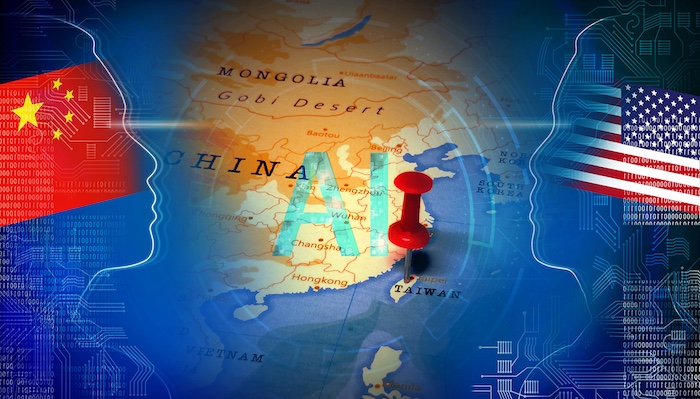
Taipei, Taiwan – Taiwan’s National Security Bureau has issued a stark warning about China’s increasing use of artificial intelligence to generate and disseminate disinformation aimed at undermining the island nation’s unity and stability. In a report submitted to Taiwan’s parliament, the bureau detailed a sophisticated and intensifying influence operation alongside ongoing military pressure and economic coercion from Beijing. This new phase of what Taiwanese officials term “cognitive warfare” leverages AI’s capabilities to manipulate public opinion and sow discord within Taiwanese society, posing a significant challenge to the island’s democratic values and national security.
The report reveals a dramatic increase in the volume of "controversial messages" circulating online, with over 500,000 identified in 2025 alone. These messages, often appearing on popular social media platforms like Facebook and TikTok, frequently spike around politically sensitive events. The bureau highlighted a surge in such activity following President Lai Ching-te’s recent comments on cross-strait relations and the announcement of new US investments by Taiwan Semiconductor Manufacturing Company (TSMC), a leading global chip manufacturer. The timing suggests a deliberate effort to exploit key moments and amplify existing tensions. The report explicitly links this surge to the Chinese Communist Party’s increasing reliance on AI tools for generating and disseminating these divisive messages.
The National Security Bureau’s findings shed light on China’s evolving tactics in its ongoing campaign to exert influence over Taiwan. While Beijing has long employed various forms of pressure, from diplomatic maneuvering to cyberattacks, the use of AI represents a significant escalation. By automating the creation and spread of disinformation, China can achieve greater reach and impact while potentially obscuring its involvement. This “cognitive warfare” strategy aims to shape public perception, erode trust in the government, and foster internal divisions within Taiwanese society, ultimately weakening the island’s resilience against potential future aggression.
This latest development adds another layer of complexity to the already fraught relationship between China and Taiwan. Beijing continues to assert its claim over the self-ruled democratic island and has never ruled out the use of force to achieve unification. Taiwan, on the other hand, remains steadfast in its commitment to self-determination, with President Lai emphasizing that only the Taiwanese people can decide their future. He has labeled China a "foreign hostile force," reflecting the growing concern over Beijing’s increasingly assertive posture.
The National Security Bureau report also highlights a surge in China’s “grey-zone” activities – tactics that stop short of open conflict but are designed to exert pressure and erode Taiwan’s sovereignty. These activities have included a sharp increase in Chinese coast guard incursions into Taiwanese waters, the increased use of surveillance balloons, and provocative live-fire military drills near the island. A recent round of such exercises drew condemnation from the United States and its allies, underscoring the international community’s concern over China’s escalating actions in the Taiwan Strait.
Taiwan’s leaders are now grappling with a multi-pronged challenge, facing not only the traditional threat of military force but also a sophisticated disinformation campaign fueled by cutting-edge AI technology. This combination of hard and soft power tactics poses a serious threat to Taiwan’s democracy, stability, and social cohesion. As tensions continue to rise, the international community will be closely watching developments in the region and seeking ways to support Taiwan’s defense against these escalating threats. The use of AI in disinformation campaigns represents a significant escalation in the ongoing tensions, highlighting the evolving nature of modern geopolitical conflict. The international implications of this new form of information warfare remain to be fully understood. Taiwan’s experience serves as a warning sign for other democracies facing similar challenges in the age of AI-powered influence operations.