


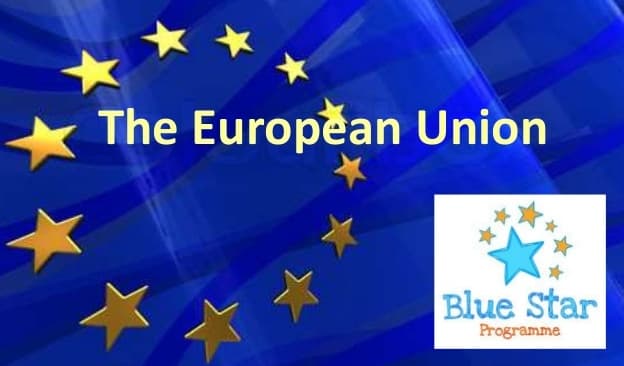
Schools across County Louth are being invited to sign up for the Blue Star Programme, a pioneering education initiative run by European Movement Ireland and funded by the Department of Foreign Affairs and Trade. The programme, which is designed for primary school pupils, aims to introduce children to the European Union through creative, curriculum-friendly activities that explore Europe’s cultures, history and geography. At the same time, it seeks to foster a strong sense of awareness of the EU and of Ireland’s place within it. The invitation to schools has taken on a new urgency because of the rapid changes in the digital landscape. Recent research shows that 55% of primary school children aged eight to twelve are now using artificial intelligence tools. This growing use of AI means that children are encountering online content at a younger age and are more exposed than ever to misinformation and disinformation. European Movement Ireland has responded by developing the Blue Star Programme’s Media Literacy Series, a set of interactive videos designed to help teachers bring conversations about misinformation and disinformation into the classroom. The series introduces essential skills that allow pupils to question what they see, to distinguish between what is real and what is not, and to understand how information can be manipulated. Through the series, children are taught to think critically about online material, including content related to the EU. Teachers are supported with practical tools that make it easier to address complex topics with young learners. The programme thus serves a dual purpose: it builds European awareness and it equips the next generation with the digital skills they will need throughout their lives.
The Blue Star Programme is designed to be flexible, accessible and enjoyable. It is open to every primary school class in Ireland, from junior infants to sixth class, and can be run in every kind of school, including island schools, Gaelscoileanna and DEIS schools. This inclusivity is central to the programme’s ethos. It recognises that Irish classrooms are increasingly diverse, with children from many different cultural backgrounds, and it places a strong emphasis on celebrating that diversity. By exploring the cultures, histories and geographies of different European countries, pupils are encouraged to appreciate both what makes Europe diverse and what unites EU member states. The activities are deliberately aligned with the primary school curriculum so that teachers can integrate them into existing lesson plans without adding unnecessary pressure. Projects may take many forms, from classroom discussions and art activities to research tasks and presentations. The programme encourages children to engage with European themes in a hands-on, creative way, making abstract ideas more concrete and memorable. For younger pupils, this might mean learning about the flags, food, music and traditions of other countries. For older pupils, it might mean exploring how the EU works, what it does for its citizens, and why international cooperation matters. The goal is to give every child, regardless of background, a meaningful introduction to the European Union. By making the programme adaptable to each class’s needs, European Movement Ireland hopes to ensure that no school feels left out. The programme also aims to create a lasting sense of curiosity about Europe, so that children continue to follow European affairs with interest as they grow up and become young citizens of the Union.
The Media Literacy Series is one of the most important additions to the Blue Star Programme in recent years. It was developed in response to growing concerns about the spread of false information online. With the rapid rise of artificial intelligence, it has become harder for adults and children alike to tell the difference between reliable and unreliable content. The series is specifically aimed at primary school children, an age group that is often overlooked in media literacy education. It uses interactive videos to explain complex ideas in an age-appropriate way. The videos cover topics such as misinformation, disinformation, fake news and online manipulation. They help children understand that not everything they see on the internet is true, and that some content is created with the deliberate intention of deceiving them. The materials also teach children how to verify information, how to check sources, and how to ask critical questions. For example, pupils are encouraged to consider who created a piece of content, why they created it, and whether the content is supported by evidence. These skills are essential in an era when AI can generate convincing fake images, videos and articles. The series has been designed with the EU context in mind, meaning that examples and case studies are relevant to European institutions, policies and issues. This helps pupils see that media literacy is not just a personal skill but a civic one. Being able to identify misinformation is part of being an informed citizen in a democratic society. The Blue Star Programme’s media literacy resources also support teachers by providing ready-made lesson materials, discussion prompts and activities that can be used with minimal preparation. This is particularly valuable for teachers who may not feel confident discussing digital technology and AI with their pupils. By providing a clear framework, the programme takes the guesswork out of teaching these complex subjects while ensuring that children receive consistent, reliable guidance.
Speaking about the Media Literacy Series, David Geary, CEO of European Movement Ireland, stressed the importance of preparing children for the digital age. He said: “The rapid growth of digital tools and technology has transformed how we live, learn, and communicate, bringing enormous benefits to society. Yet, the digital age also carries risks. The rise of AI, misinformation, and fake news means people of all ages are increasingly exposed to manipulation by bad actors, with children being particularly vulnerable. Younger pupils will grow up in a world fundamentally different to their parents’ experience and it’s essential they are equipped to do so.” Geary added that the Blue Star Programme’s Media Literacy Series teaches pupils to question what they see, and to distinguish between what is real and what is not, skills that are now more important than ever in the digital age. His comments reflect a wider recognition among educators, policymakers and parents that digital literacy is no longer optional. Children are growing up in an environment where social media, online games, smart speakers and AI chatbots are deeply embedded in everyday life. The ability to navigate this environment safely requires not only technical skills but also critical thinking and emotional resilience. Geary’s remarks also point to the responsibility of schools to adapt as the world changes. The Blue Star Programme is an example of an existing educational initiative being updated to meet new challenges. By integrating media literacy into the programme, European Movement Ireland has ensured that the Blue Star Programme remains relevant to the realities of childhood in the 2020s. His words are likely to resonate with teachers in Louth and across Ireland who see every day how digital technology is reshaping pupils’ lives and who are searching for practical ways to respond.
The importance of the programme is also underlined by the political context. During Ireland’s Presidency of the Council of the European Union, the Irish Government has placed children’s online safety as a key priority. The Blue Star Programme directly supports this priority by helping schools teach children how to identify misinformation and disinformation. The programme is funded by the Department of Foreign Affairs and Trade, which recognises the importance of both EU citizenship and digital awareness. By taking part in the Blue Star Programme, schools in Louth will be contributing to a national and European effort to protect children online. Last year, 19 schools in Louth participated in the Blue Star Programme, demonstrating strong local engagement. This year, European Movement Ireland is hoping that even more schools will join. The programme’s flexible structure makes it easy for schools to take part, and teachers can shape their EU-themed projects to fit their own class’s needs. For Louth, a county with a rich mix of urban and rural communities, the programme offers an opportunity to celebrate cultural diversity while building a deeper understanding of Ireland’s place in Europe. Participation in the programme also gives schools a chance to showcase the work of their pupils and to involve parents and the wider community. The local participation figures suggest that teachers in Louth see the value of the programme. European Movement Ireland’s invitation is a reminder that EU education and media literacy should not be left to chance. With 55% of children aged eight to twelve now using AI, schools need resources that allow them to respond to the digital age without delay.
Ultimately, the Blue Star Programme is about giving children the knowledge and skills they need to thrive in a changing world. It is not enough to teach children about the EU as if it were purely a matter of history and geography; they also need to understand how the digital world shapes their perceptions of Europe and of global events. The programme’s combination of European citizenship and media literacy is especially useful in an age of fake news and AI-generated content. Teachers who sign up for the Blue Star Programme gain access to a structured programme that aligns with the curriculum and supports pupils from junior infants to sixth class. The programme is open to all primary schools, including island schools, Gaelscoileanna and DEIS schools, and it celebrates the cultural diversity of Irish classrooms. European Movement Ireland, as the national implementation body, provides the materials and guidance necessary to make the programme a success. Schools in Louth interested in taking part can find further information at bluestarprogramme.ie. With the issue of misinformation becoming more pressing by the day, the Blue Star Programme offers a practical, positive response. It empowers children to question what they see, to seek out reliable information, and to participate in society as informed and responsible citizens. For the pupils of Louth, this is an opportunity to learn about Europe and equip themselves for the digital future. For teachers, it is a chance to make a real difference. European Movement Ireland’s invitation could not be more timely.