


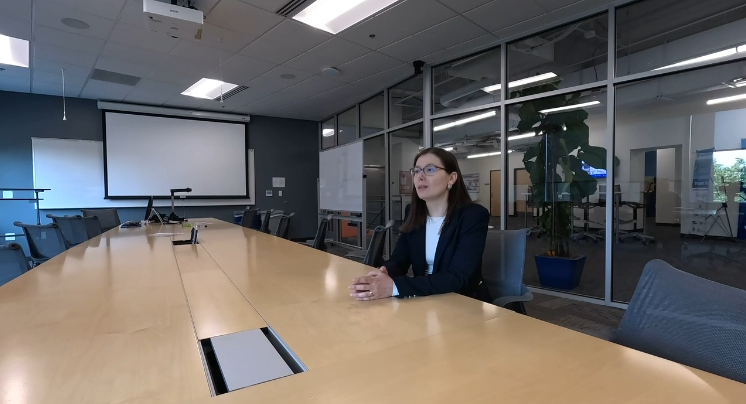
In the wake of a violent shooting in Twin Falls, Idaho, a secondary storm was brewing—a digital tempest of rumors, unverified theories, and panic-stricken posts that flooded social media feeds. As law enforcement raced to secure the scene and investigate the incident, residents and online onlookers were confronted with a dizzying array of conflicting narratives, some of which threatened to derail the official investigation and exacerbate the community’s trauma. This chaotic information ecosystem is a stark reminder that in the 21st century, a crisis extends far beyond the physical location of the event itself; the immediate aftermath of any mass casualty event creates an informational vacuum, and into that void rushes speculation, half-truths, and outright fabrications. For Associate Professor Francesca Spezzano, a computer science researcher who has spent more than a decade dissecting the anatomy of falsehoods in digital spaces, the Twin Falls case serves as a perfect—and deeply tragic—example of how human psychology and social media infrastructure intertwine to wreak havoc on our collective understanding of reality. Her featured analysis in a KTVB news report highlights that the problem isn’t merely about “fake news” as a buzzword, but about the intricate mechanics of how we process, share, and consume information when we are at our most vulnerable. The proliferation of these false claims not only muddied the waters for the public but also presented significant operational challenges for investigators who had to devote precious time to debunking rumors while simultaneously managing an active crime scene. Spezzano’s expertise underscores a critical reality: the information landscape has become as contested and dangerous as the physical one, requiring a new kind of civic literacy to navigate safely.
The first critical distinction Spezzano draws upon to explain the Twin Falls phenomenon is the fundamental difference between misinformation and disinformation. While the terms are often used interchangeably in popular discourse, the underlying intent separates them radically, and understanding this nuance is crucial for crafting an appropriate societal response. Misinformation refers to false or inaccurate content that is shared without the intent to deceive; a person who forwards a unverified claim about a suspect’s identity, believing it to be true out of confusion or fear, is spreading misinformation. Conversely, disinformation is deliberately manufactured and disseminated with the explicit goal of causing harm, manipulating public opinion, or sowing chaos—often by malicious actors, foreign adversaries, or fringe political groups seeking to exploit tragedy for ideological gain. In the specific context of the Twin Falls shooting, Spezzano observed that the confusion appeared largely unintentional. The predominant driver was not a covert campaign of state-sponsored interference, but rather a spontaneous, organic outpouring of public fear and uncertainty. In the immediate aftermath of a crisis, when official information is scarce and law enforcement wisely withholds details to protect the integrity of the investigation, the human brain abhors ambiguity. Citizens, desperate for answers about their safety and the identities of those involved, grasp at any scrap of information, often failing to scrutinize its source. This panic-driven sharing creates a perfect storm for amplified fear, where a single speculative tweet can cascade into a trending topic within minutes, outpacing the official statements that eventually arrive but are often buried under the weight of algorithmic engagement.
Spezzano further illuminates a deeply troubling psychological mechanism that makes such falsehoods so sticky: the “illusory truth effect.” This well-documented cognitive phenomenon demonstrates that the more frequently a piece of information is repeated, the more likely individuals are to believe it is true, regardless of its factual accuracy. Our brains are wired to process fluency—the ease with which information is processed—as a heuristic for truth. When a claim is repeated across different platforms, reshared by friends, and amplified by social media algorithms designed to maximize engagement rather than accuracy, it becomes neurologically easier to process, and thus, it feels intuitively correct. The algorithms themselves are silent accomplices in this process; they prioritize content that generates clicks, comments, and shares, which frequently means sensationalist, emotionally charged, or controversial material. Conflict and outrage drive engagement, so false claims that provoke strong reactions are preferentially surfaced in news feeds, creating a feedback loop. In the Twin Falls aftermath, this meant that a baseless claim about a second shooter or an incorrect victim list—if shared enough—quickly acquired a veneer of credibility. Spezzano’s research highlights that repetition in a digital echo chamber can override our critical thinking faculties, making it nearly impossible for even well-meaning individuals to distinguish between verified fact and convincing fiction, especially in the cognitive fog of a high-stress, high-anxiety event.
Compounding this epidemic of repetition is the exponential rise of generative artificial intelligence, which Spezzano identifies as a transformative—and terrifying—new factor in the misinformation landscape. The average internet user is now equipped with tools that can instantly produce hyper-realistic fake images, audio deepfakes, and synthetic text that are virtually indistinguishable from genuine artifacts. During a breaking news event like the Twin Falls shooting, this technology allows for the rapid creation of counterfeit “photographs” of the suspect, fabricated dispatch audio, or entirely fictional eyewitness accounts that masquerade as legitimate reporting. The sheer speed and scale of AI-generated content overwhelm traditional fact-checking mechanisms, which are labor-intensive and often take hours to debunk a single claim. Spezzano emphasizes that this creates a profound epistemic crisis: when visual and auditory evidence can be perfectly fabricated, the public loses the ability to trust their own senses. The “liar’s dividend” becomes operational, meaning that even when authentic evidence emerges, it can be dismissed by skeptics as another deepfake. This erosion of trust in primary sources is particularly damaging in the context of breaking news, where the timeline is compressed and the stakes are life-and-death. For local communities like Twin Falls, this means that rumors spread by AI bots can galvanize mobs to go looking for the wrong person, or cause witnesses to withhold information because they believe the law enforcement response is part of a manufactured narrative.
The real-world consequences of this rampant misinformation are severe, extending far beyond online annoyance and into the realm of tangible harm. When false claims circulate in a community reeling from violence, they divert law enforcement resources away from actual investigative leads toward chasing digital ghosts. They cause immense emotional distress to the families of victims, who may be subjected to rumors that their loved one is a perpetrator rather than a casualty. Furthermore, misinformation can incite vigilante actions or escalate tensions within the community, potentially putting innocent individuals at risk. Spezzano stresses that the damage is not easily undone; once misinformation spreads, it becomes extraordinarily difficult to fully correct. Research into the “continued influence effect” shows that even after a piece of misinformation is explicitly debunked, individuals continue to rely on the false information when reasoning about the event. Corrections are often ineffective because the original false story is more memorable and emotionally resonant, and the retraction rarely achieves the same viral reach as the original lie. The initial false narrative sets the “default” framing, and subsequent corrections are often perceived as defensive, untrustworthy, or political. In the digital age, retractions are also frequently shared less widely than the original falsehood, meaning that a significant portion of the audience who saw the lie never even sees the truth, leaving a permanent stain on the collective memory of the event.
Given these daunting challenges, Spezzano offers a pragmatic and actionable set of recommendations for communities facing such crises, imploring citizens to adopt a mindset of rigorous skepticism and disciplined restraint. First and foremost, she urges the public to rely on credible news organizations—specifically local outlets and established national wire services that have proven editorial standards, dedicated fact-checking departments, and a reputation for accountability. These organizations have the resources to verify information with law enforcement and primary sources before publishing, unlike anonymous social media accounts. Secondly, she emphasizes the necessity of cross-checking information across multiple trusted sources. If a claim appears in one obscure Facebook post, but not in any official police statement or recognized news outlet, it is almost certainly speculation. True, verified facts will emerge simultaneously from multiple independent, reliable channels. Finally, and perhaps most crucially, Spezzano delivers a stark warning: avoid sharing unverified posts. The act of sharing is the catalyst that converts misinformation into a viral epidemic. By withholding the impulse to “share for awareness” without first confirming the content, individuals can serve as the crucial firewall against the spread of falsehoods. Her underlying message is that silence and patience are powerful virtues in the immediate aftermath of a crisis. Waiting for official channels—however frustrating the delay may be—is a far more ethical and effective response than amplifying rumors. Through this framework of responsible consumption and delayed sharing, Spezzano argues, communities can protect themselves not only from the initial violence but also from the insidious, long-lasting informational wounds that follow.