







Paragraph 1: The Accusation and the Scale of the Crisis
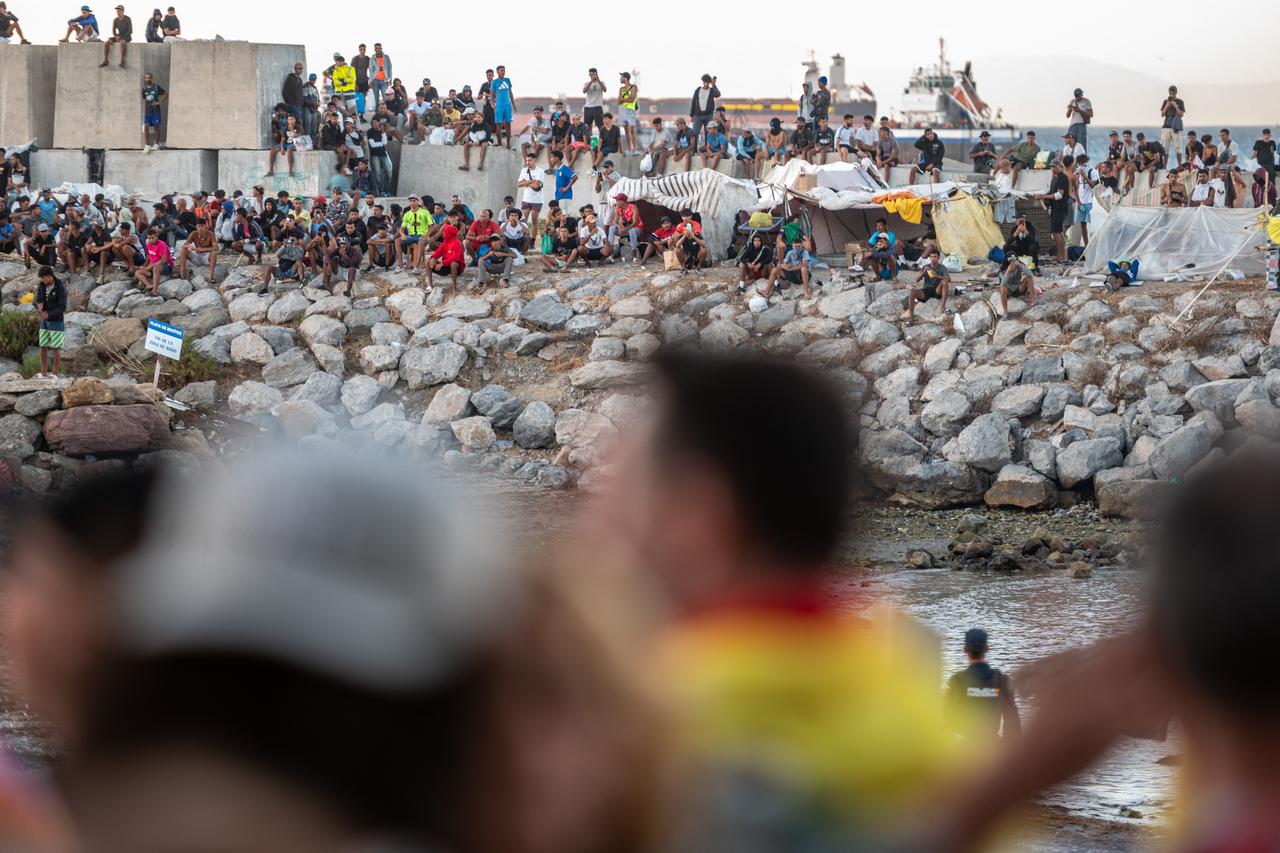
Spanish Prime Minister Pedro Sanchez has found himself at the helm of one of the most severe border crises Spain has faced in decades, and on Monday, August 31, 2026, he publicly named what he believes to be the primary catalysts behind the chaos: a coordinated disinformation campaign injected into the digital sphere by foreign state actors and extreme political factions. In a revealing interview with the radio station Cadena Ser, Sanchez stated unequivocally that the massive irregular migrant influx that overwhelmed the North African enclave of Ceuta at the end of July was exacerbated, if not orchestrated, by networks linked to Russia and Israel, alongside the machinations of international far-right groups. “After July 30 and 31, there was a spread of rumors and disinformation, from social networks linked both to Russia and to Israel, and to an ultra-right international that always uses migration not only to attack Spain, but also to attack Europe and divide it,” Sanchez declared, framing the event not merely as a humanitarian or border control issue, but as a hybrid geopolitical assault. The sheer scale of the event is staggering: more than 70,000 individuals swam from the shores of Morocco’s Fnideq city to the Spanish enclave within a brutal 48-hour window at the end of July. While many were swiftly returned or dispersed, Sanchez confirmed that approximately 5,000 irregular migrants currently remain in Ceuta, a figure that includes a particularly vulnerable subset of around 1,200 unaccompanied minors. As the Spanish government grapples with the fallout, the Prime Minister emphasized that criminal organizations and malicious, fake messages propagated across social media platforms provided the immediate spark that led to this unprecedented mass movement of people, a situation that continues to strain the resources and political stability of the enclave and the nation as a whole.
Paragraph 2: The Anatomy of an Unprecedented Border Breach
The events of July 30 and 31 represent a stark departure from previous migration waves in the region. In a matter of hours, the beaches of Ceuta transformed into a chaotic staging ground as tens of thousands of people braved the Mediterranean waters, attempting to bypass border fortifications that have historically been fortified against such incursions. The sheer volume of the influx overwhelmed Spanish border guards, who were vastly outnumbered and left scrambling to process, detain, or redirect the surging crowds. While Spanish authorities mobilized every available government resource to respond to the incident, the immediate aftermath saw a humanitarian vacuum. Local authorities in Ceuta, which is already a small autonomous city with limited capacity, found their infrastructure buckling under the weight of the arrivals. The situation on the ground remains tense; the Prime Minister acknowledged that the 5,000 individuals currently sheltering in the enclave include many who are sleeping on the streets, awaiting processing or repatriation. Sanchez noted that the majority of these irregular migrants appear to be driven by economic motives rather than immediate threats to their safety, a distinction that shapes the government’s response strategy. However, the human cost of the crisis extends beyond the living. Authorities have confirmed that at least 88 irregular migrants lost their lives attempting to make the crossing from Morocco to Spain during this period, a grim reminder of the dangers that drive such desperate journeys. As Spain continues to process the scale of this event, questions linger over the immediate response. The decision to deploy the Spanish armed forces to the region was a direct acknowledgment that the civilian police and border guard forces were insufficient to guarantee security and control in the face of such a massive and coordinated movement. This deployment of military personnel, while framed as a measure to ensure territorial integrity, has also drawn criticism from humanitarian organizations concerned about the treatment of individuals who have not necessarily committed any crime beyond seeking entry.
Paragraph 3: The Geopolitics of Disinformation and Migration Weaponization
Prime Minister Sanchez’s accusations go beyond mere political spin; they tap into a growing global concern regarding the weaponization of migration as a hybrid warfare tool. By explicitly naming Russia and Israel, Sanchez is pointing to a sophisticated ecosystem where foreign intelligence operations utilize social media algorithms to amplify panic, provide logistical misinformation to migrants, and stoke anti-immigrant sentiment within host nations. The link to Russia aligns with a well-documented pattern of Moscow using migration flows to destabilize European border states, as seen in prior incidents at the Belarus-Poland border. In this context, social media platforms became a conduit for telling 70,000 people that the gates to Europe had suddenly flown open, creating a spontaneous mass exodus that no single border force could readily contain. The inclusion of Israel in this equation is more complex, potentially rooted in shifting alliances in the Middle East and North Africa, where Israeli interests intersect with European security policies. Sanchez argued that these disinformation campaigns are not just aimed at undermining his Socialist government but are profound attacks on the cohesion of the European Union itself. The “ultra-right international” that he referenced includes a network of nationalist populist parties across Europe and North America who feed on such crises to justify xenophobic policies. These groups, Sanchez implied, use the resulting chaos to push narratives of a “replacement” or fundamental security threat from the Global South. By blending the efforts of state actors with domestic far-right agitators, the information ecosystem surrounding the Ceuta crisis became an environment where truth was the first casualty. The Spanish government maintains that criminal smuggling organizations capitalized on these fake messages, charging desperate migrants for information that was, in reality, publicly available or entirely fabricated, effectively using the disinformation landscape as a business model to facilitate the chaotic crossing.
Paragraph 4: Morocco’s Role, Intelligence Gaps, and Bilateral Relations
A crucial aspect of Sanchez’s interview was his exoneration of the Moroccan state security forces and official authorities regarding direct orchestration of the border breach. This stands in sharp contrast to historical tensions between the two nations, where Morocco has occasionally used lax border control as a diplomatic lever. “No information has come from the state security forces or the National Intelligence Center (CNI) that would raise any suspicion of the involvement of Moroccan authorities,” Sanchez asserted. However, while clearing Morocco of official collusion, the Prime Minister inadvertently highlighted a significant failure on the part of his own intelligence apparatus. Sanchez noted that although the CNI employs highly professional and expert personnel, no information had been conveyed in advance that would have warned Spanish authorities of the “seriousness and scale” of the events that unfolded. This admission suggests a monumental intelligence failure—the inability to anticipate that 70,000 individuals would move simultaneously. If the influx was driven by social media misinformation rather than official state policy, it raises the question of why counter-intelligence agencies failed to monitor and intercept such viral trends. Sanchez pivoted to emphasize that cooperation with Morocco has yielded positive results in the weeks since the crisis, particularly regarding the repatriation of unsuccessful asylum seekers and the identification of minors. He stressed that the bilateral relationship remains robust, and that the Moroccan authorities have been instrumental in managing the security of the borders in recent weeks. Yet, the political fallout of this intelligence gap gives ammunition to his critics. The Spanish parliament is awaiting Sanchez’s formal address regarding the Ceuta events, scheduled for September 3. In that address, he will need to balance the narrative of foreign malicious interference with the undeniable reality that his government was caught significantly off guard, raising questions about the effectiveness of Spain’s national security framework in the digital age.
Paragraph 5: Domestic Political Turmoil and the Far-Right Response
The crisis has ignited a fierce political firestorm within Spain, where migration policy is already a highly charged issue. Right-wing and far-right opposition parties have been relentless in their criticism of Sanchez, accusing his coalition government of responding too late and with insufficient force to the influx. In Ceuta, which is governed by the People’s Party (PP), the mood is particularly volatile. The enclave has become a hotbed of reactionary sentiment, with Spanish nationalist groups guiding demonstrations against the presence of the migrants. On August 29, just days before Sanchez’s radio interview, the city witnessed large protests where demonstrators carried Spanish flags, demanding immediate action to remove the migrants and criticizing the central government for what they perceive as abandoning the enclave to its fate. The deployment of the armed forces to Ceuta in the immediate aftermath of the July 31 surge was a significant and symbolic gesture, but it has not quelled the unrest. The PP argues that the military should have been deployed earlier or that harsher measures, such as immediate mass internment camps, should have been enacted. Sanchez’s framing of the crisis as a foreign disinformation attack is viewed skeptically by the opposition, who see it as a tactic to deflect blame from his own immigration policies, which they accuse of being too lenient and creating a “pull factor.” The protests in Ceuta reflect a broader societal anxiety about demographic change and national identity, a fertile ground for the far-right. International far-right personalities have seized upon the imagery of the packed beaches and the sight of Spanish soldiers to amplify their own agendas, creating a feedback loop where the physical crisis feeds the digital propaganda, which in turn exacerbates the physical situation. This domestic political pressure is now focused on the upcoming parliamentary address, where Sanchez will face a hostile chamber demanding accountability for the intelligence failures and the ongoing presence of thousands of migrants in a territory of just over 18 square kilometers.
Paragraph 6: The Road Ahead, Shelter Plans, and European Implications
Looking forward, the immediate priority for the Spanish government is managing the physical reality of the 5,000 migrants remaining in Ceuta, particularly the 1,200 minors who require specialized care and legal representation. Sanchez asserted that Spanish authorities will soon have sufficient capacity to shelter the migrants currently sleeping on the streets, pledging resources and facilities to address the squalid conditions that have drawn international media attention. This logistical challenge is immense, requiring not only physical infrastructure but also administrative processes to determine asylum claims, facilitate voluntary returns, or initiate deportations where applicable. However, the broader implications of the Ceuta crisis extend far beyond the borders of Spain. Sanchez framed this incident as a critical stress test for the entire European Union’s migration and security apparatus. If disinformation can successfully funnel 80,000 people toward a single point, it exposes a systemic vulnerability that no EU member state can handle alone. He reiterated that the aim of the malicious actors is not just to attack Spain, but to divide Europe and undermine the Schengen Area’s principle of open internal borders. This requires a coordinated EU response, including monitoring social media networks for such coordinated influence operations and strengthening Frontex’s capabilities. In the lead-up to his September 3 address to the General Assembly of Parliament, Sanchez is walking a tightrope. He must reassure his domestic audience that the borders will be secured, while also presenting a humanitarian facade to the international community. He must maintain the delicate diplomatic balance with Morocco, avoiding accusations that could damage a vital partnership, while also demanding better intelligence sharing. The crisis in Ceuta serves as a chilling premonition of a future where border security is not just fought with fences and coast guards, but with algorithms and data bots. As the migrants remain in limbo and the political machines churn, Spain finds itself at the forefront of a new era of hybrid warfare, where the movement of desperate people becomes a weapon in a global digital conflict. Sanchez’s acknowledgment of the Russian and Israeli links, while controversial, signals that Spain is preparing to defend its borders in the digital domain just as rigorously as it defends them in the physical world.


