


Navigating the Digital Age: Ghanaian Politician Advocates for Transparency and Accountability to Combat Misinformation in Africa
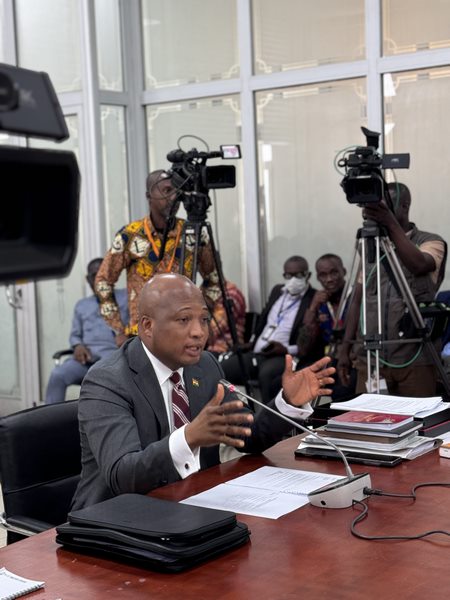
In a recent address to the Appointments Committee, Samuel Ablakwa, a prominent Ghanaian politician known for his active presence on social media, delivered a compelling argument for the responsible use of digital platforms, particularly in the African context. He acknowledged the transformative power of social media as a tool for communication and engagement, while simultaneously emphasizing the urgent need to address its potential for misuse and the spread of disinformation. His remarks highlighted the challenges faced by many African citizens in accessing reliable information and underscored the importance of transparency and accountability in governance as key strategies to combat the proliferation of fake news.
Mr. Ablakwa stressed the evolving media landscape and the growing influence of social media, urging African leaders to recognize and adapt to this new reality. He advocated for a paradigm shift towards greater transparency in government operations, arguing that open access to information empowers citizens and strengthens democratic processes. By fostering a culture of transparency, governments can effectively counter the spread of misinformation and build public trust. He emphasized the principle of "knowledge is power," asserting that informed citizens are less susceptible to manipulation and more likely to engage critically with information circulating online.
However, Mr. Ablakwa also acknowledged the significant hurdles that many Africans face in accessing accurate and reliable information. He pointed out the stark reality that access to information is often tied to positions of power, leaving many citizens vulnerable to misinformation. This disparity in access, he argued, underscores the critical need for robust implementation of the Right to Information (RTI) law, which, despite being enacted, has yet to fully realize its potential in empowering citizens with access to information. He called for greater efforts to strengthen the RTI mechanism and ensure its effectiveness in promoting transparency and accountability.
Addressing the issue of social media misuse, Mr. Ablakwa called for stronger regulatory measures to combat the spread of disinformation. He expressed concern over the increasing sophistication of disinformation campaigns, some even allegedly funded by governments seeking to manipulate public opinion. He stressed the need for proactive measures to identify and address these malicious actors, and to hold them accountable for spreading false narratives. The unchecked proliferation of fake news, he argued, poses a serious threat to democratic processes and social stability.
Mr. Ablakwa then shared a personal anecdote highlighting the ease with which false information can spread and gain traction. Just days before his appearance before the Appointments Committee, a rumor circulated online claiming he was deleting his Facebook posts. He vehemently denied this, stating, "Why would I do that? I’m not a coward.” This incident served as a poignant illustration of the rapid spread of misinformation and the challenges in countering its impact. He expressed frustration at the tendency to accept online claims without critical evaluation, underscoring the need for media literacy and critical thinking skills.
In his concluding remarks, Mr. Ablakwa reiterated his belief that social media, while presenting challenges, is an undeniable force in modern society and is here to stay. He emphasized that the key to harnessing its potential for good lies in promoting open governance and transparency. By empowering citizens with access to information and fostering a culture of accountability, governments can create an environment where misinformation struggles to thrive. He urged a proactive and collaborative approach, involving governments, civil society organizations, and individuals, to maximize the positive aspects of social media while effectively mitigating its negative effects. He concluded by emphasizing that embracing transparency and open governance is not only a vital strategy for countering disinformation, but also a fundamental pillar for strengthening democracy and promoting good governance in Africa.