




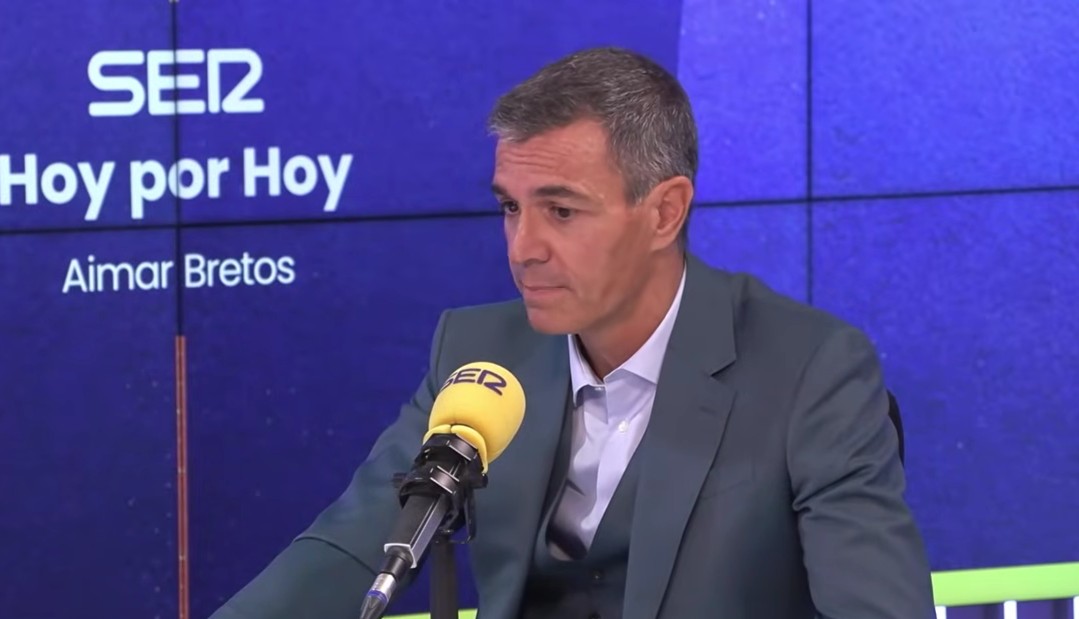
Spanish Prime Minister Pedro Sánchez has made a dramatic and sweeping accusation, alleging that networks linked to Russia and Israel, alongside the international far-right, orchestrated a sophisticated disinformation campaign surrounding the recent mass migration crisis in Ceuta, a Spanish enclave situated on the northern coast of Africa. During an exclusive interview on Spain’s Cadena SER radio, Sánchez revealed that his claims are substantiated by intelligence gathered through research conducted by the European External Action Service (EEAS), the European Union’s dedicated diplomatic and intelligence apparatus. The crisis erupted over a 48-hour period on July 30 and 31, when a sudden and massive influx of migrants overwhelmed the border, creating a severe humanitarian and security emergency in the strategically vital territory. Ceuta, which shares a physical land border with Morocco, is a perennial flashpoint for migration, but the scale of this particular surge was exceptional, prompting immediate political fallout. Sánchez’s decision to name specific foreign state actors represents a significant escalation in the escalating battle against hybrid warfare and foreign interference targeting European nations. He articulated a clear warning to the public about the malignant intentions of these networks, which he believes sought to exploit a complex humanitarian tragedy to generate domestic instability, undermine the Spanish government, and delegitimize the European Union as a whole. The Prime Minister’s use of the term “malignant” indicates a proactive security stance, signaling that his government will not remain passive in the face of what he perceives as coordinated attacks on democracy, using migration as a weapon.
The Prime Minister detailed the mechanics of the alleged campaign, stating that a cacophony of rumours and false information flooded social media platforms in the immediate aftermath of the events of July 30 and 31. “After July 30 and 31,” Sánchez said, “rumours and disinformation spread on social networks linked to Russia and Israel, and to an ultra-right international that always uses migration to attack both Spain and Europe and divide it.” This statement squarely blames a confluence of geopolitical adversaries and domestic political extremists. The “ultra-right international” refers to a global network of populist, nationalist groups who often collaborate across borders to amplify xenophobic narratives. In Spain, this aligns with the rise of Vox, a far-right party that has historically exploited migration crises for electoral gain. The disinformation itself likely took several forms: fabricated videos depicting violent clashes, misleading statistics about the number of arrivals, and false claims that the Spanish government had surrendered control of the border. The mention of Israel is particularly provocative, linking the crisis to the fallout from the Gaza conflict, where Sánchez has been a vocal critic of Israeli military operations. The EEAS research presumably identified distinct bot networks, inauthentic coordination, and amplification patterns originating from these different actors, revealing an unholy alliance between the Russian state’s influence operations and elements within the Israeli security apparatus, united in their desire to destabilize the current Spanish government.
Sánchez offered a coherent explanation for why Spain has become a target, directly connecting the disinformation campaign to his government’s independent and principled foreign policy. He pointed to Madrid’s unwavering condemnation of Russia’s invasion of Ukraine, which has seen Spain provide military aid and heavy weaponry to Kyiv, as well as its strong stance on the humanitarian catastrophe in Gaza, where Sánchez has advocated for a permanent ceasefire and recognized a Palestinian state. These positions, he argued, have placed Spain on a collision course with the Kremlin and the right-wing Israeli government, and they have also alienated the global far-right, which tends to align with the narratives of both Moscow and Tel Aviv regarding conflict. The Prime Minister argued that the initial attacks were not random occurrences but rather a calculated response to his government’s refusal to align with the agendas of these powerful blocs. He told Cadena SER that the disinformation was designed to portray Spain as weak, chaotic, and unable to control its southern border, thereby undermining his coalition government’s credibility. More importantly, Sánchez framed this as an attack on Europe itself, aiming to sow discord among EU member states. By fueling the narrative that migration is an invasion, the actors hope to empower far-right parties across the bloc, which in turn would weaken EU unity on sanctions against Russia and block efforts to hold Israel accountable.
Despite the robust nature of his accusations, Sánchez exhibited a careful diplomatic precision, drawing a crucial distinction between external amplification of the crisis and direct state orchestration of the migrant flow. He stressed that the investigation into the underlying causes of the influx is still very much underway, and cautioned the public and the media against prematurely concluding that a foreign state actor directly organized the crossing on the ground. “The reality we are facing does not mean that it has to come from a state actor,” Sánchez asserted, adding that authorities still do not have a complete picture and “must rely on verified facts.” This careful language appears intended to defuse potential diplomatic conflicts, particularly with Morocco. He unequivocally rejected any allegations implicating the Moroccan government in the orchestration of the surge. Sánchez emphatically stated that Spanish intelligence services, including the National Intelligence Centre (CNI), have uncovered “no information from any intelligence center that casts doubt on the participation of the Moroccan authorities.” Instead, he praised the bilateral relationship, describing cooperation between Madrid and Rabat during the crisis as “frankly positive.” This pro-Morocco stance is a continuation of the strategic rapprochement initiated in 2022, when Spain shifted its position on Western Sahara, aligning with Morocco’s autonomy plan. Sánchez’s insistence on trusting Rabat is a calculated move to preserve the increasingly vital security and economic partnership that helps manage irregular migration flows across the Mediterranean and Atlantic.
The Prime Minister went on to expose the specific falsehoods that were circulated and weaponized by criminal elements. He highlighted the viral claim that the Spanish Supreme Court had issued a ruling prohibiting the immediate return of migrants who entered the country by swimming. This legal-manipulation was essential for the traffickers, as it created a dangerous sense of impunity. Sánchez explained that such false claims were actively exploited by “criminal trafficking organizations” to encourage more people to attempt the perilous maritime and land crossings, leading to the surge. The actual Spanish legal framework allows for “hot returns” (devoluciones en caliente) for individuals caught crossing the border irregularly, but the disinformation distorted this reality, presenting a fictitious court decision that implied a free pass to remain in Spain. By targeting the legal interpretation, the disinformation campaign aimed to boost migrant numbers and further strain the system. Meanwhile, the humanitarian situation on the ground in Ceuta remains acute. Thousands of migrants are still housed in temporary facilities, awaiting processing, accommodation, or potential return to Morocco. The local government is under immense pressure to manage the influx, dealing with housing shortages, healthcare needs, and the social tensions that inevitably arise. Sánchez reiterated that the state-linked actors provided the political narrative, while the trafficking organizations provided the desperate human cargo, a grim and lucrative partnership that thrives on instability and misinformation.
The fallout from Sánchez’s comments has been swift and sharply confrontational, particularly with Israel. In a terse and defiant response, Israeli Foreign Minister Gideon Sa’ar took to social media platform X to accuse Sánchez of lying in a desperate attempt to distract from his own domestic political troubles. Sa’ar stated bluntly: “In his interview with Cadena SER today, he lied again, astonishingly accusing Israel of disseminating misleading information regarding the events in Ceuta.” The Israeli minister twisted the knife by framing the Spanish Prime Minister’s allegations as a sign of weakness, asserting that Sánchez’s repeated attempts to make defamatory accusations are a smokescreen for his failure to manage internal affairs effectively. “Continuing to make defamatory accusations will not distract from his failure to manage domestic affairs,” Sa’ar declared. This diplomatic barbs are part of a broader downward spiral in Spanish-Israeli relations, which have grown increasingly hostile due to Sánchez’s strident criticism of the Israeli offensive in Gaza and his formal recognition of a Palestinian state. The Israeli government views Sánchez as a leading antagonist within Europe, and this latest spat will likely deepen the rift. For Sánchez, the accusation is a high-stakes gamble. Domestically, he faces an opposition that will likely capitalize on the diplomatic row to accuse him of reckless foreign policy, while also battling over amnesty laws and government formation. The Ceuta crisis and its aftermath have thus become a tangled web of migration policy, domestic politics, international intelligence, and geopolitical posturing, leaving the truth of the events of July 30 and 31 far from settled, and ensuring that the disinformation battle will rage on in the corridors of power.