


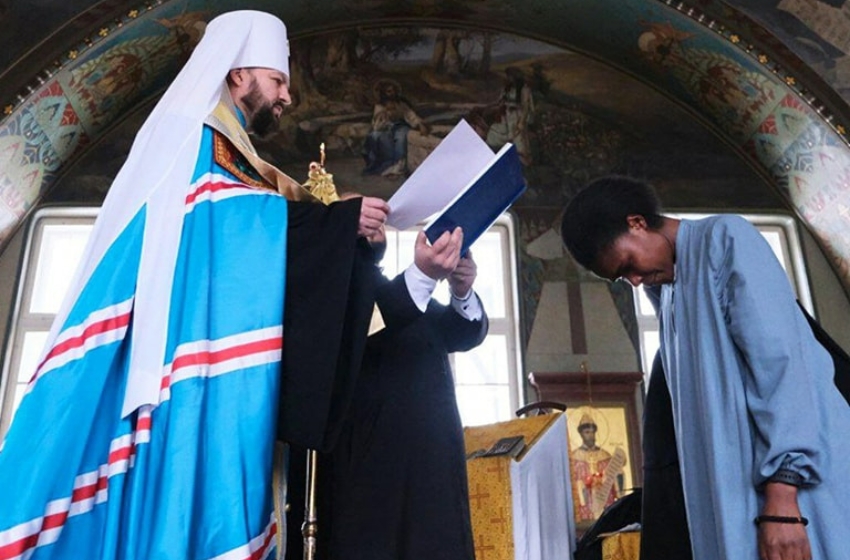
Kremlin’s Spiritual Offensive: Russian Orthodox Church Expands Influence in Africa Amidst War in Ukraine
The Russian Orthodox Church (ROC), a historically influential institution deeply intertwined with the Russian state, has dramatically amplified its presence across the African continent in recent years, raising concerns about its role as an instrument of Kremlin soft power and propaganda, particularly in the wake of Russia’s invasion of Ukraine. The Ukrainian Center for Counteracting Disinformation, a body affiliated with the National Security and Defense Council of Ukraine, has highlighted this rapid expansion, noting the establishment of ROC parishes in 30 African countries, with a significant surge in 2022, coinciding with the escalation of the war. This accelerated growth fuels suspicions that the ROC’s activities serve a broader strategic objective of garnering international support for Russia amidst widespread condemnation of its aggression against Ukraine.
The ROC’s expansion in Africa is framed within the context of supporting Orthodox Christians on the continent. However, critics argue that this religious veneer masks a calculated campaign to promote a pro-Russian narrative and undermine Western influence. The ROC strategically addresses sensitive historical issues relevant to Africa, such as colonialism, racism, and the slave trade, by portraying Russia as untainted by these legacies. This narrative contrasts sharply with historical realities, including Russia’s own history of serfdom, which paralleled aspects of slavery, and its colonial ventures in the Caucasus, Asia, and Europe, which involved oppression and exploitation of indigenous populations.
The ROC’s activities in Africa mirror a broader global strategy employed by the Kremlin, often referred to as the "Russian World" (Russkiy Mir) ideology. This ideology utilizes various instruments, including cultural exchanges, language promotion, and religious outreach, to cultivate pro-Russian sentiment and create a network of influence beyond Russia’s borders. The ROC, with its long-standing ties to the Russian state, plays a crucial role in disseminating this ideology, presenting Russia as a protector of traditional values and a counterweight to Western liberalism. This message resonates with some segments of African societies, particularly those disillusioned with Western influence or seeking alternative alliances.
The Ukrainian Center for Counteracting Disinformation emphasizes the ROC’s function as a potent propaganda tool, bolstering Russia’s military presence on the continent and solidifying support for its actions on the global stage. This raises alarm bells about the potential for escalating tensions and further destabilizing already fragile regions. The ROC’s narrative often depicts Russia as a victim of Western aggression, deflecting blame for the conflict in Ukraine and framing it as a defensive measure against NATO expansion. This narrative seeks to justify Russia’s actions and garner sympathy from nations wary of Western dominance.
The ROC’s expansion in Africa is viewed with concern by some Western governments and analysts who see it as a component of Russia’s hybrid warfare strategy, integrating religious influence with political and military maneuvering. Concerns are particularly acute given Africa’s rich resources, strategic geopolitical location, and growing influence in international forums. Russia’s efforts to cultivate allies in Africa could potentially undermine international efforts to isolate Moscow and hold it accountable for its actions in Ukraine. It also raises the spectre of increased competition for resources and influence between Russia and Western powers on the African continent.
The interplay between religious outreach and geopolitical strategy underscores the complexities of Russia’s engagement with Africa. While the ROC’s expansion may be presented as a purely religious endeavor, the timing and context suggest a broader political agenda. The rapid growth of ROC parishes, particularly following the invasion of Ukraine, aligns with Russia’s need to secure international support and counter Western pressure. The dissemination of a pro-Russian narrative through religious channels adds another layer to the Kremlin’s multifaceted strategy in Africa, raising concerns about the potential for heightened tensions and a further fragmentation of the international order. The ROC’s role in furthering Russia’s interests on the continent warrants close scrutiny as the dynamics of this complex relationship continue to unfold.