


Dissecting the Disinformation Iceberg: Unmasking Russia’s Complex Manipulation Machine
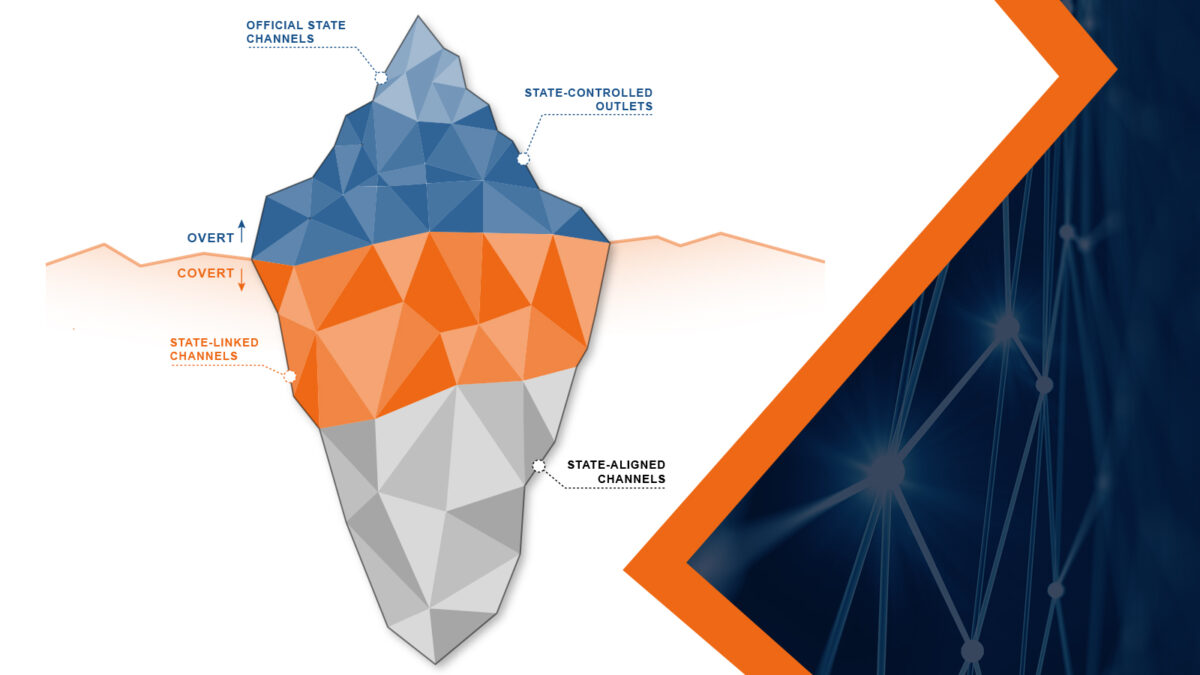
Russia’s disinformation campaigns are not haphazard bursts of falsehoods; they are meticulously engineered operations, structured like an iceberg. The most visible layer, the tip, consists of the loudest pro-Kremlin voices – government officials and propagandists on heavily funded state TV channels. However, this visible layer is merely the surface manifestation of a vast, largely hidden network operating beneath. This submerged network comprises a multitude of channels – websites, blogs, social media accounts, influencers, and pseudo-commentators – working in concert to amplify, contradict, mock, spin, question, and ultimately confuse, all in service of the Kremlin’s overarching goal: dominating the information landscape.
Russia’s foreign information manipulation and interference (FIMI) operations rely on a sprawling, well-financed, and purpose-built architecture. This architecture encompasses both overt and covert elements, integrating state and non-state actors. It possesses remarkable flexibility and adaptability, enabling the deployment of tailored approaches designed to shape perceptions and influence behavior not only in neighboring countries but also globally. Prior research into Russia’s disinformation and information manipulation tactics has illuminated the complex architecture underpinning the Kremlin’s deceptive narratives. These efforts have been aptly likened to a digital hydra, characterized by distinct pillars and the ability to evolve and adapt under pressure.
Building on existing research, the 3rd EEAS Report on FIMI threats provides a novel perspective on the architecture of Russia’s FIMI operations, focusing on technical and behavioral indicators. This approach allows for a more in-depth analysis of websites, social media accounts, and other digital channels used for information manipulation, enabling researchers to delve deeper than the readily visible tip of the iceberg. This analysis goes beyond surface-level observations to identify the underlying mechanisms and connections within the disinformation network.
The report introduces the concept of technical and behavioral indicators as key tools for identifying and classifying pro-Kremlin disinformation sources. Technical indicators encompass digital signatures, hosting patterns, domain ownership, and other technical traces that help unveil the underlying digital infrastructure of a FIMI operation. Behavioral indicators, on the other hand, refer to activity patterns in content creation, distribution, and engagement, including patterns of automated republishing, linguistic patterns, and the use of artificial intelligence. These indicators, when combined, allow researchers to systematically categorize pro-Kremlin disinformation sources based on their proximity to the Kremlin, understand their position within the broader information manipulation architecture, and develop more targeted and effective countermeasures.
The report delineates four distinct blocks within the FIMI architecture. At the tip of the iceberg are the official state channels, comprising the Russian government, its institutions, and representatives. These channels represent the official voice of Russia, with figures like the Minister of Foreign Affairs and the head of Russia’s spy agency frequently disseminating disinformation narratives. They set the tone for the rest of the system, amplifying false claims and even elevating conspiracy theories to the highest political levels, often utilizing international forums to launder their narratives. The second layer consists of state-controlled outlets, such as federal TV channels, RT, and Sputnik. These outlets are openly funded, managed, and editorially controlled by the state or state-appointed bodies, many of which have been sanctioned by the EU for supporting Russia’s invasion of Ukraine.
Deeper within the iceberg, just below the surface, are the state-linked outlets. These operate under state oversight but conceal their affiliation, functioning in a grey zone that blurs the lines between government, media, and online influence. Their purpose is to shape narratives, manipulate perceptions, and sow confusion while maintaining a veil of opacity. Attributing these outlets to a specific threat actor, like the Kremlin, requires extensive research and ongoing effort. Examples include NewsFront, registered in illegally annexed Crimea, which presents itself as documentary journalism while disseminating pro-Kremlin narratives, and The Doppelganger campaign, a multifaceted FIMI operation involving a network of fake websites targeting Ukraine and the EU Parliament elections. These operations often require a combination of open-source and classified information for reliable attribution.
The deepest layer of the iceberg comprises the state-aligned channels. These sources cannot be directly linked to state control or funding with currently available evidence. However, a combination of technical and behavioral indicators, such as shared infrastructure or patterns of systematic amplification of identical disinformation narratives, reveals strong, recurring patterns of alignment with other known and attributed parts of Russia’s FIMI architecture. While they remain unattributed to a specific state actor pending further evidence, these channels play a systemic role in FIMI operations and are an integral part of Russia’s information manipulation machinery. Examples include social media accounts, blogs, and websites impersonating legitimate outlets, which have featured prominently in recently exposed Russian influence operations like False Façade and Portal Kombat.
Understanding the structure and function of this complex disinformation architecture is crucial for developing effective responses. By mapping disinformation actors based on their proximity to the Kremlin, we can gain valuable insights into how Russia’s manipulation machine operates. The more precisely we can identify and understand the various components of this intricate system, the better equipped we will be to counter its deceptive narratives and protect ourselves from its manipulative influence. This knowledge is essential to effectively combat disinformation and safeguard the integrity of information spaces. The 3rd EEAS FIMI report offers a deeper dive into this critical issue, providing valuable resources and insights for those seeking to understand and counter Russia’s disinformation campaigns.