


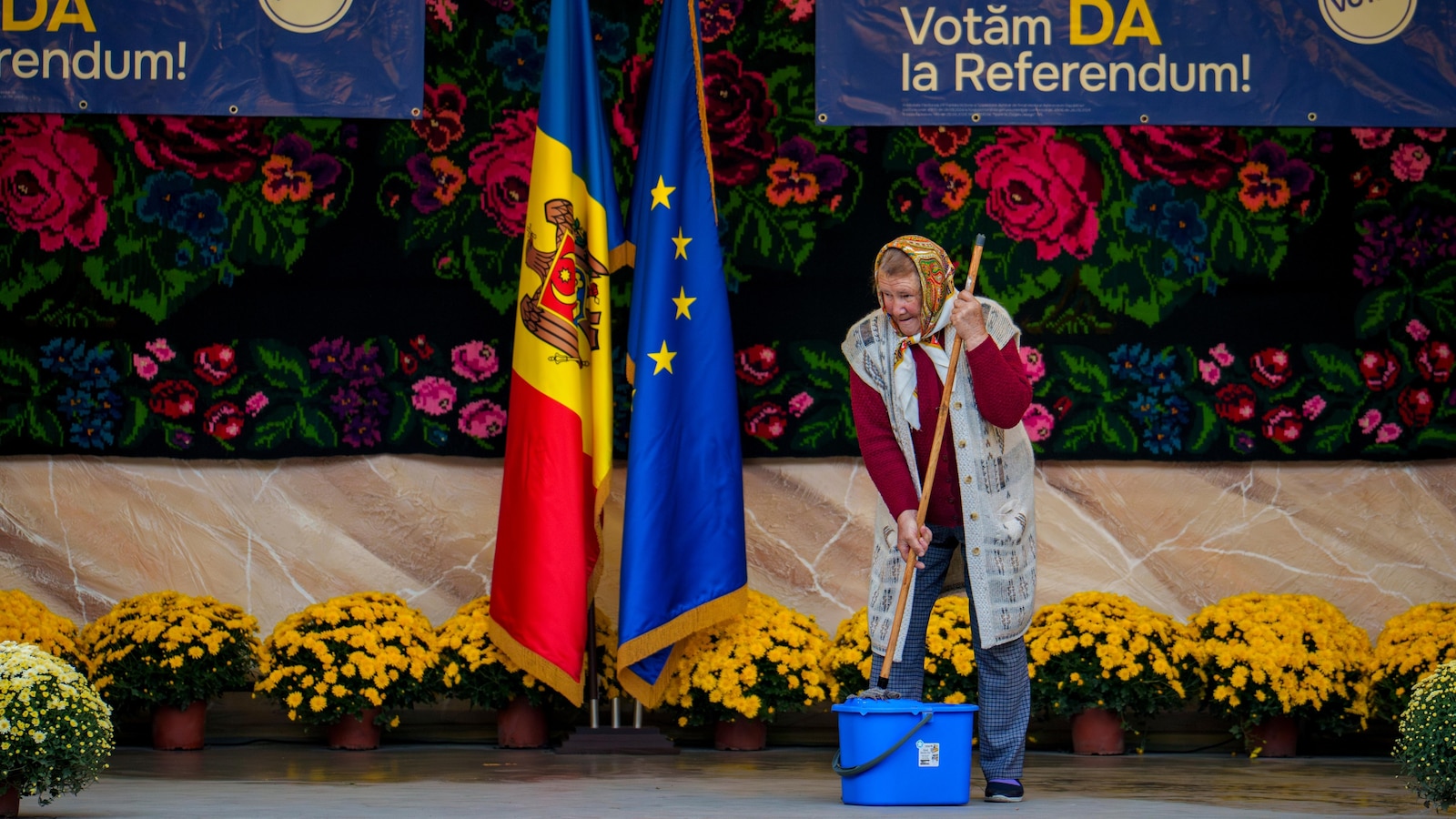
Moldova Grapples with AI-Powered Disinformation Campaign Ahead of Crucial Elections
Moldova finds itself on the front lines of a sophisticated disinformation war as it prepares for parliamentary elections that will determine its future trajectory: continued integration with the European Union or a return to Moscow’s sphere of influence. The ruling pro-European Party of Action and Solidarity (PAS) is facing a barrage of online propaganda and disinformation campaigns attributed to Russia, aimed at undermining its support and potentially swaying the election in favor of pro-Russian parties. This marks a new era in information warfare, leveraging artificial intelligence and sophisticated online tactics to manipulate public opinion.
The disinformation campaign represents a departure from traditional methods. It employs AI-generated websites mimicking legitimate Western media outlets, AI bots flooding comment sections with anti-PAS and anti-EU rhetoric, and “engagement farms” in Africa amplifying these narratives across social media platforms. This coordinated approach, researchers say, signifies a significant escalation in Russian influence operations, designed to exploit vulnerabilities in the digital landscape and sow discord within Moldovan society.
One notable example is Restmedia, an English-language AI-generated platform posing as a legitimate news source. Its content, entirely fabricated using AI tools, focuses heavily on criticizing the Moldovan government, President Maia Sandu, and the EU. These narratives are then translated and disseminated through websites in other EU languages, expanding the reach of the disinformation campaign. The platform’s operators employ “amplification-for-hire” schemes, paying engagement farms to promote their content through verified accounts on platforms like X (formerly Twitter), further obscuring the origins of the disinformation.
The proliferation of AI-generated disinformation poses a significant challenge to democratic processes. The speed and scale at which AI can generate realistic fake profiles, fabricated news articles, and compelling visuals make it increasingly difficult to distinguish between legitimate information and malicious propaganda. This erosion of trust in information sources can have a corrosive effect on public discourse and undermine faith in democratic institutions.
Moldovan authorities, recognizing the gravity of the threat, have taken steps to counter the disinformation campaign. President Sandu has signed a decree establishing a center to combat disinformation. However, the sheer volume and sophistication of the attacks necessitate international cooperation and support. Experts emphasize the need for greater collaboration between governments, tech companies, and civil society organizations to effectively identify and counter these sophisticated disinformation campaigns.
Moldova’s struggle against AI-powered disinformation serves as a stark warning to other democracies. As AI technology becomes more accessible and sophisticated, the potential for malicious actors to exploit it for political manipulation will only grow. The international community must work together to develop effective strategies and safeguards against this emerging threat to democratic institutions and free and fair elections. The future of democracy may well depend on our ability to navigate this complex and evolving information landscape.