


Moldova Grapples with AI-Powered Disinformation Campaign Ahead of Crucial Elections
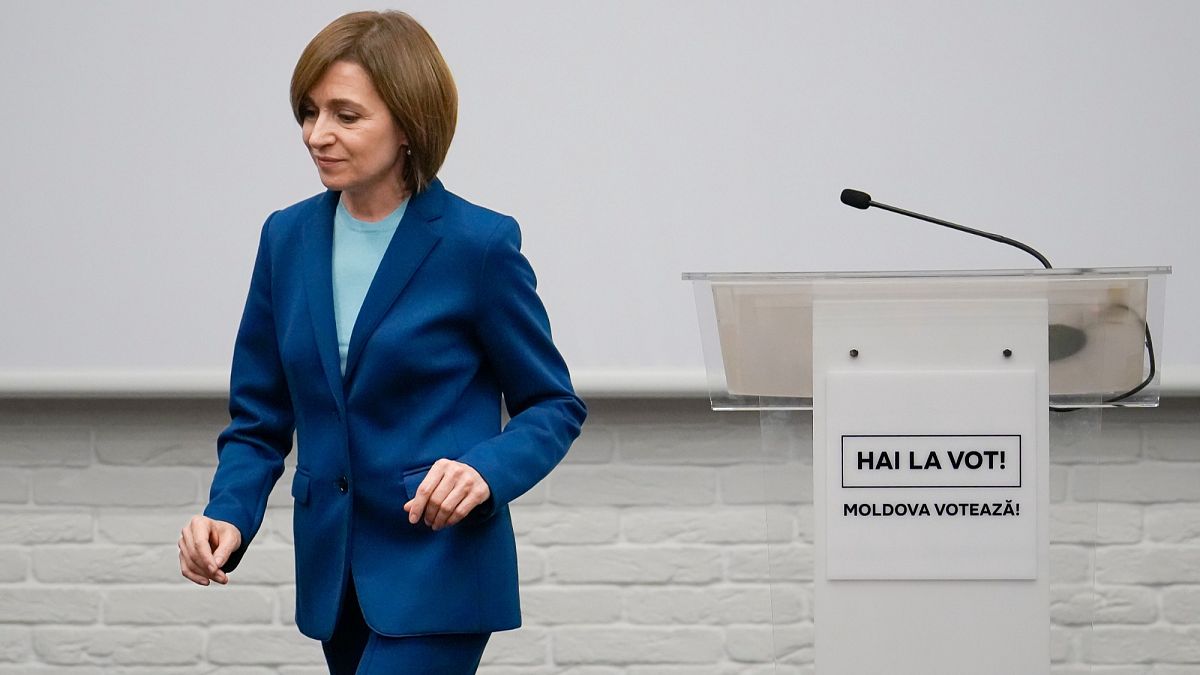
Moldova finds itself on the front lines of an information war, facing a sophisticated disinformation campaign orchestrated through artificial intelligence as it prepares for pivotal parliamentary elections on Sunday. This vote is not merely about choosing representatives; it’s a referendum on Moldova’s future direction, a choice between continued integration with the European Union or a return to Moscow’s sphere of influence. The ruling pro-European Party of Action and Solidarity (PAS), founded by President Maia Sandu, is fighting to maintain its parliamentary majority against a backdrop of manipulated narratives and outright falsehoods aimed at undermining public trust in the government and the EU.
The disinformation campaign represents a significant escalation in Russian interference tactics, leveraging cutting-edge technology to sow discord and manipulate public opinion. Researchers have uncovered a network of AI-generated websites mimicking legitimate news outlets, churning out fabricated stories designed to discredit President Sandu and the PAS. These fabricated narratives are then amplified through “engagement farms” primarily located in Africa, utilizing social media platforms like X (formerly Twitter) to spread the disinformation to wider audiences. The use of AI allows for the rapid generation of realistic profiles, believable content, and varied narratives, making it exponentially more challenging to detect and counter these malicious efforts.
The breadth and depth of the disinformation campaign have alarmed international observers. Reset Tech, a non-profit organization specializing in monitoring digital threats to democracy, has identified clear links between the AI-generated disinformation platforms and Russia. Their investigations revealed technical connections through IP addresses and website metadata, confirming the Kremlin’s involvement in this sophisticated operation. The scale of the operation highlights the challenge posed by AI-powered disinformation, raising concerns about the ability of social media platforms and governments to effectively combat this new form of information warfare.
The disinformation campaign targets President Sandu personally, deploying fabricated stories laced with gender stereotypes and attacking her private life. One such narrative falsely accuses her of purchasing sperm from celebrity donors, aiming to discredit her reputation and exploit societal prejudices. Other fabricated stories allege Sandu’s involvement in child trafficking, drawing on reports from sanctioned Russian entities known for spreading disinformation. These tactics underscore the insidious nature of the campaign, designed not only to spread misinformation but also to erode public trust in credible sources and institutions.
In addition to AI-generated content, the disinformation campaign leverages social media platforms like TikTok and Facebook. Monitoring groups have identified hundreds of fake accounts spreading identical anti-EU and anti-Sandu messages, racking up millions of views. These coordinated networks utilize trending hashtags to manipulate algorithms and push their propaganda to wider audiences. The coordinated nature of these efforts, coupled with the speed and scale of dissemination, highlights the growing challenge of combating disinformation in the digital age.
The Moldovan government has taken steps to counter the disinformation onslaught, recently establishing a center dedicated to combating these threats. However, the resources available to a small nation like Moldova are dwarfed by the scale and sophistication of the Russian-backed campaign. International support and cooperation are crucial in providing the necessary tools and expertise to effectively counter this disinformation onslaught. Experts emphasize the need for a multi-pronged approach, involving government action, tech company accountability, media literacy initiatives, and international collaboration, to effectively counter this emerging form of information warfare. Moldova’s struggle against AI-driven disinformation serves as a stark warning to democracies worldwide, highlighting the urgent need to develop robust strategies to combat this growing threat to free and fair elections.
The involvement of fugitive pro-Russian oligarch Ilan Shor further complicates the situation. Shor, convicted of fraud and reportedly residing in Moscow, is accused of funding a vast network of paid political ads on Facebook and YouTube. These ads promote narratives accusing the PAS of election rigging, persecuting the Orthodox Church, and impoverishing the country. Moldovan authorities have conducted raids targeting Shor’s network, uncovering evidence of cash payments, instructions from Russia via Telegram, and coordinated efforts to disseminate disinformation videos. These findings underscore the interconnectedness of the disinformation campaign, involving both sophisticated technological manipulation and traditional forms of corruption and influence peddling. The stakes for Moldova are high. The outcome of Sunday’s election will not only determine the country’s political future but also serve as a litmus test for the resilience of democratic institutions in the face of increasingly sophisticated disinformation campaigns. The international community must remain vigilant and provide meaningful support to help Moldova navigate this critical juncture and safeguard its democratic future.