








OANA Agencies Forge United Front Against AI-Driven Disinformation at Moscow Forum
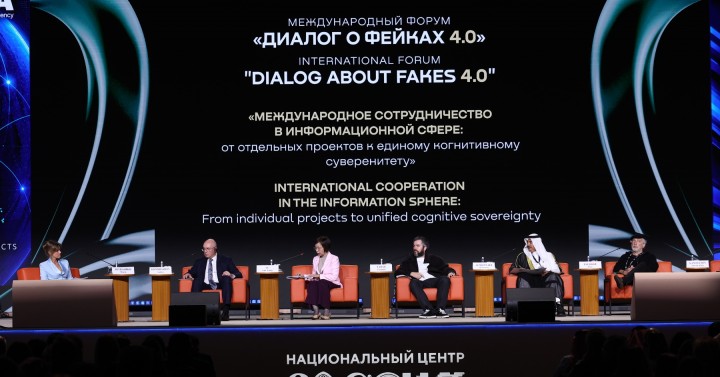
MOSCOW — In a decisive show of unity against the escalating threat of digital deception, member agencies of the Organization of Asia-Pacific News Agencies (OANA) convened in Moscow on Tuesday to champion cross-border collaboration in the fight against disinformation, a challenge rapidly intensified by the proliferation of artificial intelligence. During the International Dialogue About Fakes 4.0 forum at the National Centre Russia, media leaders from across Asia and the Pacific grappled with the fundamental question of how to preserve truth and trust in an era where technology has blurred the line between reality and fabrication. OANA President and TASS Director General Andrey Kondrashov opened the proceedings with a forceful call to action, emphasizing that the strengthening of information sovereignty and the promotion of honest, responsible journalism must be the cornerstone of any effective counteroffensive. He argued that the global information ecosystem is under siege from sophisticated manipulation tactics, particularly social engineering, which exploits the most basic human emotions—fear, urgency, curiosity, and trust—to compromise even the most careful and discerning consumers of news. Kondrashov delivered a starkly simple yet profound dictum: information must be judged solely on whether it is true or false, irrespective of its source, affiliation, or the algorithmic systems that propagate it. This foundational principle, he suggested, must guide all collaborative efforts among media organizations and stakeholders who share a commitment to safeguarding the integrity of public discourse.
Building on this call for unity, concrete proposals emerged from the forum’s speakers, pointing toward a new architecture of collective defense against the viral spread of falsehoods. Vu Viet Trang, General Director of the Vietnam News Agency, articulated a forward-looking vision that moves beyond the reactive, fragmented approach of isolated fact-checking. She advocated for a paradigm shift toward what she termed “connected information resilience,” a model that recognizes the interconnected nature of modern media ecosystems and the necessity of a synchronized, cross-border response. Central to her proposal was the establishment of an “OANA anti-fake news center,” a pragmatic and actionable cooperative mechanism designed to enable member agencies to share real-time alerts, verification requests, and the results of their investigations. Trang emphasized that this initiative would leverage existing local knowledge and technological capacities, upgrading them through a collective infrastructure capable of responding to threats with speed and accuracy. The ambitious plan would commence with a pilot phase targeting high-stakes domains where disinformation poses the most immediate and severe danger to public welfare, namely public safety, public health, and financial stability. Her proposal was echoed and expanded upon by Nur-Ul Afida Kamaludin, Chief Executive Officer of Malaysia’s Bernama news agency, who openly acknowledged that artificial intelligence has fundamentally complicated the battle against disinformation. Kamaludin stressed that earning and maintaining public trust hinges on the unwavering commitment to accuracy, balance, and accountability, and she urged members to deepen cooperation in specialized fields such as fact-checking, digital forensics, and deepfake detection. She outlined several key areas ripe for partnership, including the creation of an OANA Verification Network dedicated to debunking claims falsely attributed to news organizations, the development of information resilience and AI training programs to educate journalists on responsible generative AI use and deepfake recognition, and the establishment of a comprehensive framework for responsible AI and verified content that would mandate verification of AI-generated material and create robust mechanisms for error correction.
The imperative for rigorous verification and a renewed commitment to journalistic fundamentals was a recurring theme, underscored by speakers from the Middle East and the global fact-checking community. Mohammed Almannaei, Acting Director General of the Kuwait News Agency, reinforced the necessity of providing professional, accurate, and undistorted information, emphasizing the vital importance of checking and rechecking content thoroughly before it ever reaches the public domain. His remarks highlighted a shared understanding among news agencies that their primary value lies in their credibility, a fragile asset that can be irrevocably damaged by a single lapse in judgment. Adding a psychological dimension to the discussion, Vladimir Tabak, President of the Global Fact Checking Network (GFCN), offered a sobering analysis of why disinformation persists and why people are drawn to false narratives. He posited that individuals often turn to conspiracy theories when they fail to receive satisfactory or timely answers to their pressing questions, and that they are frequently persuaded by false yet confident and convincing claims that offer simple explanations for complex realities. This insight points to a critical deficiency in the current information landscape: the failure of authoritative institutions to effectively and accessibly communicate accurate information. To address this, Tabak argued, media organizations must redouble their efforts to promote media literacy, critical thinking, and responsible information consumption among the public. Reinforcing the spirit of global solidarity, OANA and GFCN formalized their shared mission on Monday by signing a memorandum of understanding and cooperation. This strategic pact commits both entities to collaborating on the organization and improvement of fact-checking practices, the dissemination of reliable information, and the development of new methods and technologies for verifying factual accuracy. The agreement also establishes a framework for mutual expert, advisory, informational, and educational support, cementing a powerful alliance dedicated to combatting global misinformation.
The forum’s return to “back to the basics” journalism principles was vividly illustrated in the operational details shared by news leaders, who emphasized that technological advancement cannot supersede the core tenets of editorial rigor. Demetrio Pisco Jr., Executive News Editor of the Philippine News Agency (PNA), provided an in-depth look at how a comprehensive workflow—from planning major events and news gathering to writing and publication—serves as the first line of defense against errors and falsehoods. Pisco detailed how reporters and editors must proactively monitor and anticipate emerging developments, using story summaries as an initial vetting step before committing to full coverage. He described a system of multi-level verification by editors prior to publication, ensuring that accuracy, editorial independence, and accountability are not just aspirational values but operational realities. Post-publication, news organizations must vigilantly monitor audience reactions and be prepared to issue swift corrections or follow-up stories when necessary. He highlighted the Philippines’ Presidential Communications Office’s Anti-Fake News Desk as a concrete example of a state-level response, which actively monitors and verifies suspected misinformation, coordinates with government agencies and media organizations, and issues corrections to ensure the public receives accurate information. This national initiative also promotes media literacy and responsible information sharing as part of a broader governmental strategy to combat fake news and strengthen trust in official sources. Complementing this perspective, Benny Siga Butarbutar, President Director of Indonesia’s Antara News Agency, outlined a comprehensive multi-stakeholder approach to creating a safer digital environment, anchored on the principles of rapid detection, verification, and coordinated response. Butarbutar proposed robust long-term measures including cross-border early-warning systems, the sharing of forensic metadata to track the origin of deepfakes, multilingual media-literacy programs, and the adoption of common ethical standards for AI-generated content. He further advocated for pioneering structural solutions, such as a permanent OANA AI and Disinformation Task Force, a “polluter pays” model that would require major technology platforms to financially support independent verification efforts, and measures to shield public media funding from short-term political volatility to guarantee uninterrupted access to reliable information.
Across the forum, a nuanced consensus emerged regarding the role of artificial intelligence in journalism: AI is a powerful tool, but it must remain a servant, never a master. Enkh-Orshikh Khurlee, Director General of Mongolia’s Monstame News Agency, acknowledged that AI is gradually becoming integrated into the newsroom workflow, streamlining tasks such as transcription and initial data processing. However, he drew a clear boundary, stating that AI must only assist journalists and can never replace them, particularly when it comes to editorial judgment and accountability. Khurlee conceded that while speed is essential in the fast-paced news environment, speed does not always equate to accuracy, and he stressed that the final approval of content for publication must remain within human purview. This sentiment was passionately echoed by Yuzuf Ozhan, Vice President and Editor in Chief of Turkiye’s Anadolu Agency, who recognized AI’s utility in developing new content and expanding distribution across various platforms but insisted that verification is an essential, non-negotiable component of every newsroom. Ozhan emphasized that understanding context—the nuanced, unspoken subtext that gives facts their true meaning—is a uniquely human task, and that technology does not absolve editors of their responsibility. Amanpreet Singh, Managing Editor of the Press Trust of India, captured the radical change wrought by AI with the striking observation that “seeing is no longer believing.” While AI can effectively streamline tasks such as research, summarizing lengthy documents, transcription, and translation, Singh asserted that journalists remain absolutely essential in verifying facts, exercising sound judgment, and upholding the ethical standards of the profession. Moriyasu Chikazawa, Managing Director of the International Department at Kyodo News of Japan, offered a philosophical perspective on the limitations of artificial intelligence. He argued that while technology can support journalism, only people can bring the truth to light, as AI excels in the data-driven realm of cyberspace but cannot truly recognize or interpret real-world events unless they are converted into quantifiable data. Chikazawa stressed that the core functions of journalists—observing the world with their own eyes, capturing human voices and emotions, building trust with sources, and understanding the full context of a story—remain fundamentally unchanged regardless of how advanced AI becomes. Mohammad Mehdi Rahmati, Managing Director of Iran’s Mehr News Agency, added a practical, humble note to the proceedings, encouraging news agencies not to fear admitting mistakes. He proposed a simple yet powerful process for maintaining long-term credibility: spot the error, recognize it, explain the circumstances, issue a sincere apology, and remove the erroneous content. This willingness to be transparent about failures, he argued, is itself a potent defense against the erosion of public trust.
Founded in 1961 on the initiative of the United Nations Educational, Scientific and Cultural Organization (UNESCO), OANA stands as a testament to the enduring power of international cooperation in the field of journalism. With member agencies representing more than 30 countries across Asia and the Pacific, the alliance collectively accounts for approximately two-thirds of the world’s information flow, giving it immense influence over the global narrative. The forum in Moscow, held to mark the alliance’s 65th anniversary, served not only as a commemoration of past achievements but as a critical strategic session to chart a course for the future. The discussions underscored a collective recognition that the battle against disinformation is not a skirmish to be won by any single nation or organization but a sustained war requiring a unified, multi-pronged strategy. The path forward, as articulated by the diverse voices at the forum, is clear: it demands robust international cooperation to share intelligence and resources; a renewed commitment to the timeless principles of verification, editorial independence, and accountability; a proactive approach to educating the public in media literacy and critical thinking; and a clear-eyed understanding of the capabilities and limitations of artificial intelligence. The dialogue at the National Centre Russia has laid the groundwork for a more resilient and trustworthy information ecosystem, one in which the pursuit of truth, backed by the collective strength of the world’s news agencies, can withstand the corrosive forces of AI-driven manipulation and disinformation. The declarations and proposed initiatives, including the OANA anti-fake news center and the formal partnership with the Global Fact Checking Network, signal a new era of vigilance and cooperation, offering a blueprint for safeguarding the integrity of information in an increasingly complex and contested digital age. As these proposals move from discussion to implementation, the commitment of OANA members to honest journalism and information sovereignty provides a beacon of hope for a world desperate for reliable, verified truth.


