


Canada’s Immigration Debate Reignited by Misinformation Amidst Economic Concerns
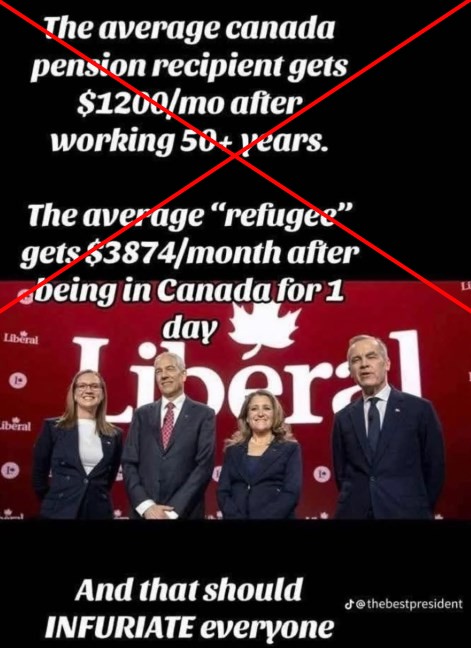
The Canadian political landscape is once again grappling with the complex issue of immigration, fueled by a resurgence of misinformation circulating on social media platforms. A viral image falsely comparing pension benefits received by Canadian workers with financial aid provided to refugees has sparked renewed debate and anxieties, particularly concerning the economic implications of the country’s immigration policies. This misinformation comes at a time of heightened economic uncertainty, with rising housing costs and lingering anxieties lingering from the US-imposed tariff wars during the Trump presidency.
The inaccurate comparison circulating online presents a distorted view of the financial support provided to refugees. The figures suggest refugees receive monthly amounts greatly exceeding what Canadian pensioners receive, fostering resentment and misunderstanding about the actual costs associated with refugee resettlement. This manipulated narrative has found fertile ground on social media platforms, quickly spreading across TikTok, X (formerly Twitter), and Threads, further exacerbating public concerns. The image’s rapid dissemination highlights the challenges of combating misinformation in the digital age, particularly when it taps into pre-existing anxieties.
The resurgence of this false comparison coincides with a shift in Canada’s immigration policies. Following a decade of leadership under Justin Trudeau, marked by an open immigration policy and the resettlement of tens of thousands of Syrian refugees, public sentiment began to shift. Rising housing costs and increased competition for resources contributed to a growing unease regarding immigration levels. This culminated in Trudeau’s government announcing sharp cuts to immigration in 2024, reflecting a growing political imperative to address public concerns.
Mark Carney, who succeeded Trudeau as Prime Minister after the April 2025 election, has inherited this complex landscape. While the Liberal Party, under Carney’s leadership, has committed to maintaining Canada’s role in supporting vulnerable populations, including refugees, they have also pledged to stabilize permanent resident admissions at less than one percent of the population annually beyond 2027. This balancing act aims to address both the humanitarian aspects of immigration and the economic anxieties felt by some segments of the population. Carney’s challenge lies in navigating this complex political landscape while effectively countering the spread of misinformation that threatens to undermine reasoned debate.
The reality of refugee support in Canada is significantly different from the distorted picture painted by the viral image. Refugees receive a one-time start-up allowance to help establish their households, covering essential expenses like furniture, utilities, and winter clothing. This amount, while appearing substantial in isolation, is not a monthly payment, but rather a one-time assistance package designed to facilitate initial settlement. Additionally, refugees receive monthly aid for a maximum of one year, based on provincial social assistance rates, to cover basic needs and shelter. These amounts vary across provinces and are intended to provide a temporary safety net while refugees integrate into Canadian society. Critically, these monthly allowances are often less than the average Canadian Pension Plan payments, directly contradicting the false comparison circulating online.
The persistence of this misinformation underscores the need for accurate and accessible information about Canada’s immigration and refugee resettlement programs. A clear understanding of the support provided to refugees, alongside the economic contributions they make to Canadian society, is crucial to fostering informed public discourse and countering the divisive narratives that often dominate social media. The government, media outlets, and fact-checking organizations have a critical role to play in disseminating accurate information and debunking false claims, ensuring a more nuanced and evidence-based understanding of this complex issue.