








Public Urged to Verify Online Information as AI Fuels Misinformation Crisis
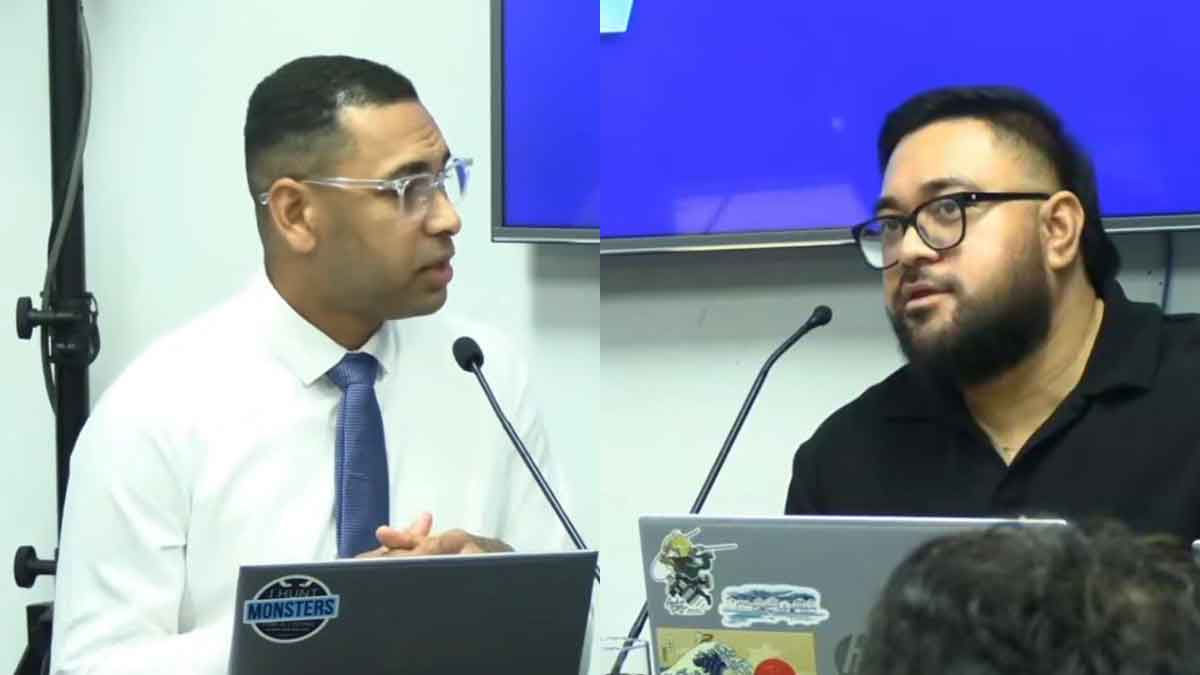
The public is being strongly urged to verify information before sharing it online, as misinformation, disinformation, and malinformation become increasingly difficult to detect, particularly with the growing use of artificial intelligence. This warning emerged during the fijivillage Straight Talk Public Forum with Vijay Narayan, where key officials addressed the growing challenge facing Fiji and the wider world. Online Safety Commissioner Filipe Batiwale and Fiji Law Reform Commissioner David Solvalu both acknowledged that while laws and regulations can help discourage the spread of false or harmful content, technological change has outpaced existing safeguards. With social media platforms amplifying false narratives at unprecedented speed, the responsibility for ensuring truth no longer rests solely with governments or platforms—it now falls, to a significant extent, on ordinary internet users. Batiwale stressed that stronger legal frameworks alone are not a silver bullet. While laws can deter malicious actors and provide remedies after harm occurs, they cannot prevent the initial spread of false information in real time. The decentralized and anonymous nature of online communication makes enforcement extremely difficult. As a result, public education and personal vigilance have become essential tools in the fight against digital falsehoods.
Commissioner Batiwale explained that the Online Safety Commission recognizes the value of legislation but is equally aware of its limits in an era where anyone with a smartphone can become a publisher. He noted that while new laws and policies can help create a safer online environment, they must be accompanied by a cultural shift in how people engage with content. The public, he argued, has a shared responsibility to stop, think, and verify before sharing. This is particularly important in Fiji, where community networks and social groups often accelerate the spread of information—and misinformation—without adequate scrutiny. Batiwale said that too many people forward articles, images, and messages simply because they appear credible or align with their existing beliefs. The consequences can be serious, ranging from public panic and reputational damage to real-world violence and social unrest. He also drew attention to “malinformation,” which involves genuine information deliberately shared out of context to cause harm. This type of harmful content is even more challenging to detect because it is based on facts, making it harder to regulate without risking free expression. The Commissioner emphasized that no legal measure alone can effectively address every harmful piece of content, especially when artificial intelligence tools can now generate realistic fake images, videos, and audio that are almost indistinguishable from reality.
To help combat this, Batiwale offered concrete advice for the public. He urged individuals to pause before sharing content, reminding listeners that “stop and verify” should become a digital habit. First, people should check whether the information comes from a reliable source, such as established news outlets, government agencies, or recognized experts in the relevant field. Second, they should seek information directly from relevant organisations when necessary, rather than relying on second-hand social media posts. For example, if a message claims a health warning, people should check the Ministry of Health’s official website or social media channels. If a viral post concerns a government policy, the public should consult official announcements rather than anonymous commentary. Batiwale also highlighted that the Online Safety Commission can assist with education and awareness initiatives designed to improve digital literacy. The Commission can work with schools, community groups, and civil society organizations to teach people how to verify online information and avoid spreading harmful falsehoods. He stressed that the public should not feel helpless—there are practical steps anyone can take to protect themselves and others. By developing a sceptical mindset and learning how to trace information to its original source, individuals can reduce the power of misinformation in their communities. In a digital environment where AI-generated content is becoming more sophisticated, these ordinary skills are more important than ever.
Meanwhile, Fiji Law Reform Commissioner David Solvalu provided a legal perspective on the issue, noting that there are already provisions dealing with misinformation in specific areas. For instance, electoral laws contain safeguards against false statements that could distort democratic processes. Business practices laws also address deceptive conduct and false representation in commercial activities. These existing legal frameworks were designed for an era when information was produced primarily by professional media organisations and official institutions. However, Solvalu pointed out that social media has drastically changed the scale of the problem. Unlike traditional media, where there were editorial checks and legal accountability, social media allows individuals to create and spread large amounts of misinformation to influence public views and opinions. Anyone can now produce a convincing post, manipulate an image, or even generate a realistic video using AI, and disseminate it to thousands or millions of people in minutes. This democratisation of content creation has brought tremendous benefits, but also significant dangers. The sheer volume and velocity of online information have overwhelmed traditional fact-checking mechanisms and legal enforcement capacities. Once false content goes viral, correction often cannot catch up with the reach of the original lie. This is particularly damaging in the political sphere, where misinformation campaigns can shape election outcomes, undermine trust in institutions, and inflame social divisions.
Solvalu also acknowledged that online misinformation is extremely difficult to regulate, not only in Fiji but around the world. The internet is global by nature, meaning content created in one country can easily be viewed from another. This creates serious jurisdictional challenges for law enforcement and regulatory bodies. Even if Fiji strengthens its laws, content hosted on offshore servers may fall outside its reach. International cooperation is needed, but it is slow and inconsistent. Moreover, governments must be careful not to over-regulate in ways that suppress legitimate free speech. Striking a balance between preventing harm and preserving openness is a complex task. Solvalu argued that because making laws and enforcing them takes time and may never fully address the problem, public education and awareness remain among the strongest ways of addressing the challenge. Educating citizens to critically evaluate what they read and see online builds resilience against misinformation at the grassroots level. When people understand how social media algorithms work, why misleading content is often written to trigger emotional reactions, and how to verify sources, they become less vulnerable to manipulation. Education also promotes a culture of accountability, where sharing unverified information is seen as socially irresponsible rather than acceptable. The Law Reform Commissioner suggested that schools, media outlets, faith-based organisations, and traditional leadership structures all have roles to play in spreading accurate information and promoting digital literacy.
The broader implications of these remarks go beyond Fiji. As artificial intelligence continues to evolve, the battle against misinformation will only become more complex. Deepfakes, automated bots, and AI-generated text are already being used to spread confusion and distrust in many countries. No government, corporation, or civil society group has yet found a perfect solution. However, the combined message from Batiwale and Solvalu is clear: while laws and technology are part of the answer, human judgment is indispensable. Fiji’s experience echoes a growing global consensus that media literacy should be treated as a core skill for modern citizenship. The public is no longer just a consumer of information but also a distributor, and with that power comes responsibility. The officials’ remarks at the fijivillage Straight Talk Public Forum serve as an important reminder that online safety is a shared endeavour. It requires strong governance, responsible platform behaviour, and active participation from users in every community. For ordinary Fijians, and indeed for people everywhere, the call to action is straightforward: check the source, confirm with official channels, and think carefully before sharing. By embracing these habits, individuals can greatly reduce the damage caused by misinformation, disinformation, and AI-driven digital deception, making the online world safer for everyone.


