








PM’s new anti-disinformation unit gets cross-party backing – as Farage says it’s Orwellian attack on free speech
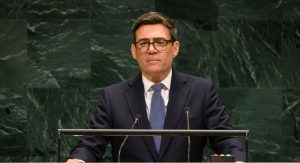
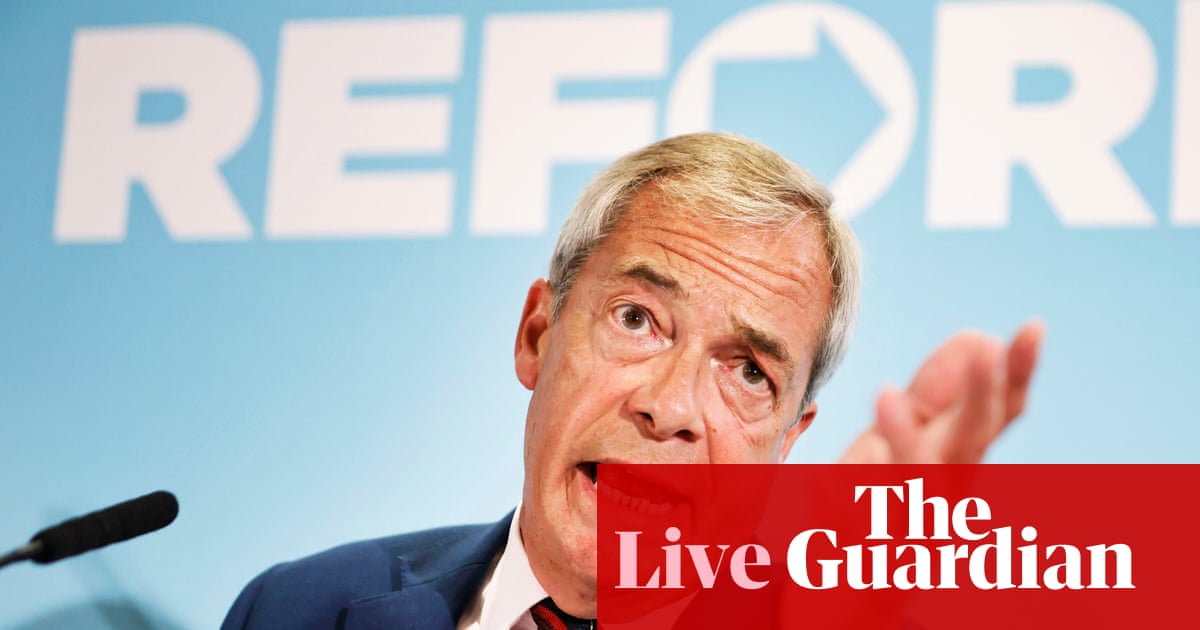
Prime Minister Andy Burnham has announced the creation of a new National Centre for Information Defence, a dedicated body designed to detect, attribute and disrupt hostile state information attacks, in a move that has drawn immediate cross-party support but also fierce criticism from Nigel Farage, the Reform UK leader, who condemned it as an “Orwellian” assault on free speech. Unveiling the initiative during his address to the United Nations General Assembly, Burnham said Britain had given too much ground over the past decade to those peddling “a negative, corrosive narrative about life in Britain, which bears no resemblance to reality”, and he highlighted what he described as an “industrial-scale assault” on the UK’s information environment by hostile actors, particularly Russian agencies. He cited a litany of tactics, from bots and fake websites to falsified newspaper articles and the forged branding of 28 British organisations, including universities and the BBC, and said there was evidence Russia had tried to interfere with the 2019 general election. The centre, he said, would coordinate intelligence, law enforcement and government departments in a more strategic response to information warfare, and would be tasked with supporting and defending democracy. It follows a recommendation from the cross-party Commons Foreign Affairs Committee earlier this year, which had warned that Whitehall’s approach to disinformation was disjointed and said the UK needed to follow countries like France and Sweden in establishing a dedicated national hubero. The prime minister’s announcement was immediately welcomed by the committee’s Labour chair, Emily Thornberry, and by senior members from the Conservatives and Liberal Democrats, who said the UK had been complacent in the face of Russian meddling and needed a robust, statutory, parliamentarily accountable institution. But Farage, in a social media video, said Burnham was setting up the unit “using the excuse that Russia wants to interfere with elections”, and predicted it would be used to clamp down on legitimate dissent in a manner akin to George Orwell’s Ministry of Information.
In his social media post, Farage acknowledged that online bots from Russia, India and elsewhere did try to influence political thinking, calling that “not a good piece of news”, but he said the government had already signalled it would use the new body to stop “far-right tropes” and argued it would inevitably become a tool of censorship. “This will be like George Orwell’s Ministry of Information,” he said. “This will be used to clamp down on free speech. And the one lesson I’m learning, as time goes on, whether it’s funding of parties, whether it’s cancelling elections, is never, ever trust this authoritarian government.” Farage offered no evidence to support his claim, and his intervention came amid broad political pushback from opponents who noted thatet the government had already explicitly ruled out using the unit for “policing domestic political dissent”. Defence Secretary Wes Streeting, giving broadcast interviews after the announcement, was direct in rejecting Farage’s characterisation, arguing that protecting democracy meant defending the freedom to disagree, to challenge government policy and to criticise robustly. “We’re not interested in policing domestic political dissent,” Streeting said on GB News, adding that that freedom was “a stark contrast” to the situation faced by Russian people under their political system. He also said the unit was needed to help the public “separate fact from fiction”,particularly in an era of artificial intelligence in which the next general election would make it difficult to distinguish real versions of politicians and BBC presenters from manufactured deepfakes. The exchange set up a profound argument about where the line between national security and free expression should lie, with the prime minister’s supporters insisting the initiative was narrowly targeted at foreign malign interference, while Farage and other critics cast it as the thin end of an authoritarian wedge.
The warmest backing for Burnham came from the Commons Foreign Affairs Committee, which had spent months examining Russian disinformation and had explicitly recommended exactly such a centre in March. Emily Thornberry, the Labour chair of the committee, said in a statement that for too long successive governments’ approach to disinformation had been “disjointed and without organisation”, allowing states like Russia to “amplify lies about this country, to sow division and stoke tension”. She said the new centre was an opportunity to finally take on a very serious threat, adding: “We were extremely worried about what seemed to be a complacency of the British establishment at the disinformation being promoted from abroad, particularly from Russia. We thought the response from Whitehall had essentially been ‘talk to the hand because the face ain’t listening,’ but it seems we were wrong. I’m absolutely delighted.” The committee’s Tory former culture secretary, John Whittingdale, echoed that sentiment, recalling thatet during its inquiry the committee had received extensive evidence of Russian disinformation targeting both the UK and its allies, particularly to influence democratic elections. “Having seen how countries like France and Sweden have established national centres to counter this threat, the committee strongly recommended that the UK needs to follow suit as a matter of urgency,” he said. “At the time, the government only partially agreed, saying it would consider it alongside the findings of the Rycroft review. It is very welcome that the prime minister has now shared our assessment that Russia is conducting information warfare against the West and is taking action.” Richard Foord, the Liberal Democrat member of the committee, stressed that the new body should be “public-facing, placed on a statutory footing,and accountable to parliament”, and said he looked forward to helping ensure it was a success. “We hope it demonstrates a new and robust response from the UK to hostile state information warfare,” he said. That cross-party alignment gave Burnham a rare moment of political consensus on a national security issue, with figures from the three main Westminster parties all saying the threat was real, coordinated and required a state response – even as Farage’s Reform UK positioned itself as the leading voice of opposition to the plan.
Foreign policy and democracy think tanks also welcomedethe initiative, while adding important caveats about the dangers of overreach and the need for careful implementation. RUSI, the Royal United Services Institute, said the creation of a National Centre for Information Defence was “a welcome, if overdue, step towards the UK mounting a more strategic response to foreign information warfare in the age of social media and AI”. Sophie Williams-Dunning, a RUSI research analyst, noted that despite a legal basis under the National Security Act 2023, the UK’s response had been lacking compared to countries such as France, Sweden, Ukraine and Taiwan, which already had dedicated information-defence agencies. But she also warned that the announcement would inevitably stoke debate about free speech and the appropriate level of government intervention, and that “genuine free-speech concerns will also be instrumentalised and amplified by the same inauthentic or malign networks that the new agency seeks to combat”. Demos, a think tank that has worked extensively on disinformation, similarly endorsed the prime minister’s move but urged him to go further. Hannah Perry, Demos’ director of digital policy, argued that Britain’s information supply was currently “being written in Moscow and spread by algorithms nobody voted for”, and that the new centre could not simply “mop up the mess” but had to “shut the door”. She called for protecting elections from AI manipulation, introducing tougher protocols for crisis flashpoints, and backing trusted news outlets by securing the BBC’s future, protecting local journalism and making public interest news prominent on social media. Addressing free-speech objections directly, she said: “Some will say this is a threat to free speech. But there’s nothing free about speech written by a hostile state and amplified by a machine. Britain should decide how information reaches its people, not the Kremlin or Silicon Valley.” That line captured how the government sought to frame the debate: not as a choice between liberty and security, but as a defence of democracy against manipulation by authoritarian states and unaccountable tech giants. Still, theing spectre of censorship, raised by Farage and amplified by rightwing commentators, seemed unlikely to disappear, particularly given the prime minister’s own language about “corrosive narratives” and “far-right tropes”, which critics said could easily be applied to domestic political speech.
Burnham, for his part, sought to broaden the argument beyond the machinery of counter-disinformation, tying national security to social resilience in his UN speech. He said there could be “no national security without a strong, cohesive society”, and that security started “in every home”, because those struggling with the cost of living, losing hope, or falling out of education or work were more vulnerable to hostile influence. He also stressed the centre would work with allies, noting Britain had already supported Moldova to protect its elections from Russian interference. The prime minister’s speech was also notable for what it did not do: it did not attack the UK’s domestic media, despite early headlines suggesting a crackdown on “corrosive narratives” about Britain. Instead, Burnham explicitly cast the threat as external, from Russian agencies using every means at their disposal “to prey on people’s fears”. Wes Streeting reinforced this point in interviews, saying the government was not aiming at individuals who “simply disagree” with policy, but at hostile state and non-state actors seeking to disrupt democracy through misinformation and disinformation. Yet the prime minister’s emphasis on “far-right narratives” as a vector of Russian influence troubled some civil liberties commentators, who argued that whoever amplifies them, the state should not be in the business of policing political ideology. The government’s reassurances – repeated several times that the new unit will not be used for policing domestic political dissent – were designed to meet those concerns, but they did not fully extinguish them. As RUSI noted, even legitimate free speech worries would now be weaponised by the very malign networks the agency was created to fight. The result is a fraught political landscape in which the new centre will have to prove it can target foreign threats without chilling domestic speech–a task made no easier by the febrile atmosphere around AI, deepfakes and foreign interference in elections.”
The launch of the National Centre for Information Defence marks a significant shift in the UK’s approach to national security, from reactive, fragmented responses to a more permanent, coordinated, internationally embedded strategy. It comes at a time when Britain, like many Western democracies, faces an accelerating threat from AI-generated disinformation, state-backed troll farms and real-world violence incited online, from the Southport riots to recent asylum housing rows. The government hopes the new body will not only protect Britain’s elections but also strengthen societal resilience, by helping citizens discern truth from falsehood in an increasingly polluted information environment. But its success will depend on navigating deep political divisions at home, as well as engaging with international partners in a world where even allies sometimes peddle narratives contrary to British interests. With Andy Burnham preparing to use his speech to Labour conference next week to lay out a broader vision of national renewal, the anti-disinformation unit already serves as a lightning rod for a wider argument about the relationship between security, freedom and trust in government. Farage’s comparison to Orwell’s Ministry of Information captured a real and potent political charge, echoed in parts of the rightwing media and by some civil libertarians. But the cross-party support from the Commons Foreign Affairs Committee, plus the qualified endorsements from RUSI and Demos, suggested that the political centre still saw foreign information warfare as simply too serious to ignore. As one committee member put it, the UK could no longer afford to be complacent while hostile states sought to undermine its democracy. The coming months, with elections approaching across Europe and the next UK general election on the horizon, will be the first true test of whether the new centre can deliver on its promise – detecting, attributing and disrupting attacks without becoming the very instrument of control that its critics fear. For now, the prime minister appears willing to accept that trade-off, gambling that the British public, faced with overwhelming evidence of Russian and other hostile interference, will broadly support a more muscular state response. The alternative, he implied, was to allow hostile actors to continue poisoning the information ecosystem, a course that would inevitably be more corrosive to democracy than any carefully designed defensive institution could ever be. In that sense, the creation of the National Centre for Information Defence is not just a new government agency; it is a defining statement of how this prime minister views the relationship between the state, the individual and the digital public square – and why he believes protecting democracy requires not only defence against missiles, but defence against lies.


