







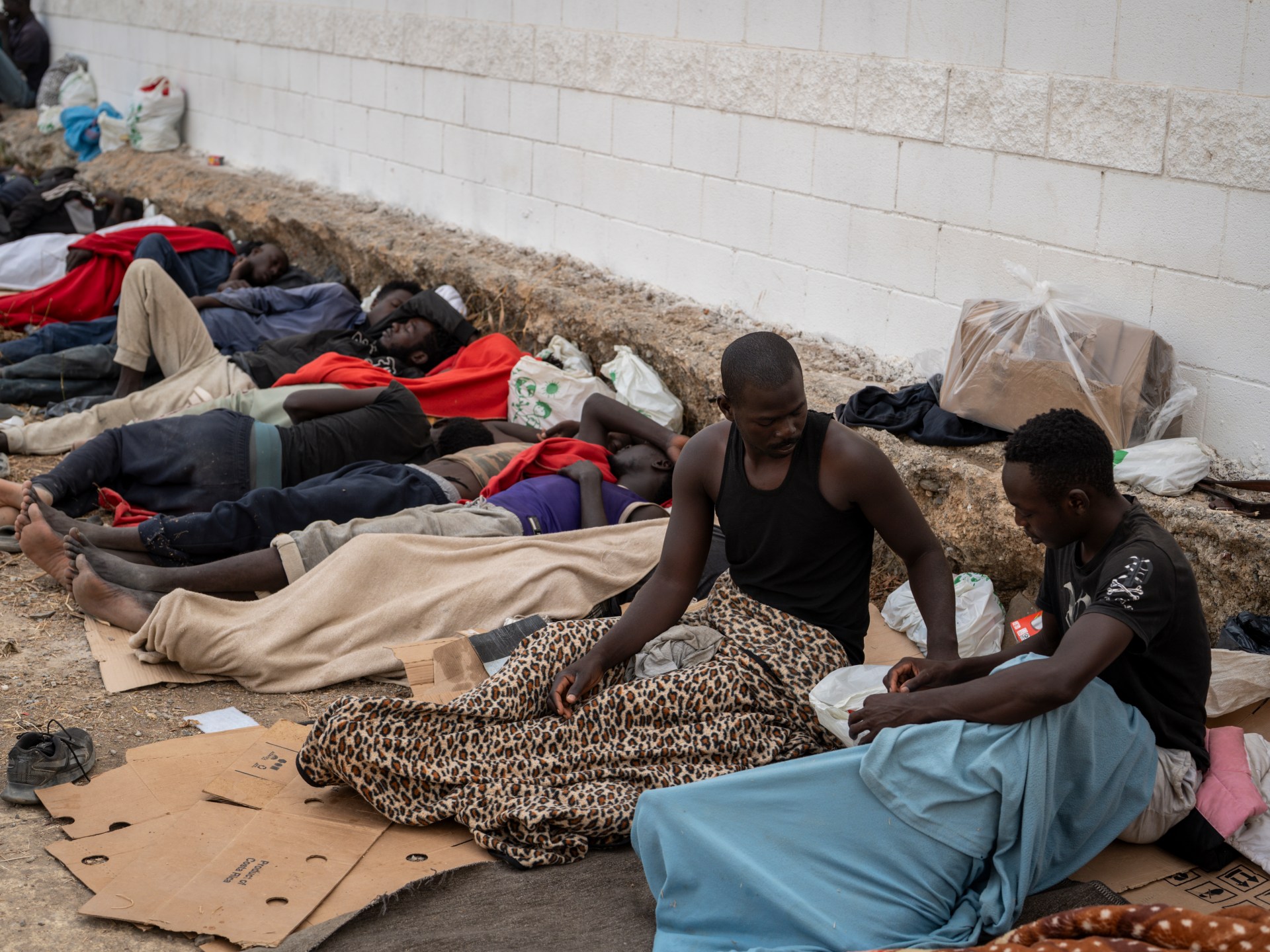
MADRID — Spanish Prime Minister Pedro Sanchez on Monday accused Russia and Israel of spreading and amplifying disinformation during the mass migrant influx into the North African enclave of Ceuta last month, citing research by the European External Action Service (EEAS), the European Union’s foreign service, which found that social-media rumours in the first days of the crisis were linked to both countries. In an interview with Cadena Ser radio, Sanchez said that after July 30 and 31, disinformation spread across social networks was connected to Russia and Israel, and also to an “ultra-right international” that, in his words, uses migration to attack Spain and Europe and divide the continent. The accusations come against the backdrop of one of the largest sudden border movements in the history of Spain’s only land frontier with Africa: at least 70,000 people crossed into Ceuta from Morocco over several days in late July, triggering a Europe-wide migrant alert. The vast majority were returned to Morocco within hours, but thousands have remained in the territory, many of them living rough in public spaces, sleeping on pavements, in parks and in abandoned buildings. Sanchez said the role of the two countries was “evident,” noting that both Moscow and Jerusalem were at odds with Madrid over Spain’s positions on the wars in Ukraine and the Middle East. Spain has been one of the EU’s most committed supporters of Ukraine, while it has angered Israel through its recognition of a Palestinian state and its repeated criticism of Israel’s military campaign in Gaza. The prime minister said the Spanish government is continuing to investigate exactly how the disinformation campaign worked, and he used the interview to appeal for European solidarity in confronting both migration and the hostile narratives that surround it. According to Sanchez, the crisis cannot be separated from hybrid influence operations that exploit human desperation to sow political panic and deepen divisions among European governments.
In his Cadena Ser interview, Sanchez said the disinformation included false assertions deliberately circulated by human trafficking groups as well as by state-linked actors. One particular claim spread online was that if a person entered Ceuta by swimming around the coastal breakwaters, they could not legally be deported to Morocco. That was false, Sanchez said, but it was deeply dangerous because it could prompt people to attempt the deadly crossing in order to stay permanently in European territory. He said human trafficking networks had an interest in spreading such claims, while Russia and Israel, for their own strategic reasons, had amplified them. The prime minister insisted that the EEAS research had established a clear pattern. Russia, Sanchez argued, resents Spain’s military and diplomatic support for Ukraine, and an organised disinformation operation is consistent with Moscow’s broader efforts to destabilise European societies. Israel, meanwhile, has repeatedly clashed with the Spanish government over the Gaza war, and the accusation suggests that the Middle East conflict now has a spillover effect inside Spain’s domestic politics. Sanchez also referred to an “ultra-right international” that uses migration to attack Europe; far-right leaders and parties across the continent seized on the Ceuta influx and circulated images of migrants walking through the streets of the enclave, often stripping them of context. The prime minister’s decision to publicly accuse Russia and Israel, rather than continuing to speak only of anonymous networks, marks a significant escalation. It ties a local border crisis to global geopolitical rivalries and exposes the extent to which migration has become another front in European information warfare. Spain’s opposition parties, however, have not been convinced; they accuse Sanchez of attempting to deflect attention from his government’s failure to prevent the border surge. The government has not yet published the underlying intelligence assessments, and no official response from Moscow or Jerusalem has been reported so far, but the Spanish prime minister made clear that he expects the investigation to continue until the full picture is known. Experts say that without publication of concrete evidence, the accusation will remain contested, but the fact that a European leader is willing to say these things openly is itself a measure of the changing discourse around migration and disinformation.
On the ground, Ceuta remains under severe strain. The enclave is just 18 square kilometres (7 square miles) in area and has a resident population of about 80,000, which means even the arrival of a few thousand people in a short period places enormous pressure on local infrastructure. Since late July, residents have held regular demonstrations over what they describe as security and hygiene problems linked to the migrant presence. People have gathered in public squares to demand that the central government take stronger action, remove makeshift camps and guarantee safety in their neighbourhoods. The Spanish government, which is a coalition led by Sanchez’s Socialist party, says that between 3,500 and 7,000 migrants remain in the territory, including unaccompanied minors. Ceuta’s right-wing politicians, who run the local administration, say the number is significantly higher, at least 10,000, and they have accused the national government of downplaying the crisis. The discrepancy shows how sharply the enclave’s politics are divided along national and ideological lines. Sanchez’s announcement of an additional 168 million euros, about $195 million, in aid for Ceuta is meant to address the immediate pressure. The funds are intended for security, sanitary services, housing and care for minors, but local authorities say much more will be needed in the long run. The prime minister also used the interview to address one of the most sensitive questions of the entire crisis: whether Morocco was directly involved in allowing so many people to cross the border. He said no intelligence service with which the Spanish government normally cooperates had suggested “any … involvement in one way or another” of the Moroccan authorities. This was a clear statement of confidence in Morocco, and it immediately drew criticism from opposition leaders who believe Rabat used migration as a diplomatic weapon. Sanchez responded that the crisis can only be resolved through cooperation and not through distrust towards Morocco. He argued that Spain’s relationship with Morocco is critical to preventing future border emergencies, and that blaming Morocco without evidence would only harm Spanish interests. But the prime minister’s own phrase was carefully limited: he said existing intelligence cooperation had not shown involvement, which leaves room for further questioning as the investigation proceeds. The aid package, meanwhile, is also a political message that the national government has not abandoned Ceuta, even as local voters express frustration in the streets.
Sanchez’s handling of the Moroccan dimension reflects the diplomatic tightrope on which his government must walk. Spain and Morocco have a long and turbulent relationship, but migration control is one of the main areas where their interests are intertwined. Moroccan security forces have often cooperated with Spanish authorities in stopping irregular crossings, and Spain relies heavily on that cooperation to manage the borders of Ceuta and Melilla. The 2021 border opening, when thousands of people entered Ceuta during a diplomatic crisis over Western Sahara, is still fresh in the memory of many, and it has made Sanchez’s statement all the more notable. He was not merely clearing Morocco of blame; he was building a case for renewed partnership. The additional 168 million euros promised for Ceuta is also part of that approach, because a more stable and better-equipped enclave makes it easier for Spain and Morocco to cooperate rather than argue over each incident. Yet this strategy is fraught with risk. If new evidence emerges that Rabat authorised or tolerated the border movement, the political fallout could be severe. Spain’s conservative Popular Party and the far-right Vox have already demanded that Sanchez appear before parliament to explain the government’s actions before, during and after the influx. Opposition politicians, however, have focused less on the foreign disinformation and more on the immediate security failures. The European Union is watching closely. Brussels is trying to implement a common migration policy that encourages member states to share responsibility, and Spain is one of the countries that wants to see more European involvement in North African border management. Sanchez’s attack on Russian and Israeli disinformation is consistent with that position: by framing the crisis as a European challenge, he is asking Brussels to help protect the EU’s external border with both physical and informational tools. But placing Israel in the same category as Russia carries special weight, and not all EU member states will agree with that characterisation. Spain’s relations with Israel have deteriorated sharply since the start of the Gaza war, and Sanchez’s remarks on Monday are likely to deepen the rift. Whether he can sustain the support of other European capitals in making this argument remains unclear. In the meantime, the Spanish government insists that nothing is more important than continuing the investigation, so that the full chain of those responsible—foreign states, criminal networks, and far-right actors—is brought to light.
The appeal for European solidarity is not just rhetorical. As the prime minister noted, migration pressure at the EU’s southern border is a structural issue, and no single member state can solve it alone. The events in Ceuta happened only two months after the EU’s new migration pact began to be implemented, and they have already put that framework under pressure. A sudden arrival of 70,000 people is exactly the kind of scenario that European contingency plans are meant to address, but the fact that most of them were returned so quickly also shows the limits of plans that depend on Morocco’s willingness to take people back. Sanchez’s reference to the EEAS research adds a new layer to the debate. The EU’s foreign service has established a common approach to detecting foreign information manipulation and interference, and its analysts have repeatedly warned that hostile states use social media to enlarge crises and exacerbate social divisions. By naming Russia and Israel, Sanchez effectively asked the EEAS to put its resources into proving and countering this interference. That may lead to more public reports and possibly to EU-level measures against individuals or entities found to be involved. For now, the Spanish government says it is continuing its own investigation. The prime minister wants European countries to recognise that attacks on Spain over migration are intended to weaken the whole European fabric. It is an argument that resonates with officials in Eastern European countries that have spent years fighting Russian influence, but it is less familiar in Western capitals, where governments have often been hesitant to blame allied states like Israel. Sanchez has taken a risk in doing so, but he appears to believe that silence is more dangerous. The alternative, he suggests, is to allow false narratives about immigration to take hold, leading to panic and to policies that are both inhumane and ineffective. The investigation into what happened in Ceuta, and into who spread the false information about deportation and legal status, will therefore have consequences beyond the enclave itself. It will test whether the European Union is prepared to treat disinformation around migration as a threat equal to the migration itself.
Ultimately, what began as a border emergency has become a battle over narrative. Sanchez’s statements on Monday set out a clear hierarchy of threats: Russia and Israel, together with an “ultra-right international,” tried to exploit a humanitarian tragedy to attack Spain and Europe. The false claim about swimming across the border was not just a technical detail; it was a mechanism designed to increase the number of people willing to make that dangerous attempt, thereby deepening the chaos. Sanchez said the government is continuing to investigate what happened, and he promised more transparency. He also said that no intelligence service with which Spain cooperates had found signs of official Moroccan involvement, and he insisted that cooperation with Rabat is essential. These two messages—look at Russia and Israel, but cooperate with Morocco—reflect the complex geometry of Spanish foreign policy. The fact that Sanchez is willing to name Israel openly is a sign of how much the Middle East conflict has frayed former alliances. It is also a reminder that migration politics cannot be separated from wars in Ukraine and Gaza. In Europe, the Spanish prime minister’s words will be read with concern by governments that prefer to maintain stable relations with Israel, and with satisfaction by those who have long warned about Russian information operations. The next few weeks will be decisive: if Spain can produce evidence supporting its claims, it will set a precedent for how European leaders respond to disinformation around migration. If not, the accusations will be remembered as a political deflection. In the meantime, Ceuta remains an unresolved crisis. Thousands of people continue to live in uncertain conditions; local residents continue to protest; and the 168 million euros in aid has not yet solved the deeper demographic and economic pressures that drive people to cross the border. Sanchez’s final appeal was for European solidarity, but also for a shared understanding that crises like Ceuta cannot be treated only through walls and deportations. They must be addressed with cooperation, with information integrity, and with a clear-eyed view of the foreign interests trying to exploit them. Whether that message survives contact with the realities of European politics is another question. But Monday’s interview makes one thing undeniable: the battle over Ceuta will be fought as much in the digital sphere and in the corridors of power as on the grey shores of the enclave itself.


