


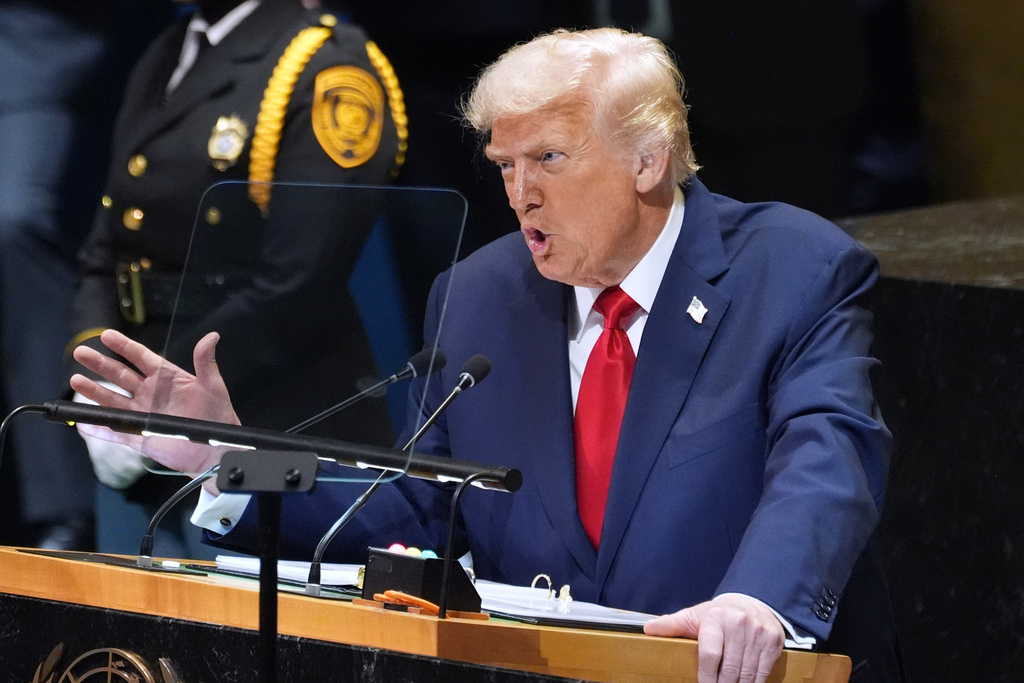
Trump’s UN Address: A Spectacle of Incoherence and Delusion
Former President Donald Trump’s 2020 address to the United Nations General Assembly stands as a stark example of unconventional political rhetoric, marked by contradictions, self-aggrandizement, and a detachment from reality that left many observers questioning his mental fitness and understanding of global affairs. The speech, intended to be a major foreign policy address, devolved into a rambling, incoherent monologue that alienated allies, emboldened adversaries, and left the United States’ international standing diminished.
Trump’s address began with a paradoxical assessment of the United Nations. He simultaneously praised its “tremendous potential” while criticizing its shortcomings and highlighting his administration’s withdrawal from various UN bodies, including the World Health Organization and the Human Rights Council. This contradictory stance underscored a recurring theme throughout his presidency: a disdain for multilateral institutions coupled with a desire to project American dominance on the world stage. His assertion that the U.S. remained “one hundred percent behind” the UN, directly contradicting his previous statements, further amplified the sense of incoherence.
Beyond the inconsistencies, Trump’s speech was riddled with misinformation, disinformation, and outright falsehoods. He boasted of ending wars that were demonstrably ongoing, such as the conflicts in Ukraine, Gaza, and Sudan, and hinted at his deservingness of the Nobel Peace Prize. This disconnect from reality extended to his pronouncements on immigration and renewable energy, which he characterized as a “double-tailed monster” destroying cultures and economies. Such pronouncements, delivered with a lack of supporting evidence or logical reasoning, further solidified the perception of Trump as detached from the complexities of global issues.
Trump’s rhetoric veered into the xenophobic and anti-scientific. He warned European nations about the supposed devastation caused by migrants and dismissed climate change and green energy initiatives as a scam. While such sentiments might have resonated with a segment of his domestic base, they clashed sharply with the prevailing views held by the international community. His speech, rather than presenting a coherent vision for American foreign policy, served to isolate the United States from its allies and undermine its credibility on critical global issues.
The erratic nature of Trump’s address, punctuated by abrupt shifts between self-congratulation, grievances, and rambling asides, raised concerns about his cognitive abilities and psychological state. His fixation on personal greatness, resentment towards international institutions, and inability to connect facts in a coherent manner painted a picture of a leader struggling with more than just poor speechwriting. The spectacle was not simply embarrassing; it raised serious questions about the stability and reliability of American leadership on the world stage.
Trump’s UN address was a missed opportunity for the United States to engage constructively with the international community. At a time when global cooperation was needed to address pressing challenges like wars, pandemics, and climate change, Trump offered only a confusing mix of boasts, grievances, and conspiracy theories. The speech served as a stark reminder of the dangers of prioritizing domestic political rhetoric over reasoned engagement with global affairs.
The world desperately needed American leadership grounded in reality, empathy, and a commitment to multilateral cooperation. Instead, it received a performance that undermined American credibility, alienated allies, and emboldened adversaries. The legacy of Trump’s 2020 UN address is one of missed opportunities, heightened tensions, and a further erosion of trust in American leadership on the world stage. His performance served as a cautionary tale about the importance of informed, rational, and responsible leadership in navigating the complexities of global affairs.