







Guyana to Consider Amending Laws to Combat Social Media Misuse, President Says
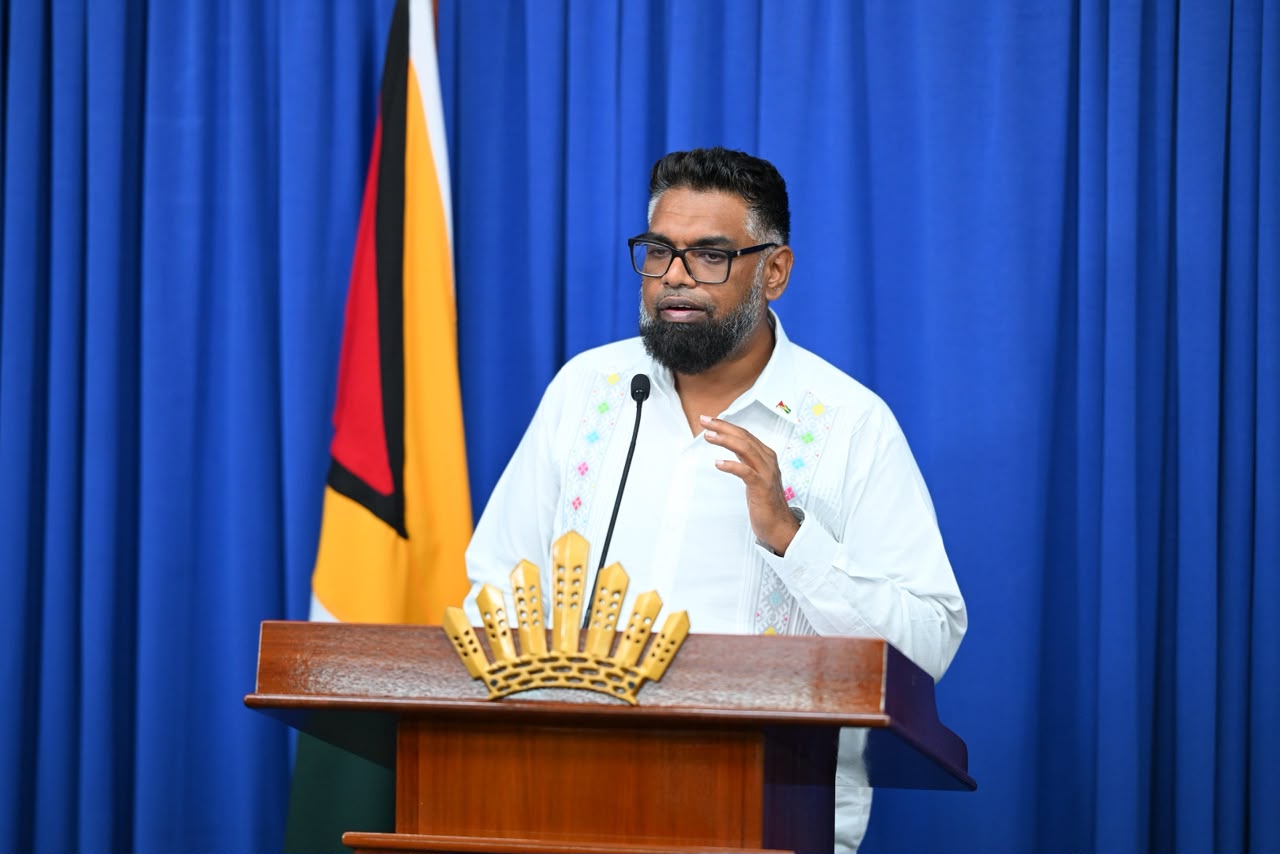
President Irfaan Ali said Tuesday that Guyana may amend its laws to address what he described as growing misuse of social media, including the spread of misinformation and the publication of harmful material. Responding to a question at his press conference, Ali said misinformation should not be treated as harmless online commentary. “Misinformation is always calculated information. It is very unfortunate that we can misuse social media in such a way,” he said. He argued that misinformation can be deliberately produced to achieve a particular outcome and said Guyanese must increasingly rely on facts, credible sources and responsible use of social media. “People have to take action. They have to utilise the legal mechanism so that the facts can be established,” the president added. The comments come as Government is already examining legislation and regulation relating to social-media platforms. Ali did not provide a timeline or detailed proposals, but his remarks signal a significant shift in official thinking. Guyana, a country now at the centre of a major oil boom, has experienced an explosion in online activity in recent years, with social media serving as a primary source of news and information for many citizens. The government has repeatedly expressed concern about the speed with which false narratives can spread, particularly during moments of national crisis. Ali’s statement on Tuesday broadened the conversation beyond earlier discussions about protecting children from harmful online content, suggesting that the government is now focused on the wider information ecosystem. He said the legal system should be used to establish accountability where people are deliberately spreading false or harmful information, and he urged Guyanese to develop a stronger ethical and moral approach to what they publish online. “We too are looking at how we can amend our laws to address the very concerns that you have raised,” he said.
Ali’s central argument is that misinformation is not an accident. “Misinformation is always calculated information,” he emphasised, insisting that falsehoods are often manufactured with the intent to influence public opinion, damage reputations or create confusion. He said it is “very unfortunate” that social media can be misused in such a way, and he called on citizens to be more disciplined in their online behaviour. The president did not single out any particular political group or individual, but his comments came amid a period of intense political debate in Guyana, where social media has been used to attack opponents, spread rumours and amplify unverified claims. Ali said Guyanese must increasingly rely on facts, credible sources and responsible use of social media. He also suggested that victims of misinformation should not simply complain privately; they should take legal action. “People have to take action. They have to utilise the legal mechanism so that the facts can be established,” he said. This call for legal recourse is significant because it places responsibility on individuals to defend their reputations and on courts to determine the truth. It also signals that the government is willing to create a legal environment in which such claims can be pursued. Ali’s remarks reflect a broader global debate about the regulation of social media, with governments around the world struggling to strike a balance between freedom of expression and the need to prevent harm. In Guyana, the debate is particularly acute because the country’s democratic institutions are still developing, and social media has become a powerful tool for both civic engagement and disinformation. The president’s comments also carry implications for journalists, content creators and ordinary users, who may now face greater scrutiny over what they share and publish online.
The government’s interest in social-media regulation is not new. Earlier this year, Attorney General Anil Nandlall said that the government’s social-media consultations were focused on protecting children from harmful online content. He rejected claims that the initiative was intended to censor social media, arguing that the state has a duty to safeguard vulnerable populations, especially minors, from exploitation, abuse and exposure to inappropriate material. Those consultations were part of a broader review of the legal framework governing online platforms, and they included discussions with civil society groups, technology companies and legal experts. Nandlall’s comments at the time suggested that the government was moving cautiously, mindful of concerns about free speech and the potential for overreach. However, Ali’s latest remarks indicate that the scope of the review has expanded. The president’s reference to “harmful material” and “misinformation” goes beyond child protection and touches on the quality of public discourse more generally. This could include defamatory statements, false news, incitement to hatred, and the non-consensual sharing of private images. By linking the need for legal reform to the recent MV Barima tragedy, Ali has also connected the issue to real-world consequences, arguing that the circulation of graphic or misleading content during a national crisis can compound suffering and undermine public trust. The government’s approach, he suggested, is not about silencing dissent but about creating a more responsible information environment.
The MV Barima tragedy served as a powerful example of what Ali described as unacceptable social-media behaviour. He pointed to the publication and circulation of photographs from the scene as an illustration of how online platforms can be used to exploit human suffering. While he did not provide details about the images, his reference was clearly intended to highlight the ethical failures that can occur when social media users prioritise attention and virality over compassion and accuracy. The president said the legal system should be used to establish accountability where people are deliberately spreading false or harmful information. This statement suggests that the government may be considering new penalties for those who share graphic content without consent, or who publish information that interferes with official investigations or causes distress to victims’ families. Ali also urged Guyanese to develop a stronger ethical and moral approach to what they publish online. He appeared to be appealing not only to lawmakers but also to the conscience of ordinary citizens, encouraging them to think before they post and to consider the potential harm their actions might cause. This dual approach—combining legal reform with moral persuasion—reflects a recognition that legislation alone cannot solve the problem of social-media misuse. Cultural change, including greater digital literacy and respect for privacy, is also necessary if the country is to build a healthier online environment.
Government has already been involved in legal action involving Meta, the parent company of Facebook and Instagram. Nandlall said in June that Guyanese courts had issued orders involving the technology company, demonstrating that large international platforms are not beyond the reach of local law. This is a significant development, as it challenges the assumption that global social-media companies can operate with impunity in smaller countries. The legal action involving Meta suggests that Guyana is prepared to assert its jurisdiction over platforms that host content affecting Guyanese citizens. It also sets a precedent for future cases involving other technology companies. If Guyana amends its laws to address misinformation and harmful content, it may seek to impose new obligations on social-media platforms, such as requiring them to remove false content within a specified time, to cooperate with law enforcement, or to provide information about users who spread illegal material. However, such measures are likely to raise complex legal and practical questions. International platforms often argue that they are not publishers and therefore should not be held responsible for user-generated content. They also face conflicting legal requirements from different countries, making it difficult to comply with local laws without affecting users elsewhere. Despite these challenges, Ali’s comments suggest that Guyana is determined to explore every available avenue to regulate online behaviour, even if that means confronting powerful multinational corporations.
The broader implications of Ali’s statement are likely to be felt across Guyanese society. On one hand, there is widespread frustration with the toxic nature of online discourse, and many citizens have welcomed the idea of stronger regulation. Misinformation has been linked to public-health crises, electoral manipulation and social unrest in many countries, and Guyana is not immune to these dangers. On the other hand, there are concerns that new laws could be used to suppress legitimate criticism of the government or to punish journalists and activists who expose wrongdoing. The challenge for policymakers will be to design legislation that targets genuine harm without infringing on fundamental rights. Ali sought to address these concerns by emphasising the importance of facts, credible sources and legal mechanisms, but he did not explain how the government would distinguish between deliberate misinformation and honest mistakes, or between harmful content and unpopular opinions. The coming months are likely to see intense debate over the shape of any new legislation, with civil society organisations, media houses and legal experts all seeking to influence the outcome. What is clear is that the era of unregulated social media in Guyana may be coming to an end. The president’s remarks have put the country on notice: the government is watching, and it is prepared to act. Whether the response will be measured and principled, or heavy-handed and counterproductive, remains to be seen. For now, Ali has made it clear that the status quo is no longer acceptable, and that the law must evolve to meet the challenges of the digital age.


