




PORTUGAL: Social Democrats Clash with Digital Populism at Summer University – Duarte Proposes Public Funding for Journalism, Mesquita Nunes Warns of CHEGA’s Institutional Assault
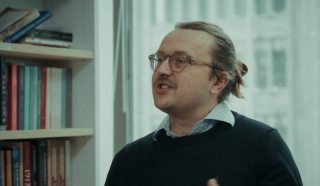
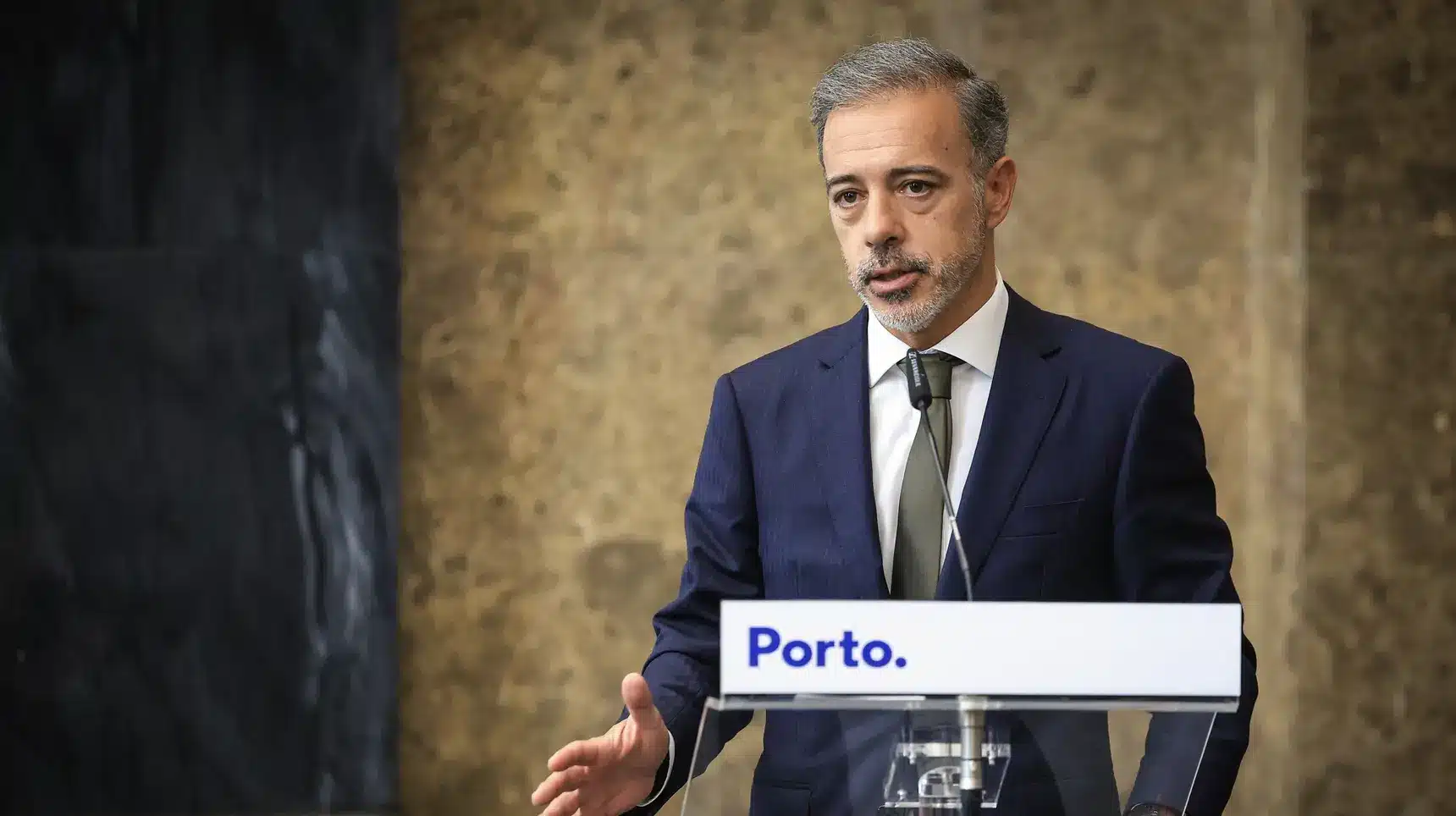
The annual Summer University of Portugal’s Social Democratic Party (PSD) served as the backdrop for a profound debate on the corrosive intersection of algorithms, disinformation, and democratic resilience. Held under the thematic banner “Algorithms: Democracy weakened?”, the event brought together two prominent figures from opposite ends of the political spectrum—Pedro Duarte, the Mayor of Porto and Vice-President of the PSD, and Adolfo Mesquita Nunes, a distinguished lawyer and former leading deputy of the CDS-PP—to dissect the existential threats facing liberal democracies in the digital age. The discussion was not merely an academic exercise; it was a stark, urgent appraisal of how platform-driven technology has fundamentally upended the economic foundations of journalism and empowered extremist political forces, specifically the far-right CHEGA party, to weaponize outrage against the very institutions that underpin the state. In a series of candid remarks, both speakers articulated a shared alarm regarding the declining trust in traditional media and parliament, offering distinct yet complementary diagnoses and prescriptions for saving the democratic project from a spiral of superficiality and cynicism.
The core of Mayor Duarte’s argument centered on the catastrophic economic disruption inflicted upon the legacy media sector by social media giants. He asserted unequivocally that social media has effectively “destroyed the media’s economic model,” dismantling the advertising revenue streams that once sustained rigorous, investigative journalism. In the pre-digital era, newspapers and broadcasters operated under a cross-subsidy model where profitable classified ads and mass-market advertising financed expensive, public-interest reporting. Today, platforms like Google and Meta have monopolized the ad market, harvesting behavioral data with surgical precision and leaving traditional outlets starved of capital. Duarte dismissed the notion that a purely free-market approach could salvage the situation, declaring that “from a strictly economic point of view, journalism’s economic model does not work if we let the market operate on its own.” This diagnosis frames the crisis not as a temporary technological transition that will self-correct, but as a structural market failure producing what economists call a “public goods” shortfall—society loses access to accountability journalism because the market is incapable of pricing it effectively against cheap, viral content.
Consequently, Duarte proposed a radical yet pragmatic solution: the introduction of robust public funding mechanisms for journalism. However, he was acutely aware of the inherent dangers of state-subsidized media, which can become a mouthpiece for government propaganda. To mitigate this risk, he laid down strict non-negotiable safeguards, insisting that any such funding “must guarantee that it is free, independent of public authorities, with standards of rigour and transparency.” This delicate balance—between public financing and editorial autonomy—represents a sophisticated intervention in the debate over journalism’s sustainability. Duarte acknowledged the practical complexities of such a scheme, admitting that “the concept will not be at all easy to bring into being,” a candid nod to the labyrinthine regulatory frameworks, potential for partisan manipulation, and the resistance from media proprietors who fear losing control to state bureaucrats. Nevertheless, his framing suggested that the alternative—allowing journalism to wither or be fully absorbed by the digital oligopolies—is a far greater risk to democratic health, effectively leaving the public uninformed and susceptible to algorithmic manipulation.
Turning his attention to the political arena, Adolfo Mesquita Nunes shifted the debate toward the pathological behaviors of populist movements exploiting these digital ecosystems. He directed a stark warning at the Portuguese public regarding the tactics employed by CHEGA, the far-right party that has surged in the polls. Mesquita Nunes argued that CHEGA is deliberately utilizing social media to dismantle the credibility of Portugal’s democratic parliament. “Look at what is happening in parliament,” he urged, describing a “deliberate attempt to destroy the credibility of an institution.” He elaborated that CHEGA’s primary goal is “to turn parliament into something that people cease to respect,” transforming the chamber of representative democracy into a stage for theatrical provocation and calculated chaos, which is then clipped, amplified, and disseminated across TikTok, Instagram, and YouTube. This strategy, he warned, is deeply effective because the metrics of social media reward conflict, emotional arousal, and outrage—the exact dynamics that mainstream politicians often avoid. By generating perpetual controversy, CHEGA dominates the digital conversation, forcing legacy media to cover their antics while simultaneously undermining the public’s faith that parliament can solve their real-world problems, thereby breeding the very cynicism that feeds their electoral growth.
Mesquita Nunes broadened his critique beyond a single party, diagnosing a systemic societal ailment where political moderation and substantive competence are systematically penalized in the online marketplace of attention. He lamented that “it is almost a miracle today that sensible people win elections” because “sensibleness is so not sexy.” This observation cuts to the heart of the algorithm’s architecture: platforms prioritize engagement metrics, and negativity bias ensures that outrageous, divisive, and absurd content spreads far faster than nuanced policy proposals. The modern political arena has become an entertainment spectacle, where charisma and contrarianism are valued over evidence and administrative skill. He expressed deep concern that society is actively “rewarding the opposite” of prudent governance, celebrating demagogues who offer simplistic answers to complex problems. When politicians adopt the persona of internet influencers—posting memes, picking fights, and appealing to visceral emotions—they win algorithmic visibility, but they inevitably degrade the deliberative quality of democracy, reducing policy debates to shallow popularity contests dictated by dopamine-driven scrolling habits.
In a unifying conclusion, both speakers converged on a proactive, albeit challenging, prescription: the imperative to make “sensibleness and democracy algorithmically sexy.” Pedro Duarte specifically highlighted this need for a paradigm shift, stating that “if we manage to get there, perhaps in this way we can all begin to save democracy and find the antidote” to the toxic digital environment. This involves more than just defensive regulation; it requires an offensive reclaiming of the digital public sphere. It calls for political leaders, journalists, and civil society to embrace the tools of modern media—short-form video, visual narratives, and agile communication strategies—to present democratic values with the same emotional punch that populists currently wield. For Duarte, this is intertwined with his media funding proposal: investing in content that is not only rigorous but also compelling enough to compete for attention. Mesquita Nunes echoed this, insisting that the battle will be won by those who can adapt the substance of democratic governance into the format of viral virility, proving that boring competence can be packaged to ignite passion, while also demanding that platforms be held accountable for the amplification of malign content.
Ultimately, the debate at the PSD Summer University painted a stark canvas of the contemporary democratic predicament—a struggle fought not on battlefields or in ballot boxes alone, but within the hidden code of recommendation algorithms. Mayor Duarte’s call for public funding serves as a lifeline for the fourth estate, preserving its role as a watchdog against the eroding economics of digital capitalism, provided it remains fiercely independent from political power. Mesquita Nunes’s warnings regarding CHEGA illuminate the cynical playbook of authoritarian populism, which thrives on delegitimizing institutions through manufactured chaos. Their shared conclusion—that we must make sensibleness sexy—is a profound call to action for all defenders of liberal democracy. It signifies a rejection of naive fatalism and a demand for creative, courageous adaptation. As Portugal and the wider European Union confront rising extremism and collapsing media trust, this high-level reflection offers a crucial blueprint: to rescue democracy, one must not only restore the economics of truth but also master the psychology of attention. The future of governance rests not just in legislation passed in parliament, but in the battle for the very algorithm that shapes the minds of the electorate.