








Poland Establishes Unified Center for Combating Disinformation, a European First, as Hybrid Threats Intensify
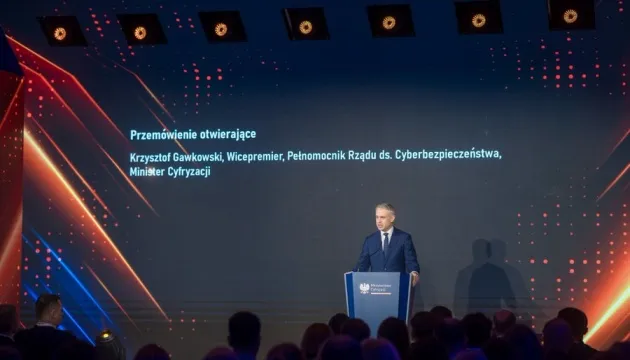
WARSAW — In a landmark move to fortify the nation’s digital and information security, Polish Prime Minister Donald Tusk has signed an order establishing the Center for Combating Disinformation, a dedicated government agency tasked with coordinating Poland’s response to foreign influence campaigns. The announcement was made on Tuesday by Deputy Prime Minister and Minister of Digitalization Krzysztof Gawkowski during the eighth Cybersecurity Forum in Warsaw, as confirmed by a Ukrinform correspondent. The decree was formally signed on September 29 and took effect the following day, marking a decisive step in Poland’s efforts to counter a growing wave of hostile propaganda. Gawkowski declared that Poland would be “the first country in Europe to create a single, unified center to combat disinformation,” positioning Warsaw at the forefront of a continental push to defend democratic institutions against manipulation. The center is set to become the sole government agency with a comprehensive mandate to detect, analyze, and neutralize disinformation campaigns, particularly those originating from Russia and Belarus, which Polish officials have repeatedly identified as the primary sources of destabilization.
The creation of this specialized body represents a significant organizational overhaul in Poland’s security architecture. According to Gawkowski, the center will not only support the government in its day-to-day fight against disinformation but will also develop a long-term strategic framework to anticipate and counter hostile information operations. The entire process of establishing the institution was coordinated by Deputy Minister of Digitalization Paweł Olszewski, who is also responsible for cybersecurity, underscoring the close linkage between information integrity and technical security. By consolidating efforts into a single entity, the Polish government aims to overcome the fragmentation that has often hampered previous responses, where multiple agencies worked in silos without a cohesive strategy. The center’s mandate is expected to include real-time monitoring of social media and news outlets, cooperation with tech platforms, and rapid communication with the public to debunk false narratives. This unified approach is designed to enable Poland to react swiftly and decisively to disinformation attempts, from election interference to attempts to undermine public trust in state institutions and international alliances.
The urgency behind the new center stems from an alarming escalation in disinformation activities targeting Poland, which officials have linked directly to the Kremlin and its ally in Minsk. Gawkowski emphasized that disinformation — particularly that spread by Russia and Belarus — is constantly on the rise and is being used to destabilize the situation in Poland. This is not merely a theoretical concern; Poland has been a primary target for hybrid warfare due to its strategic location on NATO’s eastern flank, its role as a critical logistics hub for military aid to Ukraine, and its large population of Ukrainian refugees. Over the past year, Polish authorities have uncovered numerous influence operations ranging from fake social media accounts spreading panic about the border, to coordinated attempts to sow division over Polish-Ukrainian relations, and even fabricated reports of military incidents. The new center is meant to provide a permanent, institutionalized response to these threats, moving beyond reactive measures to proactive resilience-building. By consolidating expertise from the digitalization, interior, and defense ministries, the center will be able to assess the full spectrum of information threats, including deepfakes, AI-generated content, and coordinated bot networks, which are proliferating at an unprecedented pace.
The timing of the announcement is significant, as it coincides with a series of security incidents that have raised public anxiety and underscored the multifaceted nature of hybrid challenges. In recent weeks, Poland has experienced several troubling events that, while not all confirmed to be linked to foreign intelligence, have contributed to a sense of vulnerability. For instance, Polish authorities have announced plans to significantly increase fines for disorderly conduct on airplanes and at airports, a move aimed at deterring potential disruptions that could be exploited for political provocation. Separately, a tragic incident occurred at a monastery in Poland, where a Ukrainian man attacked people with a knife, resulting in one fatality — an event that was rapidly seized upon by disinformation actors to inflame ethnic tensions. In another concerning development, a Starlink ground station in Poland caught fire under what authorities described as “suspicious circumstances,” prompting speculation about sabotage given the system’s critical role in supporting Ukraine’s military communications. Additionally, a Russian military helicopter violated Polish airspace, and two Polish airports were closed again due to what was attributed to an attack by the Russian Federation, further straining the nation’s sense of security. While investigators continue to probe each case, the cumulative effect highlights the diverse tactics employed by adversaries, making the case for a coordinated information-defense mechanism more compelling than ever.
Beyond the immediate operational benefits, the establishment of the Center for Combating Disinformation reflects a broader legislative and policy shift in Poland. The government has been working on legal measures to criminalize the most egregious forms of disinformation, impose stricter transparency rules on online platforms, and increase penalties for those who spread false information that endangers public safety or national security. The proposed increases in fines for airport and airplane disturbances are part of this wider effort to maintain order in critical infrastructure. Poland has also been actively cooperating with NATO and European Union allies, sharing intelligence on disinformation networks and participating in joint exercises focused on countering hybrid threats. The new center is expected to become Poland’s focal point for these international partnerships, serving as a model for other European nations that are grappling with similar challenges. Experts note that while several EU countries have dedicated units to debunk false claims, none have yet created a single, unified center with such a broad mandate, making Poland a pioneer. However, some analysts caution that the center’s effectiveness will depend on its ability to balance free expression with security measures, and its success in coordinating with civil society and independent media, which are essential partners in any information resilience strategy.
As Poland moves forward with this ambitious initiative, the government is aware that it faces a long and evolving battle. Gawkowski’s remarks at the Cybersecurity Forum conveyed a sense of determination but also realism about the scale of the task. The deputy prime minister stressed that the government wants to respond not only at the legislative level but also to effectively counter disinformation in a timely manner, suggesting a dynamic and adaptive approach. The center’s first tasks will likely include mapping existing disinformation trends, establishing rapid-response protocols, and recruiting a team of analysts, linguists, and digital forensics specialists. The coming months will test whether this centralized model can deliver on its promise to protect Polish society from foreign manipulation. For now, the signing of the order is a powerful signal that Poland is serious about defending its sovereignty in the information age. As the first country in Europe to establish such a unified body, Poland is setting a precedent that may soon be emulated by other nations facing similar threats from Russia and beyond. With the new center operational as of September 30, the eyes of both allies and adversaries are on Warsaw to see how this pioneering experiment in information defense unfolds.


