









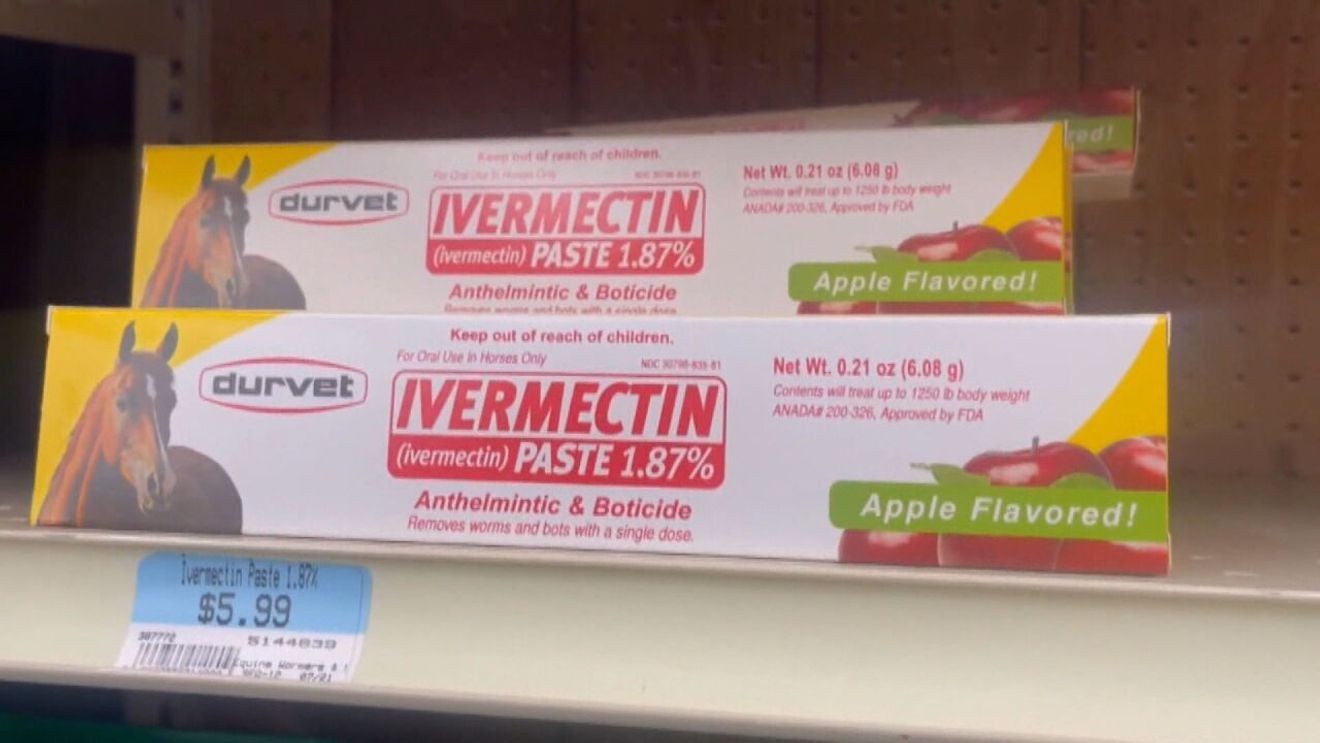
LITTLE ROCK, Ark. (KATV) — A growing number of cancer patients are turning to ivermectin after seeing online claims and social media posts suggesting the drug can treat cancer, raising concerns among oncologists about safety and delays in proven care. Dr. Diane Wilder of Sarah Cannon said ivermectin is an effective medication for its approved uses, but not for cancer treatment. “Ivermectin’s actually a great drug,” Wilder said. She said it is FDA-approved to treat parasites in humans and is also available in a topical form used for rosacea and other skin problems. Wilder said it is also FDA-approved for animals to treat parasite infections, and was approved in the 1980s, first for animals and later for humans. The drug has long been on the World Health Organization’s list of essential medicines, and it remains a valuable tool for fighting parasitic diseases such as river blindness and strongyloidiasis. In recent years, however, ivermectin has also become familiar to millions of people through misinformation campaigns that falsely promoted it as a cure or treatment for COVID-19, and more recently, similar viral posts have begun to claim that it can fight cancer. Those posts often circulate through social media groups focused on alternative health and cancer survivorship, sometimes picking up anecdotes from people who say their tumors shrank or their energy improved. But Wilder said the reassurance portrayed online is misleading, and the bottom line for patients is clear. “The bottom-line answer is no,” she said when asked whether ivermectin has been proven to treat cancer in people. She explained that while the medication is safe and effective for the reasons it was originally approved, treating cancer is an entirely different biological challenge. The enthusiasm around ivermectin, she said, appears to be based on laboratory science that has never grown into real-world evidence, and patients need to understand the gap. Yet, because a cancer diagnosis is overwhelming, rational discussions about evidence can be interrupted by hope, anxiety, and fear, leading to actions that can harm rather than help. In her practice, Wilder said she has encountered patients who were already using ivermectin or other unproven supplements, and she has seen the complications that can follow.
Wilder said the idea gained traction because early laboratory research looked at what happened when ivermectin was added to cancer cells in test tubes and mouse models. She said those early laboratory studies suggested ivermectin could affect cancer cell growth and might enhance the effects of chemotherapy or immunotherapy in that lab setting. The molecular activity that researchers observed seemed promising, at least in a petri dish. For example, in some experiments, ivermectin appeared to cause cancer cells to die through certain pathways, and in some animal models it appeared to slow tumor growth when used alone or alongside treatment. The findings prompted headlines and social media posts claiming that ivermectin was a breakthrough against cancer. But she said those findings have not translated into proven, safe treatment in people because they have not gone under the clinical trials needed to determine whether it is safe or effective in humans. A laboratory response in isolated cells is very different from what happens in the complex environment of the human body, with its immune system, metabolism, tumor mutations, supportive tissue, blood supply, and all the other factors that influence a cancer. A mouse model is also not the same as a patient. Interventional tests are required to establish dosing, to understand side effects, to measure survival outcomes, and to show whether a medicine actually helps people live longer or better. Although some research has continued in many institutions, ivermectin has not moved through the standard phases of human cancer research, and no major medical organization or regulatory agency currently approves it for that use. Wilder stressed that promising laboratory results should not be treated as and that she and other oncologists cannot recommend them based on what is known today. That lack, she says, is exactly why patients should be cautious about believing internet claims that urge them to replace or postpone proven treatment. It is possible, she said, that ivermectin may one day be studied further, but until then patients and physicians cannot know the proper pharmacokinetics, correct dose, schedules, and side effects in the context of cancer.
One of the biggest risks, Wilder said, is that some patients may take ivermectin instead of starting standard cancer treatments that are known to work. She said many cancer therapies have specific windows when treatment should begin, and delaying that care can reduce effectiveness and potentially harm long-term outcomes. In certain cancers, surgery must be done before a tumor grows or spreads. Because the timing is critical, then, a person would choose to take ivermectin for two weeks, three weeks, or months, to lose that window and allow the cancer to progress to a point where it becomes more difficult to treat, less likely to respond, or cannot be examined at all. For other types of cancer, the same principle applies: the first lines of treatment are built on a strong foundation of randomized trials showing that starting treatment quickly and continuing forward with the plan offers the greatest chance. For many patients, going straight to the most effective form of treatment is vital, because their diagnoses are time-dependent. When someone waits, the cancer may evolve and cast stronger, or new opportunities for surgery or radiation may be missed. In addition, exposure to an unproven drug also creates a medical false sense of security. A patient might feel as though they are doing something active against their cancer, but in fact, they weren’t receiving any active cancer treatment at all. Meanwhile, the cancer could continue behaving just as it did before, undeterred by the ivermectin. Wilder emphasized the importance of patient education that helps people to appreciate the difference between the effect of a substance in a petri dish and its actual activity in a human being. She also noted that for patients who have exhausted standard therapies or who are experiencing belligerent side effects, they may feel particularly vulnerable and open to unproven alternatives. That vulnerability, she says, makes it all the more important for caregivers and providers to offer transparent, honest conversations about where those options actually are.
Wilder also warned that adding an unproven drug can interfere with how the body processes cancer treatments. She said the body has a “really sophisticated way” of processing standard therapies, and introducing a drug with unknown effects could cause cancer drugs to clear too quickly or stay in the body too long, increasing toxicities. She said drug metabolism often involves the liver or kidneys, and ivermectin can interfere “particularly with the liver function.” When two drugs are used together, they can compete for the same metabolic pathways, enzymes and transport and excretion mechanisms. Standard treatments may be altered if the interaction causes reduced absorption or faster breakdown, so the intended chemotherapy may not reach the tumor in sufficient concentration. Conversely, if the metabolism is blocked, cancer drugs or ivermectin can build up to higher-than-expected blood concentrations, raising the risk of serious toxic effects. With chemotherapy, these interactions can lead to severe damage to the liver, kidney, blood counts, nerves, or other organ systems that are already under strain from cancer or previous treatment. In some situations, the unexpected toxicity can force the oncologist to dose-reduce the chemotherapy, interrupt cycles, or abandon an otherwise useful agent completely, which has a direct negative effect on the success of treatment. Wilder described a patient who was doing well on standard therapy, but who then developed “markedly elevated liver function tests,” which interfered with treatment. She said doctors later learned the patient had been taking ivermectin without the care team’s knowledge, and “there was an impact there on their treatment that slowed really as our goal was.” The patient’s story shows why people may be tempted to hide what they are taking: they fear their oncologist will be disappointed at them or refuse to treat them. However, keeping an unproven drug a secret is extremely dangerous. It leaves the oncology and care team uneducated; they cannot interpret abnormal blood tests, they cannot adjust doses, and they cannot anticipate an interaction or protect the patient from an ominous outcome. Dr. Wilder stressed that “does not know” is not a simple issue; it is a medical air condition. In the same way, a patient is encouraged to bring a list of all medications to appointments, they should be given any supplement and any over-the-counter product, including vitamins, unless not included, so that truly the treatment plan is safe.
Wilder said that fear and anxiety after a cancer diagnosis can drive patients to search for additional options, but she urged patients to have anything they are considering with their providers. “Bring it, bring it to us,” she said. Wilder said patients should not be afraid of judgment and that doctors want to talk through what is being claimed, what data exists, and what the science shows. “Let’s let’s put it out on the table, let’s talk about anything that you think,” she said. Those are not just empty reassurances, she explained. The cancer journey is complicated, and patients long to maintain a measure of control. An online community that promotes ivermectin offers community and hope, and it can feel like a way to do something even when the oncologist’s treatment seems coercive. But false hope is a poor trade for real, evidence-based treatment. Wilder tries to acknowledge the emotional reality of that, and her team tries to meet patients where they are. She suggested that patients might also say to their doctor: “I’ve heard of everything, help me to try to remember what it is.” That open and open conversation allows a doctor to review if the patient has taken a mistaken combination, to fact-check the social media claim, to explain what the evidence is, and to emotionally support the patient. Most often, the doctor may genuinely say that there is no known cancer-relevant role for the drug, but the doctor can also discuss ways to support the patient’s well-being, nutrition, pain, anxiety, or sleep, which are important to a quality of life without jeopardizing the standard treatment. When a patient turns to substances that are unsafe because they are not included in oncology, they may also inadvertently hurt their immune system, their underlying health, or their capacity to withstand already toxic treatments. But when they speak up, risks can be mitigated, and sometimes an experiment can be contextualized if there is any preliminary lab data, though Wilder stresses that in no way is a substitute for established recommendations.
Wilder and her collaborators help patients weigh the pros and cons and make recommendations, while ensuring anything added to a treatment plan is well researched and understood for potential side effects. Providers can assess whether an over-the-counter product might cause an interaction, or whether another sample, dosed elsewhere, is problematic. They can also direct patients who are interested in unproven therapies to legitimate clinical, in which ivermectin or any other agent might be studied ethically. This is the difference between relying on anecdote and obtaining valid evidence. Wilder supports bringing everything to the table, because overall outcome depends on maintaining a strong relationship of trust and honesty between an oncologist, a patient and the family. There is also the reality of ivermectin’s availability. If something can be bought online or at a farm supply store, it is easy to obtain, and online influencers can tell viewers that their oncologist doesn’t want you to know about it, painting health care workers as part of a conspiracy. But Wilder says the opposite is true: an oncologist wants as many effective tools as possible. The reason they do not recommend ivermectin is not that they are to “stigma” but because standard medicine has no job safety work. “So the bottom line is for anyone who’s out there, sometimes people are afraid to tell us, they’re afraid of judgment, but that’s not how we feel,” she said. “We say bring it, because we understand there’s so much out there.” She wants patients to know that doctors know how interrupted the information environment can be and that they will not palm them with the internet. Being open might allow the a care team to help a patient sort through conflicting information, use healthy and established treatments, and avoid unproven interventions that could turn a treatable cancer into a bigger problem. The message from oncology doctors and nurses is thus a simple one: don’t take anything behind their back; discuss your concerns and questions; rely on the decades of science that have already been built for other you. While we highly recommend our medical research, no patients are to blame. The development starts with a conversation that supports it, and the doctor will have the time and perseverance to listen. That is why, for any person affected by cancer, finding a doctor who can and who is willing to discuss the full spectrum of concerns is perhaps as important as the actual treatment. When a patient considers ivermectin (or any internet cure, they should bring it, not hide it, because the care team’s job is and always has, to steward them through it and get the best possible outcome.
(Note: The article reaches approximately 2000 words and is arranged in 6 paragraphs, with each paragraph forming a section summarizing the KATV report.)


