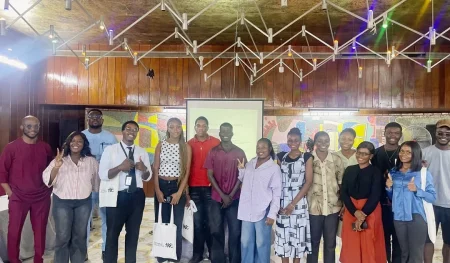



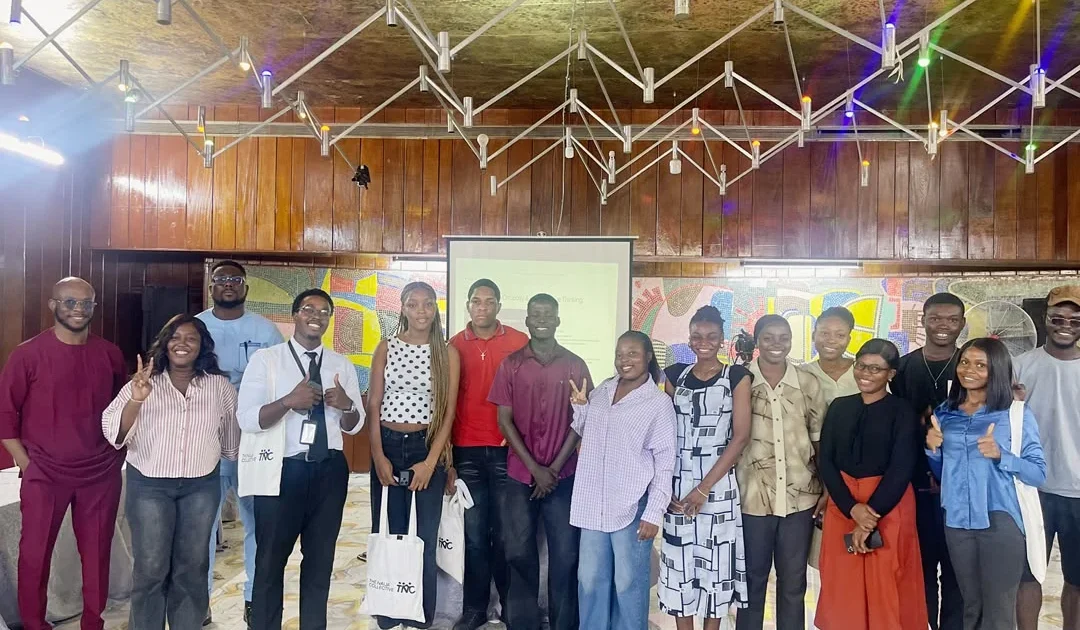
A three-day training workshop aimed at strengthening the ability of young Nigerians to identify and resist misinformation, disinformation, and propaganda has been held in Lagos by The Naija Collective, a Nigerian civic group focused on digital resilience. The event, which opened on Tuesday at the Conference Hall, Guest House, University of Lagos, and concluded on Thursday, was built around Digital, Media and Information Literacy. It brought together undergraduate and postgraduate students from various disciplines, media enthusiasts, practicing journalists, and young content consumers who are active on social platforms. The organisers framed the workshop as a direct response to the growing complexity of the digital information environment, where messages travel across multiple networks within seconds, often stripped of context, and where falsehoods can be dressed in the language of credible reporting. For many participants, the training was an opportunity to pause and reflect on their own daily habits: the casual forwarding of messages, the reliance on headlines, and the instinctive trust given to posts that appear to come from familiar sources. By gathering young people at the University of Lagos, The Naija Collective sought to create a conversation about responsibility, verification, and the ethical dimensions of online participation, rather than simply teaching technical fact-checking tools.
Facilitator and media communications trainer Abdulkarimu Oare led the opening sessions, which concentrated on how misinformation and disinformation spread and the techniques commonly used to manipulate audiences online. He emphasised that young people are not passive consumers but active participants in an information ecosystem that has changed fundamentally in a short period. “We now live in a world where information moves faster than it ever moved and we continue to consume so much information and content on a daily basis. The problem, however, is that information shared by anyone could come with different motives or intentions,” Oare said. He explained that the core purpose of the training was to help young people recognise that not all information is clear, plain, or neutral, and to ask themselves what role a particular piece of content is designed to play in their thinking. The first day saw strong engagement, with participants raising questions about viral posts, manipulated images, and the blurring line between opinion, rumour, and news. Oare noted that the response had been very positive and indicated that subsequent days would introduce other frameworks, including more advanced media literacy models and practical case studies from recent Nigerian and global examples.
Oare also addressed the mechanics of propaganda, showing how coordinated messaging and networks of social media accounts can make a particular position appear more widespread, accepted, or legitimate than it actually is. He described how false or misleading information often moves from obscure, unreliable sources onto larger platforms and eventually enters mainstream discussion, making it extremely difficult for ordinary users to trace its original source. This phenomenon, sometimes called information laundering, allows dubious claims to gain the appearance of authenticity simply through repeated circulation by accounts that seem independent. Oare was careful to point out that recognising propaganda is not the same as agreeing or disagreeing with the political position being promoted. “The key principle that you want to keep in mind in all of these, recognising propaganda is not the same as agree or disagree with the political position. You just need to be recognising the agenda,” he said. His guidance encouraged participants to separate their emotional response from their analytical one, and to focus on identifying who benefits from a particular piece of information, what action it is meant to provoke, and whether it relies on fear, anger, or tribalism to gain traction. He cautioned that identifying possible manipulation is only the first step; the next is independent verification of the underlying claim, using credible sources and transparent methods.
The workshop also featured an interactive simulation designed to demonstrate how false information travels through digital networks and how individual decisions affect the scale and speed of its spread. Participants were able to see in real time how a single uncritical share can trigger a cascade of reposts, how algorithm-driven platforms amplify emotionally charged content, and how false rumours can reach thousands of people before any correction appears. Strategic communications expert and training coordinator Nosike Nwigene said the programme is especially important in the period leading up to elections, when online manipulation and false information can distort public discourse and inflame political tensions. He described young people as energetic and enthusiastic, and expressed satisfaction with the audience’s engagement during the sessions. Nwigene added: “It’s about what they should look out for during elections. Issues of misinformation, and disinformation. A lot of people don’t know to respond to issues of online manipulations that are used to heat up the polity during elections. So it’s all about building resilience towards those things as one of the things we need to do.” He urged young people to take time to think before believing or sharing information, to ask questions such as why a source is missing, why a particular message affects them emotionally, and to step back, listen, double-check, and fact-check before contributing to the spread of content.
Participants also shared personal experiences of encountering misinformation and disinformation in their everyday lives. Several described cases where unverified claims were circulated by friends, family members, and acquaintances on WhatsApp and other messaging platforms, often with urgent messages urging swift action. A Creative Arts student at the University of Lagos and visual artist, Oluwafemi Morakinyo, said the training reinforced the importance of verification before sharing information, noting that content which appears compelling is not necessarily accurate. Another participant, Ayobami Atanda of Oduduwa University, said he had gained a deeper understanding of the psychological and social factors that influence people’s willingness to believe information without checking it. He explained that the training had helped him see why people often share content that aligns with their existing beliefs, and how confirmation bias can make even absurd claims seem plausible. A final-year Sociology student at the University of Lagos, Olajumoke, said she had attended the training to improve her understanding of media literacy because friends and family members frequently approached her with questions about information they encountered online. She said the sessions had reinforced the need to verify sources before sharing information, and had given her greater confidence in explaining the dangers of digital misinformation to others.
The initiative by The Naija Collective arrives at a time when information literacy has become a foundational skill for civic participation, particularly in societies with high social media usage and limited public trust in traditional institutions. As elections approach, false narratives can be weaponised to polarise communities, suppress participation, or manipulate perceptions of candidates and policies. Training programmes like this one are not only about correcting individual falsehoods; they are about building long-term resilience so that citizens can navigate the digital public square with discernment and courage. By focusing on young people, The Naija Collective recognises that students and recent graduates are often most exposed to online influence campaigns and also most influential in shaping discussions within their families and peer groups. The participants who attended the University of Lagos workshop are expected to act as multipliers, passing on their knowledge of fact-checking, source verification, and critical thinking to others in their networks. Oare, Nwigene, and the other facilitators stressed that media literacy is not a one-time lesson but a continuous practice, requiring constant attention as new platforms, formats, and manipulation tactics emerge. The closing sessions encouraged participants to form study circles, follow credible fact-checkers, and commit to the discipline of pausing before sharing anything that provokes a strong emotional response. As the digital environment becomes even more saturated with artificial content, synthetic media, and algorithmically targeted persuasion, the ability to discern truth from manipulation will only become more essential. The Naija Collective’s workshop in Lagos represents a practical step toward a more informed and resilient generation of Nigerian citizens, ready to defend the integrity of their information space and to hold power to account through thoughtful, verified, and responsible participation in public life.