





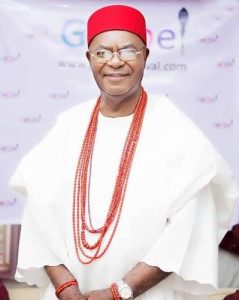



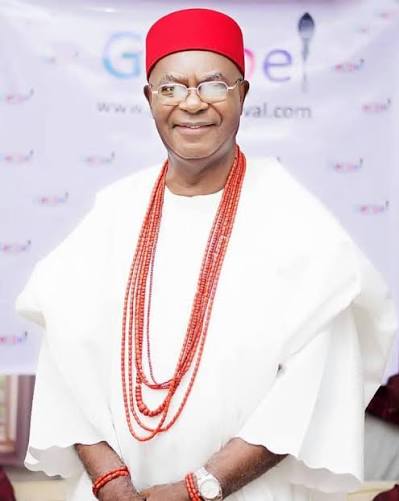
Obi of Onitsha Charges Editors to Combat AI Disinformation to Save Democracy
The Obi of Onitsha, Igwe Nnaemeka Alfred Achebe, has issued a powerful and urgent call to Nigerian editors to strengthen verification and fact-checking mechanisms in order to protect the nation’s democracy from the growing and escalating threat posed by artificial intelligence-generated disinformation. The monarch delivered the call in his opening address as Chairman of the All Nigeria Editors Conference (ANEC), which commenced in Enugu on Thursday, bringing together senior editors from print, broadcast and digital media platforms across the country for an intensive deliberation on the pressing issues confronting the journalistic profession and the wider challenges of democratic governance in the digital age. The conference is themed “The Ballot, the Media and the Task of Keeping Democracy Alive,” with the sub-theme “When Lies Look Real: Detecting and Debunking AI Disinformation Before, During and After Elections” — a thematic choice that underscores the deepening anxiety among media professionals about the escalating sophistication of synthetic media and its potential to subvert electoral integrity and public trust in democratic institutions. Achebe’s address, delivered before a distinguished gathering of editors and media executives, framed the challenge in stark and uncompromising terms, arguing that the emergence of AI-generated falsehoods has fundamentally altered the terrain of information warfare and created a new set of unprecedented challenges for journalism and democracy. He warned that fabricated voices, videos and images can appear increasingly authentic to even the most discerning audiences, rendering it harder than ever for citizens to separate truth from falsehood. The monarch illustrated this threat through vivid examples: a voice could be generated to sound like a governor saying something the governor never said; videos could depict political candidates in places they had never visited; and an image could depict violence that never occurred, timed precisely to inflame passions on the eve of an election. As Chairman of the conference, Achebe spoke not only as a traditional ruler but as a concerned stakeholder in Nigeria’s democratic future, bringing a unique perspective to the intersection of traditional governance, modern media and electoral integrity, and reminding the editors before him that their decisions will shape, in profound ways, the quality of public discourse and the survival of democratic governance itself.
Continuing his exposition of the threat landscape, Achebe stressed that the danger is not a distant or hypothetical one confined to other countries or future elections. It is already present and active in Nigeria’s information environment, pervading social media platforms and the WhatsApp groups that have become the backbone of the country’s communication ecology. He observed that Nigeria’s diversity, political engagement and strong community and family networks — attributes that have historically contributed to the nation’s resilience and vibrancy — could also facilitate the rapid and unchecked spread of false information. This observation carries a painful irony that goes to the heart of Nigeria’s vulnerability: the very structures that enable Nigerian society to function — the trust between neighbours, the authority of town unions, the intimacy of family WhatsApp groups — are the same conduits through which AI-generated disinformation can travel with alarming speed and devastating effect. “The same social fabric that has made us resilient can now become the very medium through which falsehood spreads fastest, precisely because we trust the neighbour, the town union, the family WhatsApp group, more than we trust a stranger,” he said. This paradox means that traditional methods of information dissemination based on interpersonal trust are now being weaponised by those seeking to manipulate public opinion and electoral outcomes. The monarch’s analysis points to a fundamental vulnerability in Nigerian society: while technological countermeasures and media literacy programmes are essential, they cannot fully address the reality that disinformation spreads most effectively through trusted personal networks, where critical scrutiny is often suspended in favour of social harmony and loyalty. Editors, he implied, must therefore understand the social dynamics of their audiences in order to combat the spread of AI-generated falsehoods effectively. Furthermore, the speed and reach of social media amplification mean that once a fabricated narrative enters these trusted networks, it can acquire an air of legitimacy simply through repetition by people known to one another. In such an environment, official denials and fact-checks often struggle to catch up, and even when they do, the false narrative may have already taken root in the minds of voters. This is why Achebe insisted on the critical role of editors in breaking the chain of transmission — by refusing to publish unverified content and by actively debunking falsehoods that their audiences may have already encountered in their personal networks.
Confronting this multi-faceted challenge, Achebe identified three key responsibilities that editors and journalists must embrace to defend the integrity of information and, by extension, the integrity of democracy itself. The first is verification. The monarch urged editors to prioritise verification before speed, declaring that being first with a false story amounts to a betrayal of public trust, even when done unintentionally. In an age where social media rewards immediacy and news organisations compete relentlessly to break stories, this counsel represents a necessary recalibration of journalistic priorities. The pressure to publish quickly is immense, particularly during election cycles when every development seems urgent and every claim is accompanied by demands for instant coverage. Yet Achebe’s message was unambiguous: the credibility of the newsroom is its most valuable asset, and once lost, it is nearly impossible to recover. He advised journalists to approach information that appears “too perfectly damning” with professional scepticism, particularly when such content is conveniently timed for immediate circulation before it has been properly verified. This advice recognises the modus operandi of modern disinformation crafters: producing content designed to trigger immediate emotional reactions — outrage, fear, vindication — and releasing it at the precise moment when it will cause maximum impact. Journalists, he cautioned, must resist the temptation to publish or broadcast such material without rigorous scrutiny. Verification, in this context, is not merely a procedural step but a moral obligation to the public, a commitment to ensuring that the audience receives not just information, but information that has been tested, challenged and proven to be reliable. Achebe also hinted at the institutional dimension of verification, suggesting that individual journalists need the support of newsroom systems, training and tools that make rigorous verification feasible under tight deadline pressures. Without such institutional investment, even the most conscientious journalist may find it difficult to withstand the relentless push to be first.
The second responsibility is literacy. Achebe urged editors to understand the tools and techniques used to produce disinformation, including synthetic voices, fabricated images and coordinated networks of social media accounts designed to amplify false narratives. This technical knowledge, he argued, is no longer optional but a core journalistic competency in the AI era. Journalists must be able to identify the subtle artifacts of AI-generated content — inconsistencies in facial movements, unnatural speech patterns, glossing of detail — and to use detection tools to expose manipulation before audiences are deceived. He also highlighted the coordinated nature of modern disinformation campaigns, where networks of bots and coordinated accounts work in concert to amplify selected narratives and artificially manufacture the appearance of popular consensus. Understanding these dynamics is essential for editors who must decide whether a trending topic reflects genuine public concern or a covert manipulation operation. Beyond the newsroom, Achebe called on journalists to help citizens develop the ability to critically assess information, but without going so far as to become so sceptical that they trust nothing at all. “We must note that a citizenry that believes everything is as dangerous as one that believes nothing,” he said, capturing the delicate balance that media literacy must achieve. If citizens believe everything, they become easy prey for every disinformation campaign; if they believe nothing, they become alienated from legitimate journalism and from one another, retreating into echo chambers and conspiracy theories. Journalists, in this view, have a responsibility not merely to report the news but to model the habits of mind that make democratic citizenship possible: curiosity, open-minded scepticism and a commitment to evidence. Achebe encouraged editors to view public education as an integral part of their mandate, using their platforms to teach readers and viewers how to spot AI-generated content and how to evaluate the credibility of sources. This is a demanding vision that extends the journalist’s role from information provider to educator and guardian of critical thinking in the public sphere, a task that becomes ever more essential as the tools of deception grow more sophisticated.
The third responsibility is courage, and Achebe invested it with profound moral weight. He challenged journalists to debunk falsehoods regardless of the political interests they serve, insisting that true journalistic integrity requires correcting misinformation whether it benefits a journalist’s preferred political camp or its opponents. “True journalistic integrity in this era will require you to correct falsehoods regardless of who benefits from them, before, during, and yes, after elections,” he declared. This is a critical point in a deeply polarised political environment where partisanship often colours editorial decisions, and where journalists may face pressure from within their own organisations and from powerful political actors to ignore or downplay falsehoods that serve one side’s electoral interests. Achebe’s injunction cuts through such rationalisations, reminding journalists that their primary loyalty is to the truth, not to any political formation or partisan allegiance. The monarch also acknowledged the difficult operating environment for Nigerian journalists, citing economic challenges, political intimidation and the relentless speed of information dissemination as factors that make the journalist’s task even harder. Many Nigerian media organisations are financially fragile, dependent on advertising and other revenues that have been eroded by digital disruption and economic uncertainty; journalists increasingly face harassment, casual threats and targeted violence as they attempt to do their jobs; and the ceaseless torrent of digital information leaves little room for the reflection that careful verification demands. Yet despite these substantial obstacles, Achebe expressed profound confidence in the capacity of the Nigerian media to rise to the occasion. “I say them because I believe in you,” he said. “I believe that the same profession that exposed colonial injustice, that gave us independence, that chronicled our darkest hours and our proudest triumphs, still carries within it the capacity to rise to this new and unusual challenge.” These words were not merely rhetorical comfort; they were a call to draw upon the deep reserves of historical memory and professional pride that have allowed Nigerian journalism to survive previous crises, and to apply that legacy to the novel challenges of the AI era.
Throughout his speech, Achebe returned to the metaphor that democracy is not a permanent structure that sustains itself without care and vigilance. “Democracy is not a monument we erect and then walk away from,” he said. “It is more like a fire lit to keep the house warm. It must be tended, fed, protected from wind and rain, or it dies quietly in the night while everyone believes it still burns.” This image captures both the fragility and the resilience of democratic systems, and it locates the responsibility for tending the democratic fire in particular institutions and individuals, among whom journalists are of critical importance. Drawing on his authority as a traditional Igbo ruler, Achebe noted that the Obi traditionally ruled through consultation, dialogue and the wisdom of elders and the people, a system of governance that bears important parallels to democratic principles. The ballot, he argued, represents a modern expression of the ancient principle that legitimate political power derives from the consent and informed judgment of the people. “The ballot is the citizen’s voice. The media is the mirror by which that citizen sees the world clearly enough to know what to say with that voice,” he said, in a formulation that captures the symbiotic relationship between free press and democratic agency. When the media mirror is distorted by disinformation, he warned, citizens make electoral decisions based on false premises, and the resulting democracy becomes a hollow caricature of itself. “A democracy built on illusion is not genuine democracy but drama. It becomes a theatre,” he said. Achebe concluded his address by urging editors to use the conference not merely to produce speeches and communiqués, but as “a genuine council of war against the erosion of truth in our public life.” He charged them to remain committed to democracy and the nation despite all political pressures and institutional challenges, and to stand firm as the ultimate defenders of the democratic project. “Even if politicians, electoral body, institutions, and other things fail, you must be the ultimate last man standing in the task of defending democracy,” he said. Achebe commended the members of the Fourth Estate for their sacrifices and contributions to the country’s development, expressing gratitude for their often-unacknowledged labours, and prayed for God’s protection, good health and safe return for all editors and participants after the conference. His speech thus ended on a note of both warning and hope, challenging Nigerian editors to become, in their daily professional practice, the vigilant guardians of truth and the unwavering defenders of democracy.


