









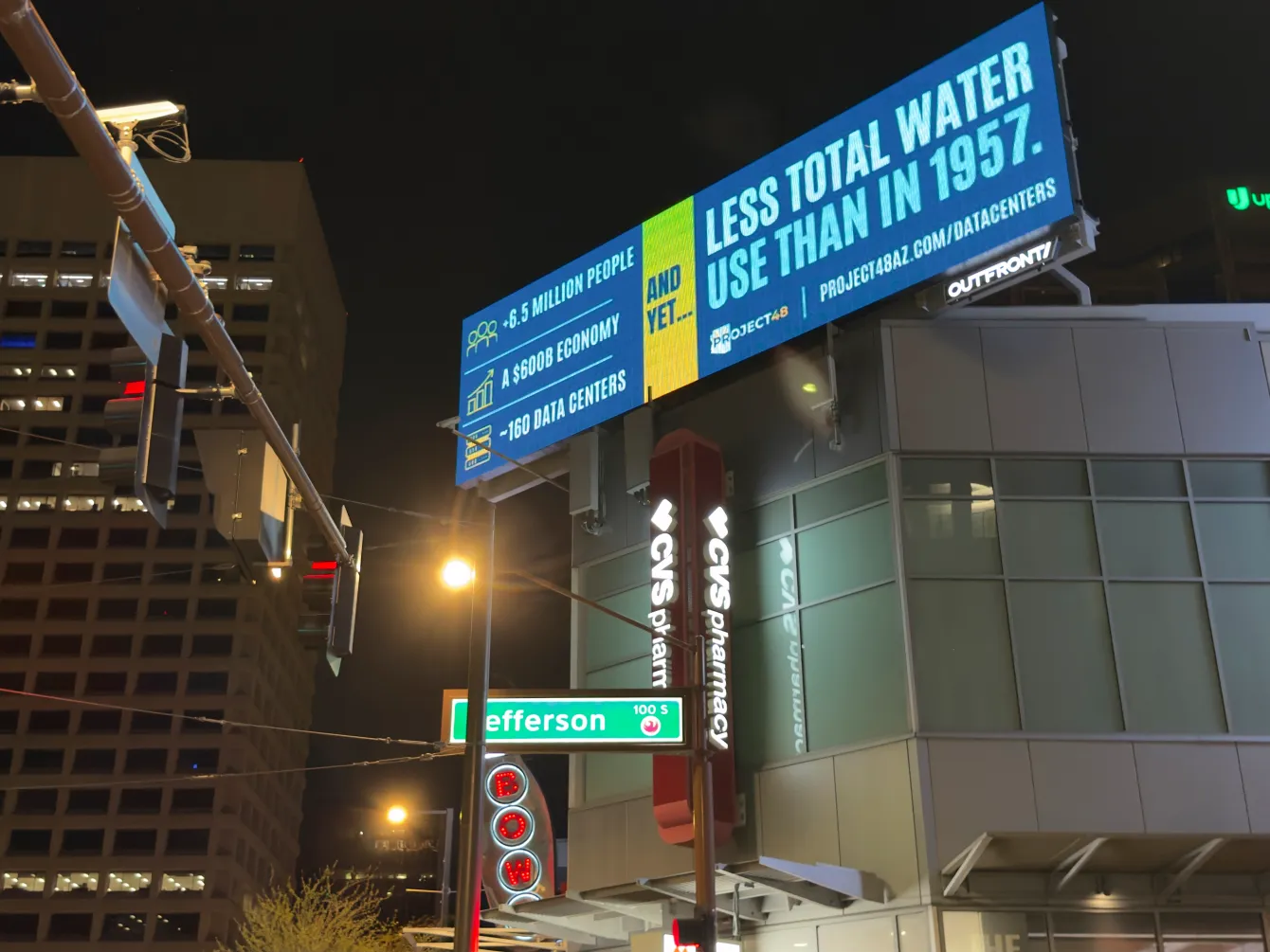
A newly formed coalition in Arizona has launched a broad public-education campaign to push back against what it calls a growing wave of misinformation about data centers, according to a report from State Affairs Pro. The group, which brings together utility companies, real estate developers, technology trade associations, economic-development officials, and labor organizations, says it is not asking Arizonans to accept every proposed data center project. Instead, its members say they want to ensure that public discussion is grounded in facts rather than viral exaggerations about water use, electricity consumption, job creation, and tax policy. The coalition has announced plans to publish explainer materials, host community meetings, and maintain a rapid-response presence on social media to correct misleading claims. Organizers say the effort is necessary because Arizona has become one of the most active data center markets in the United States, and decisions made in the next few years, at both the local and state levels, will shape the state’s energy infrastructure, water supply, tax base, and land-use patterns for decades. They argue that the data center industry can bring tens of billions of dollars in capital investment and significant economic benefits, but only if public trust is maintained. The article emphasizes that the group’s central argument is not that all concerns about data centers are baseless, but that too much of the current debate is being driven by claims that break down under scrutiny.
The stakes are particularly high because Arizona’s data center boom has moved far beyond the early days of a few corporate server facilities. The Phoenix metropolitan area, especially the East and West Valleys, has become a magnet for hyperscale cloud providers, artificial intelligence companies, and corporate data storage operations. Favorable land prices, relatively low natural disaster risk, abundant sunshine for solar power, and an existing network of high-voltage transmission lines have drawn billions of dollars in investment to communities such as Mesa, Buckeye, Goodyear, Chandler, Queen Creek, and El Mirage. The demand for new facilities is being accelerated by the explosive growth of cloud computing and artificial intelligence, which require enormous amounts of computational power and physical infrastructure. The report notes that this growth has been greeted warmly by many political and business leaders, who see data centers as clean, high-tech economic anchors that do not produce smokestack emissions or traffic. But the boom has also triggered anxiety among residents who worry about visual blight, noise from backup generators, and, above all, the strain that huge electricity and water demands may place on desert resources. The new coalition argues that those concerns are legitimate enough that they deserve accurate data, not fear-driven narratives. It says that well-informed residents are more likely to support responsible development, while poorly informed opposition can lead to unnecessary moratoriums, lawsuits, and legislative battles that harm local economies.
The first and most emotional focus of the group’s myth-busting work is water. In Arizona, where drought and long-term water sustainability are ever-present political issues, claims that data centers are draining aquifers and drinking up Colorado River water have become widespread on social media, at city council meetings, and in local newsletters. The coalition says the reality is more nuanced. Some data centers do use evaporative cooling systems that consume significant amounts of water, especially in the hottest months, but many newer facilities are designed with closed-loop cooling systems, direct-to-chip liquid cooling, heat reuse, and other technologies that substantially lower water use. The group also points out that the largest water demand in the broader digital economy often lies in the manufacturing of semiconductors and other components, not in the operation of data centers themselves. That distinction is often lost in online debates, where a single article about a factory in another state is shared as though it describes a server warehouse in downtown Phoenix. The coalition plans to use actual permit data, municipal records, and utility reports to show what individual facilities in Arizona are doing rather than relying on anecdotes from elsewhere. It also wants to explain the energy-water nexus: every megawatt-hour of electricity consumed by a data center may have upstream impacts on water if that power is generated by a thermoelectric plant. The group says that honest comparisons should look at the full life cycle of energy and water, and that some renewable projects, which use little or no water, are part of the solution. By publishing a fact-based “myth versus fact” guide for residential communities, the coalition hopes to lower the temperature of local hearings.
Electricity is the second major battleground, and here the group faces a more difficult technical story. Data centers are enormous consumers of power, and the arrival of a single large facility can strain local grids, increase transmission congestion, and raise questions about whether residential and small-business customers are being subsidized. The coalition acknowledges that the industry’s power demand is real and significant, but it says many viral claims are wildly overstated. For example, the report notes that it is misleading to take the annual electricity consumption of a data center and compare it to the number of homes in a city as though the facility were running at maximum capacity every second of every year. Interconnection agreements, utility forecasts, and regional grid operations are designed to account for large-load customers, and data centers often have arrangements that allow utilities to curtail their power demand during extreme heat events. The group also argues that data centers create substantial direct and indirect benefits: high-paying construction jobs, operations and maintenance positions, increased demand for local trades, and new tax revenue that can support public safety, parks, and schools if structured properly. However, the group tries to avoid the opposite exaggeration, that data centers are job machines. It acknowledges that a fully automated data center may only require dozens of permanent workers, but it says that the construction phase, along with the accompanying supply chain, can employ hundreds. The coalition wants to replace both exaggerated promises and exaggerated fears with a clearer economic model, showing how much revenue a project generates and how much public infrastructure it actually requires News Article Summary. It also says it supports utility planning transparency, so ratepayers can see what large new loads will mean for future electricity bills.
The coalition has already drawn criticism from people who say the label “misinformation” is itself a public-relations weapon. Environmental groups, community organizers, and some local elected officials have urged caution, arguing that data centers are not a traditional heavy industry and that existing tax incentives already tilt the playing field in their favor. They want to know whether the group’s funding from utilities and developers will influence the facts it publishesholistically public. They also worry that by aggressively rebutting false claims, the coalition may create a climate in which legitimate questions about water, energy, and aesthetics are dismissed as disinformation. The report says the group’s leaders insist that they are prepared for this criticism. They say they will fund independent research, post raw data online, invite auditors and journalists to review their numbers, and adjust their materials when better information becomes available. They also say they support local authority over zoning and land-use decisionsholistic, and they do not favor stripping residents of the right to oppose projects. But they argue that opposition should be based on the details of a specific proposal, not on a general suspicion of the industry or on recycled claims from other states. The group’s ability to earn credibility may depend on whether it is willing to publicly acknowledge the downsides of data center development, including the long transmission lines, the noise of backup diesel generators, and the possibility that some communities will decide that a particular location is unsuitable.
**Looking forward, the new Arizona group says it will not be a short-lived campaign. It plans to build an online dashboard that tracks data center applications, construction progress, employment estimates, electricity demand, and water usage in Arizona, and it will update that dashboard as new projects move through the pipeline. In addition to meeting with residents in affected neighborhoods, the group intends to work with state lawmakers, municipal planning departments, water managers, and grid operators to develop recommendations for siting standards, energy efficiency, water conservation, and community benefit agreements. The organizers believe that the conversation about data centers in Arizona is still at an early enough stage that an honest, transparent public conversation can prevent costly mistakes. They note that other parts of the country, including parts of California, Virginia, and the Pacific Northwest, have gone through similar cycles of enthusiasm, alarm, and regret after failing to build consensus early. The coalition’s underlying message is that Arizona should not turn away this transformative industry, but neither should it allow developers to act without oversight. The report concludes that the group will ultimately be judged not by its claims about misinformation, but by whether its fact sheets are accurate, whether its sponsored research survives independent review, and whether it is willing to say no to projects that cannot be built in a sustainable way. For now, the group is betting that in a state where water and power are precious, voters will appreciate a conversation grounded in evidence, even when the evidence is complicated N News Article Summary.


