









Kenya’s Peace Guardians Sound Alarm Over Hate Speech and Religious Weaponization Ahead of 2027 Election Cycle
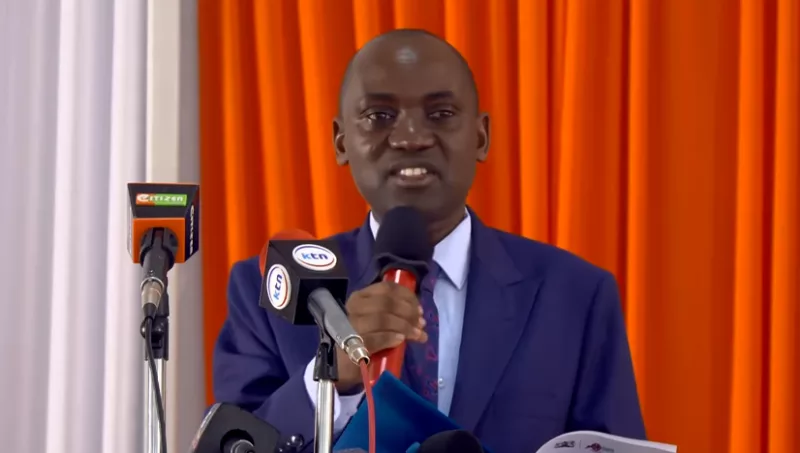
Nairobi, Kenya – In a powerful display of cross-institutional unity, the National Cohesion and Integration Commission (NCIC) and Kenya’s Inter-Religious Council (IRCK) convened a high-stakes consultative forum on August 26, 2026, issuing an urgent and unflinching warning about the existential threats facing the nation’s democratic fabric. The gathering, which brought together clergy, civil society leaders, government officials, and grassroots peacebuilders, centered on a dual-pronged crisis: the explosive proliferation of disinformation through digital platforms and the cynical exploitation of religious identity as a tool for political fragmentation. Speaking with palpable urgency, NCIC Commission Secretary and CEO Daniel Giti, along with IRCK Chairman Sheikh Abdullah Salat, underscored that while the 2027 General Election remains roughly a year away, the foundational conditions for either a peaceful transfer of power or a descent into electoral chaos are being actively forged today, not during the campaign season. The leaders made it unequivocally clear that the time for complacency has ended, demanding a synchronized, pre-emptive national strategy to dismantle the infrastructure of hate before it can ignite widespread violence.
The Digital Battlefield and the Toxicity of Misinformation
At the heart of the warnings delivered by NCIC CEO Daniel Giti was a stark assessment of Kenya’s rapidly evolving information ecosystem. Giti characterized the nation’s social media landscape as a powder keg, where sophisticated disinformation campaigns, amplified by algorithmic echo chambers and the unregulated spread of deepfakes, are eroding public trust in democratic institutions and inter-communal relationships. He noted that during previous electoral cycles, particularly the highly charged 2007/08 post-election violence and the contested 2017 polls, hate speech was largely confined to local radio and public rallies. However, today’s battlefield is decentralized, anonymous, and lightning-fast, enabling malicious actors to disseminate provocative content that demonizes entire ethnic or religious communities to millions of Kenyans within minutes. Giti warned of a dangerous trifecta: outright falsehoods presented as news, selective out-of-context clips designed to inflame tribal animosities, and targeted incitement against specific religious sects. “As Kenya gradually moves towards the 2027 General Elections, it is important that we begin preparations early and deliberately,” Giti asserted, arguing that waiting for the official campaign period to counter this digital toxicity would render the nation hopelessly reactive. He emphasized that the Commission has already documenting a worrying uptick in vitriolic online conversations correlated with political realignments taking place across the country, signaling that the “quiet before the storm” is already over.
The Imperative of a Unified Peace Message and Grassroots Vigilance
Building on his diagnosis of the digital threat, Giti pivoted to a comprehensive prescription for neutralizing it, advocating for a “whole-of-society” approach to peacebuilding. The NCIC chief made a compelling case for the creation of a unified, national peace narrative that transcends political affiliations, religious denominations, and ethnic boundaries. He proposed that this message be deliberately disseminated through the most trusted channels available in Kenyan society: places of worship, community networks, traditional councils of elders, and the full spectrum of legacy and digital media. Giti emphasized that religious institutions, given their unparalleled reach into every village and urban slum, must transform into bulwarks against division rather than being co-opted as megaphones for partisan interests. Furthermore, he called for the urgent strengthening of early-warning, mediation, and rapid-response mechanisms. He stressed that the NCIC cannot be the sole sentinel; rather, robust systems must be established at the ward and sub-county levels, where local peace committees and faith leaders can identify simmering tensions—land disputes, resource allocation grievances, or political rivalry—and intervene before they metastasize into violent conflict. “We must therefore work together to promote a unified national peace message that speaks consistently to all Kenyans,” Giti declared, calling for better coordination between government institutions, civil society organizations, and community structures to ensure that accurate information and conflict resolution resources reach the ground with unprecedented speed.
The Weaponization of Faith and the Echoes of 2022
Sheikh Abdullah Salat, the chairman of the Inter-Religious Council of Kenya, delivered a deeply resonant and equally urgent address that directly confronted the troubling intersection of religion and politics. Salat acknowledged that the political atmosphere in Kenya remains intensely volatile, with competition for power often reaching fever pitch that strains the nation’s social cohesion. He expressed profound concern over what he described as a calculated strategy to drag religious identity into the political contest, transforming sacred spaces and congregational loyalties into instruments for political mobilization and division. This, he warned, is an extremely dangerous gambit, as faith remains one of the most potent identity markers for a majority of Kenyans. Salat reminded the audience that the pressures of the 2027 cycle have not dissipated; misinformation is currently spreading faster than truth, and in some corners, attempts to use the trust that religious leaders have cultivated over decades to peddle sectarian narratives are intensifying. He strongly rejected any notion that faith should be manipulated to serve partisan ends, stating emphatically that “faith should not be turned into an instrument of division.” Drawing on Kenya’s recent history, Salat cited the 2022 elections as a testament to what is possible when diverse forces unite. He recalled that the peaceful outcome of the 2022 polls was not an accident but the fruit of deliberate collaboration between faith leaders, government institutions, and communities, who worked feverishly to de-escalate tensions in the aftermath of the divisive campaigns. “The role of faith leaders in safeguarding peace ahead of the 2027 electoral cycle is therefore not new. It is the same role we have always carried but one that now demands greater coordination, greater urgency, and greater unity of message,” Salat declared.
A Blueprint for Action: The Joint Communiqué and 2026-2028 Framework
Moving from rhetoric to a concrete roadmap, the forum concluded with a clear consensus on the actionable steps required to secure a peaceful electoral process. The primary outcome will be the development of a comprehensive Joint Communiqué on Peaceful Campaigns and the 2027 General Elections, a formal declaration that will bind signatories—including political parties, religious institutions, and civil society—to specific standards of conduct. This communiqué will reaffirm unequivocal commitments to peaceful campaigns, national cohesion, responsible leadership, and the unambiguous rejection of violence as a tool for political gain. However, the leaders recognized that a mere statement of intent is insufficient; therefore, participants are tasked with constructing a detailed Joint Peace and Cohesion Action Framework for the period spanning 2026 to 2028. This framework will outline shared priorities, assign specific institutional responsibilities, set stringent timelines for implementation, and establish clear coordination mechanisms to monitor progress. Critically, the framework will feature a coordinated National Peace Messaging Framework along with strengthened early-warning, mediation, and rapid-response protocols. To ensure that these resolutions are not relegated to dusty shelves, the forum has proposed the creation of a strategic Joint Steering Committee, composed of representatives from the NCIC, the Inter-Religious Council of Kenya, international partners like World Vision Kenya, and other key strategic stakeholders. This committee will be responsible for overseeing the execution of these resolutions, tracking potential flashpoints, and maintaining relentless pressure on political actors to adhere to the peace pact.
Historical Context and the Stakes for a Fragile Democracy
The urgency exuding from the forum is deeply rooted in Kenya’s painful electoral history, which has repeatedly demonstrated that the failure to proactively manage diversity and political competition can have devastating consequences. The 2007/08 post-election violence remains a scar on the national psyche, leaving over 1,100 people dead and hundreds of thousands displaced following a disputed presidential result. Subsequent cycles, including the 2013 and 2017 elections, were marred by episodes of localized violence, deep political polarization, and a contentious Supreme Court nullification of the presidential results in 2017. While the 2022 election saw a peaceful transfer of power to opposition leader William Ruto—a historic first for the nation—the underlying ethnic tensions and the lucrative business of electoral violence remain dangerously intact. The NCIC, which was established in the aftermath of the 2008 crisis, continues to grapple with its mandate in an environment where political elites often deploy identity politics to mobilize support, and where a youthful population is increasingly susceptible to radicalization through social media. The forum’s emphasis on the 2026-2028 timeframe signals a strategic shift from crisis response to long-term resilience building, acknowledging that peace is not a singular event but a continuous process of dialogue, reconciliation, and institutional strengthening. As the nation marches toward 2027, the collective declaration from the NCIC and the religious leaders serves as both a stark warning and a potent symbol of hope: Kenya’s democratic future depends not on the silence of its guardians, but on their unified, unwavering willingness to speak truth to power and to defend the sacred bonds that hold the nation together.


