








NACA, WHO Urge Media to Boost PrEP Awareness and Fight Stigma in Nigeria
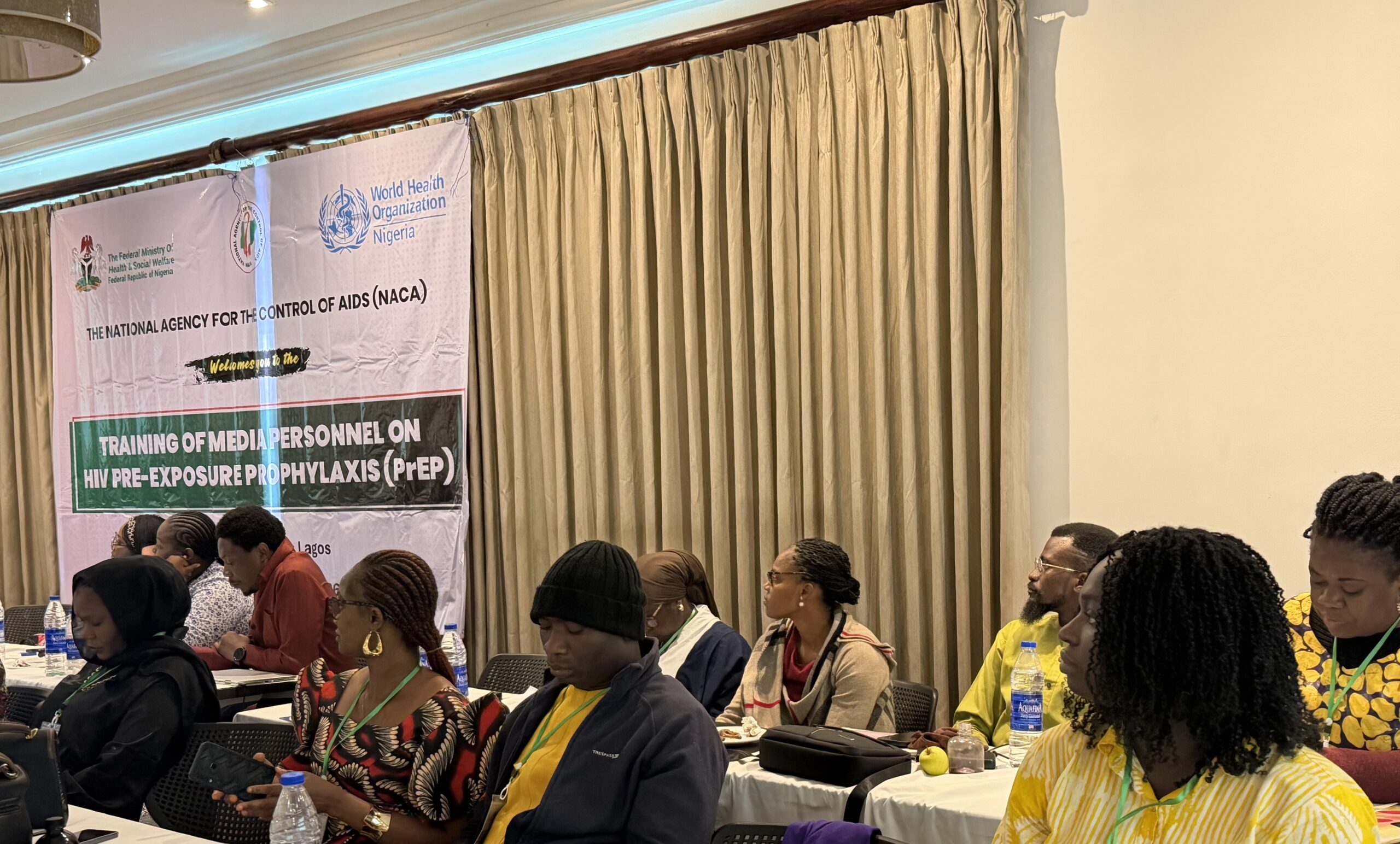
The National Agency for the Control of AIDS (NACA) and the World Health Organisation (WHO) have called for increased public awareness of Pre-Exposure Prophylaxis (PrEP) and stronger efforts to tackle misinformation and stigma around HIV prevention in Nigeria. Officials of both organisations made the call on Thursday in Lagos, during a training for journalists and social media influencers on PrEP. Speaking at the training, NACA Director-General Temitope Ilori said access to HIV prevention medicines and services must be supported by accurate information that enables people to make informed decisions about their health. “Today’s engagement is particularly important because the fight against HIV is not only about providing medicines and services; it is also about ensuring that people have the right information to make informed decisions about their health,” Mrs Ilori said. She said the media is not a passive observer in the HIV response but a critical partner whose work can determine whether people at risk understand and use prevention tools. The training was part of a broader push by NACA, WHO and partners to expand the reach of HIV prevention services and build a community of informed content creators. Nigeria continues to carry a heavy burden of HIV, and although treatment access has expanded significantly, a substantial number of Nigerians acquire the virus each year. Many of these infections could be prevented if scientifically proven interventions were more widely known and accepted. PrEP remains one of those interventions, yet awareness is still low in many communities. According to NACA, achieving the goals of the national HIV response will require a deliberate effort to put accurate health information into the public domain and to counter the rumours, half-truths and fears that keep people from seeking help. Journalists and social media influencers, the agency said, are uniquely placed to perform that function, bridging the gap between scientific knowledge and everyday experience.
PrEP is an HIV prevention intervention for people who do not have HIV but may be at risk of acquiring the virus. It involves the use of antiretroviral medicines to reduce the risk of infection. The medicines are taken before potential exposure so that if a person is exposed to HIV, the virus cannot establish itself in the body. Mrs Ilori described PrEP as a highly effective HIV prevention option but said its impact would depend on awareness, proper understanding, accessibility and willingness among eligible people to use it. “PrEP is a highly effective HIV prevention option for people who are HIV-negative and may be at risk of acquiring HIV,” she said. “However, its effectiveness in the national response depends not only on availability, but also on awareness, correct understanding, accessibility and willingness to use it.” She said journalists and social media influencers have an important role in closing information gaps around HIV prevention. According to her, traditional media remain an important partner in public health communication. In contrast, social media provides opportunities to reach young people and other groups with information in accessible and relatable formats. The NACA Director-General stressed that PrEP is not a replacement for condoms or other prevention measures but an addition to a comprehensive prevention package. It is intended for people who are HIV-negative and whose sexual or social circumstances may expose them to the virus. This includes people in serodiscordant relationships, people who have multiple sexual partners, sex workers, men who have sex with men, people who inject drugs and adolescent girls and young women in high-prevalence settings. However, she said, many people in these groups do not know they are eligible for PrEP or where to obtain it. Some are afraid to ask for fear of being judged. Journalists, by asking the right questions and giving clear answers, can remove some of that fear. “We need you to help answer the questions people may be afraid to ask,” she would later say. That simple act of providing information, she argued, can be as important as providing the drug itself.
Technical Officer for HIV, Viral Hepatitis and Sexually Transmitted Infections at WHO Nigeria, Oluwafunke Odunlade, explained that PrEP works by using antiretroviral medicines to prevent HIV from establishing itself in the body. She stressed that the medicine is not a cure and is not for people who already have HIV; it is a preventive tool for those who are HIV-negative but may be at risk. Odunlade said Nigeria currently has different PrEP options, including oral PrEP, long-acting injectable cabotegravir (CAB-LA) and lenacapavir PrEP (LEN PrEP). She said the choice of a PrEP option should be based on an individual’s needs and made with appropriate guidance from a healthcare provider. The different options, she said, provide individuals with choices based on their circumstances and preferences. Oral PrEP, which is typically taken as a daily pill, has been the most widely available form and is especially useful for people who can maintain a consistent daily routine. Long-acting injectable cabotegravir is administered by a health worker as an injection and offers an alternative for people who may prefer not to think about taking a pill every day, or who face challenges with adherence. Lenacapavir PrEP, a newer product, represents an important advancement in HIV prevention science and is being introduced into national programmes as part of an expanded toolkit. Odunlade emphasised that no single PrEP option is superior for everyone; what matters is that the person receives the right counselling and support to choose a method they can use correctly and consistently. She noted that the availability of multiple options is a significant step in the HIV response because it recognises that people have different lives, needs, preferences and barriers. The WHO technical officer also said health workers need training and support to offer PrEP without stigma, and that journalists can reinforce this by reporting not just about products but about the people who use them and the real-world challenges they face.
Mrs Ilori warned that inaccurate information about HIV prevention could create fear, reinforce stigma and discourage people from seeking prevention services. She urged journalists and digital content creators to ensure information about HIV and PrEP is accurate, evidence-based, respectful and free from stigma and discrimination. “We need you to help answer the questions people may be afraid to ask: Who can use PrEP? How does it work? Where can it be accessed? What are the options available?” she said. She also urged journalists to tell stories that humanise HIV prevention and encourage conversations rather than judgement. “Your stories should humanise HIV prevention. Your content should encourage conversations rather than judgment. And your platforms should become trusted sources of credible health information,” she said. The NACA Director-General cautioned that the words used in reports and social media posts can influence whether someone decides to go for HIV testing, pick up a PrEP refill, or speak openly to a partner or health worker. Sensational headlines that equate HIV with death or disgrace, she said, are not just inaccurate; they are harmful and can undo years of public health effort. Conversely, stories that show people taking responsibility for their sexual health, going for testing, and using prevention tools without guilt can help create a supportive culture. She acknowledged that misinformation travels quickly online, often through WhatsApp messages, TikTok videos and other platforms where influencers have enormous reach. A single misleading claim about side effects, for example, could make many eligible people avoid PrEP. That is why the training focused not only on clinical facts but also on practical skills for verifying health information, identifying trustworthy sources, and producing content that is truthful and non-judgemental. She also reminded participants that privacy and confidentiality must be respected in any reporting about HIV and prevention; revealing a person’s status or history without consent is not only unethical but can endanger their safety.
Odunlade similarly urged journalists to use their platforms to improve public understanding of HIV and counter misconceptions. “Journalists are actually supposed to help propagate the right information, to bring awareness to the people and to help dispel myths concerning any disease,” she said. She described media practitioners as important advocates who can influence public understanding of HIV/AIDS and other diseases associated with stigma. “The key message I want journalists to take away from here is that you are very important in shaping the agenda when it comes to HIV/AIDS,” she said. She recalled how, in the earlier years of the epidemic, fear and ignorance shaped much of the reporting, leading to discrimination against people living with HIV and poor coverage of prevention science. Today, because of advances in treatment and prevention, journalists can tell more hopeful and accurate stories, but this requires effort. Odunlade said reporters should treat HIV prevention stories with the same rigour as they would any significant public health issue: confirm facts with credible sources, avoid alarming language, and present the evidence clearly. She also advised influencers to remember that people are not merely audiences but individuals with feelings, relationships and social realities. A message that is accepted in a clinic may not be accepted in a chat group. The media should therefore use language that connects with ordinary people and responds to their everyday concerns. She described the media as a site of trust where misinformation can be defeated and accurate information can flourish. But that trust has to be earned. She called on journalists and influencers to maintain high ethical standards, correct errors quickly, and avoid amplifying unverified claims. The relationship between health institutions and the media, she argued, must be one of ongoing engagement based on mutual respect, so that accurate information is always available when public questions arise.
Mrs Ilori said the engagement comes as Nigeria strengthens its HIV prevention response under the National Strategic Plan 2026–2030, which focuses on sustainability, innovation, stronger partnerships and increased community engagement. She said NACA intends for the engagement with journalists and digital content creators to extend beyond the training. “I therefore see this training not as a one-off event, but as the beginning of a partnership between NACA, the media and the digital community,” she said. The NACA boss urged participants to challenge misconceptions and share the information gained from technical experts with their audiences. “Together, we can increase demand for HIV prevention services, reduce misinformation, address stigma and ensure that more Nigerians have the knowledge and tools they need to protect themselves from HIV,” she said. The event featured technical presentations by HIV specialists, question-and-answer sessions, and practical exercises that allowed participants to work through real-world examples of how to explain PrEP to different audiences. Journalists were encouraged to produce stories that go beyond policy announcements and include voices of people whose lives are affected by HIV prevention and treatment. NACA and WHO said they would continue to support media professionals by providing accurate, up-to-date information and facilitating access to experts in the field. They also asked media executives and influencers to integrate PrEP education into regular health content, not only during special campaigns or World AIDS Day. The ultimate measure of success, officials said, will be whether people across Nigeria—not only in Lagos but also in rural and underserved areas—understand what PrEP is, how to access it, and why it matters. For that to happen, the media must see itself as a partner in health promotion rather than a mere conduit of news. According to NACA and WHO, the partnership with the media has the potential to shift the country from a reactive HIV response to a preventive one, in which communities are empowered with knowledge before they face risk. The training ended with a commitment from both the organisers and participants to keep the conversation going and to turn awareness into action.


