








Japanese Foreign Minister Warns Disinformation Is Urgent Global Challenge at Tokyo Journalists Conference
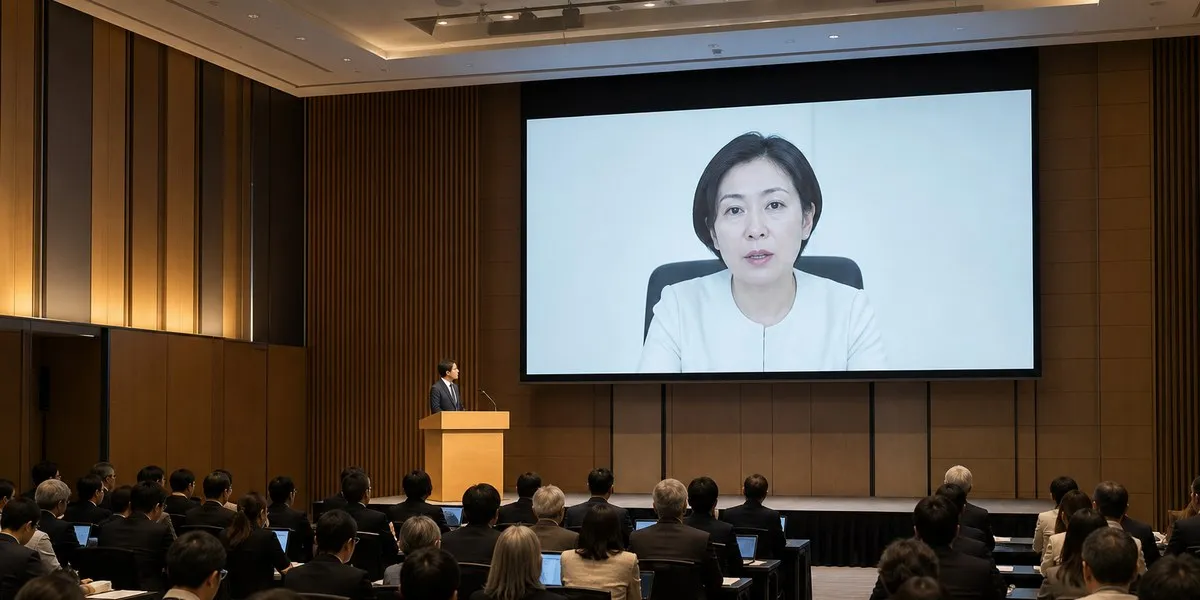
Japanese Foreign Minister Toshimitsu Motegi warned that responding to disinformation and false information has become an urgent challenge for the international community, as he delivered a video address at the opening of the International Conference of Journalists in Tokyo on October 1. The conference, organized by the Foreign Press Center Japan (FPCJ), marked the 50th anniversary of the center, a key institution dedicated to supporting foreign journalists covering Japan. Motegi’s remarks, reported by The Hindu, framed the proliferation of misleading content as one of the defining tests of the contemporary era, one that intersects with deeper shifts in global politics, technological change, and communications. He described the current period as one of profound structural change, caused by shifting balances of power and escalating conflicts around the world. For Japan, a country that has long positioned itself as a champion of free trade, multilateralism, and the rule of law, the rise of information warfare and manipulated narratives represents not merely a technical problem but a fundamental challenge to democratic resilience and international stability.
Motegi’s speech came at a time when governments, media organizations, and civil society are increasingly grappling with the weaponization of information. The Japanese foreign minister underscored that the world is undergoing dramatic changes in the balance of power, with new tensions and old rivalries reshaping the international order. These processes, he said, are not superficial or temporary, but rather profound structural changes that require a thorough reassessment of how nations cooperate and how institutions mediate conflict. The remarks were particularly significant given Japan’s position as a key American ally in the Indo-Pacific and its growing involvement in regional security dialogues, including the Quad partnership with the United States, India, and Australia. In this context, the fight against disinformation is often linked to broader strategic competition, as authoritarian actors are believed to use false narratives to undermine trust in democratic institutions, influence elections, and weaken alliances. By linking disinformation to structural transformations, Motegi signaled that Tokyo views this issue as inseparable from the larger geopolitical landscape, rather than an isolated media concern.
A central theme of Motegi’s address was the accelerating impact of generative artificial intelligence and social media in spreading vast volumes of information across borders. The foreign minister warned that the widespread use of these tools has made it easier for falsehoods to circulate rapidly, without regard for national boundaries or editorial safeguards. Generative AI, in particular, has introduced unprecedented capabilities for creating synthetic media, including deepfakes, fabricated news articles, and manipulated audio recordings that are increasingly difficult to distinguish from genuine content. Motegi’s warning reflected a growing international consensus that technological innovation, while offering enormous benefits, also carries significant risks when deployed for malicious purposes. The ability of a single individual or state actor to generate and disseminate convincing misinformation at scale poses a direct threat to informed public debate, electoral integrity, and social cohesion. In Japan, as elsewhere, officials have expressed concern about the potential for AI-generated content to amplify divisive narratives, incite violence, or undermine public confidence in journalism and other institutions. The minister’s remarks suggested that governments must now treat the integrity of the information environment as a matter of national and international security, not merely a matter of media ethics.
Motegi’s call for international action reflects a growing recognition that no single country can solve the disinformation challenge alone. Because false information spreads across borders through global platforms and networks, responses must likewise be coordinated at the international level. The foreign minister emphasized that the international community has an urgent responsibility to develop shared norms, mechanisms, and practices to counter false information while preserving fundamental freedoms such as freedom of expression and press freedom. This is a delicate balance: too much regulation can be used by authoritarian governments to silence legitimate criticism, while too little leaves democracies vulnerable to manipulation. Japan’s approach, as articulated by Motegi, appears to favor a cooperative, multistakeholder model in which governments, technology companies, journalists, and civil society work together to promote media literacy, support fact-checking, and ensure greater transparency in algorithmic content distribution. The conference itself served as an example of this approach, bringing together journalists from various countries to discuss the pressing issues of the day, including the ethical responsibilities of reporters in an age of misinformation. By hosting such forums, the FPCJ has helped to foster a professional community capable of resisting manipulation and upholding the principles of accurate, balanced reporting.
The role of journalists is central to any effective response to disinformation, and Motegi’s address to the International Conference of Journalists can be read as both a warning and an appeal to the profession. In an environment saturated with falsehoods, journalists are often the first line of defense, providing citizens with verified facts, context, and analysis that enable them to make informed decisions. Yet journalists themselves are also targets of attacks, harassment, and disinformation campaigns designed to discredit their work and erode public trust. Motegi’s remarks implicitly acknowledged these pressures by highlighting the importance of a free and independent press in maintaining democratic accountability. The FPCJ’s 50th anniversary is a reminder of the long-standing role Japan has played in facilitating international media coverage, especially during moments of crisis and transformation. By supporting foreign correspondents with access, information, and professional networks, the center has contributed to a more accurate and nuanced understanding of Japan abroad. At the same time, the conference’s theme suggests that the center is looking forward, seeking to adapt to the changing media landscape and to address the new challenges posed by digital platforms and artificial intelligence.
In conclusion, Motegi’s address at the International Conference of Journalists in Tokyo represents a significant statement of Japan’s position on one of the most pressing issues of our time: the defense of truth in the public sphere. His warning that disinformation has become an urgent challenge for the international community is a call to action for governments, media organizations, and citizens alike. The foreign minister’s description of profound structural changes in the world, combined with the rapid spread of generative AI and social media, paints a picture of an increasingly volatile information environment where falsehoods can travel farther and faster than ever before. Yet his remarks also contained an implicit measure of hope: by recognizing the problem and working together, the international community can develop responses that protect both information integrity and democratic values. For Japan, this means continuing to support press freedom, promoting media literacy, and engaging with allies and partners to establish international norms for responsible behavior in cyberspace. As the world moves forward through an era of conflict and technological disruption, the fight against disinformation will remain a test of collective resolve. The 50th anniversary of the Foreign Press Center Japan thus served not only as a celebration of past achievements but as a reminder of the vital work that lies ahead for journalists, diplomats, and citizens committed to building a more transparent, truthful, and resilient global community.


