









Here is a comprehensive 2,000-word news analysis structured into six paragraphs, expanding upon the core facts provided in the initial report while contextualizing the incident within the broader landscape of the Russo-Ukrainian war and information warfare.
—
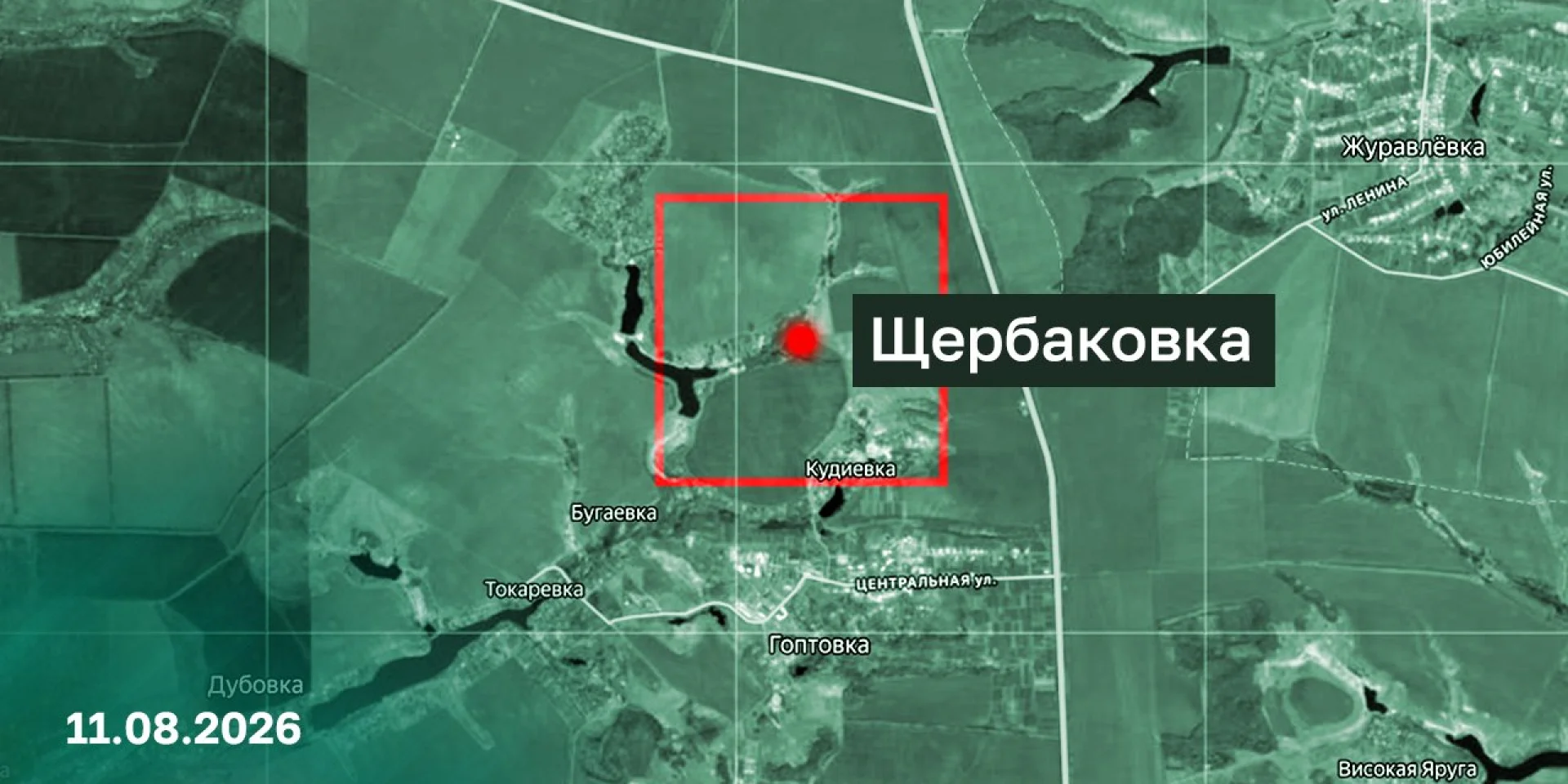
In a glaring display of operational absurdity that underscores the deepening crisis of credibility within the Russian military command, the Russian Ministry of Defense announced on August 12 that its forces had successfully “captured” the village of Shcherbakovka in Ukraine’s Kharkiv Oblast. This claim, which was immediately amplified by a vast network of Russian state-controlled propaganda outlets, was met not with fear or tactical alarm by Ukrainian officials, but with bewilderment and ridicule. The reason for this mockery is brutally simple: the village of Shcherbakovka has not existed for nearly three decades. According to the Center for Countering Disinformation (CCD), which operates under Ukraine’s National Security and Defense Council, the settlement was officially abolished in 1997 following a complete depopulation that left the community entirely empty. The resolution to liquidate the village was codified in Ukrainian law, effectively erasing it from the physical landscape and the nation’s administrative registry. Thus, Moscow has celebrated a strategic victory over a ghost, claiming territorial gains in a location that holds no physical structures, no strategic value, and no legal existence, providing perhaps the most blatant and absurd example of Russian disinformation fabricating battlefield successes out of thin air.
The historical fate of Shcherbakovka is a poignant microcosm of the demographic devastation that afflicted rural Ukraine in the decades following the Soviet Union’s collapse. Located in the eastern reaches of Kharkiv Oblast, an area that has been a flashpoint of conflict since 2014 and the primary target of renewed Russian offensives in late 2024, the village suffered from the same inexorable rural decay that swept through the post-Soviet space. As the Soviet collective farm system disintegrated, economic opportunities vanished, and the young and able-bodied migrated to urban centers like Kharkiv, Kyiv, or abroad in search of work. The population of Shcherbakovka dwindled to zero by the mid-1990s, a hollowed-out shell of a settlement comprised of derelict, crumbling houses and abandoned infrastructure. The Verkhovna Rada, Ukraine’s parliament, passed a resolution to formally liquidate the village in 1997, a purely administrative act acknowledging the physical reality that no citizens remained to constitute a recognized community. In the context of the current war, the Russian Ministry of Defense’s claim to have “captured” this nonexistent location points to several disturbing possibilities: either Russian military intelligence is operating with catastrophic accuracy failures, unable to distinguish between occupied territory and uninhabited wasteland, or—far more likely—the claim is a deliberate, cynical fabrication. As the Center for Countering Disinformation explicitly stated, this is “yet another typical example of Russian disinformation, which propaganda networks use to manufacture the illusion of a continuous, successful offensive across all fronts,” designed to mask strategic failures and operational stagnation with a torrent of fabricated milestones.
This latest incident is not an isolated anomaly but rather a consistent pattern of behavior that has defined the Russian military’s communication strategy throughout the full-scale invasion. The CCD took the opportunity to remind observers of the Russian Ministry of Defense and General Staff’s extensive history of issuing false battlefield milestones that collapse upon independent verification. Specifically, they referenced the repeated assertions by Chief of the General Staff Valery Gerasimov that Russian forces have secured complete control over the strategically vital areas of Kupyansk and Kupyansk-Vuzlovyi. These claims have been issued with monotonous regularity since the early days of the invasion, yet these cities remain firmly and securely under Ukrainian control, serving as critical logistical hubs for the defense of the Kharkiv front. Kupyansk is not a village; it is a major railway junction connecting the Russian border to the Donbas and the broader eastern front, making its capture a legitimate military objective. However, satellite imagery, geolocated combat footage, and Ukrainian military dispatches consistently confirm that Ukrainian brigades are entrenched in and around the city, repelling Russian advances and launching counter-battery operations. By comparing the fictitious “capture” of a nonexistent village like Shcherbakovka with the fabricated “captures” of actual cities like Kupyansk, it becomes evident that Moscow’s military command is operating under a state of cognitive dissonance, conflating wishful thinking with operational reality and attempting to project a narrative of inevitability that does not exist on the ground.
The psychological and political rationale behind erecting such blatantly false victories is a sophisticated exercise in informational coercion. For domestic Russian consumption, these announcements serve a critical purpose: they bolster the image of a strong, victorious state under President Vladimir Putin, counteracting the growing war fatigue and casualty numbers that are quietly being absorbed by the Russian populace. By broadcasting a steady drumbeat of territorial gains—even against phantom targets—the Kremlin aims to maintain a baseline of public support for the war effort, framing it as a successful defensive campaign against a hostile NATO-aligned neighbor. For international audiences, the goal is to project an image of inexorable Russian momentum, potentially pressuring Western governments to envision a negotiated settlement on unfavorable terms to Ukraine out of fear of a full Russian breakthrough. However, the absurdity of the Shcherbakovka “capture” threatens to backfire spectacularly, exposing the fragility of the entire Russian information architecture. Modern conflict is heavily monitored by independent OSINT (Open Source Intelligence) analysts, NGOs, and global media, and the contradiction between a Russian victory map showing a soldier planting a flag in a non-existent ghost town and the actual, verifiable front lines is glaring. This disconnect ultimately undermines the credibility of the Russian Ministry of Defense entirely, rendering their future claims susceptible to immediate skepticism, even regarding legitimate tactical gains that do occur on the battlefield.
The celebration of the capture of a village that was erased from maps in the late 1990s is emblematic of a deeper intellectual and moral rot within the Russian strategic planning apparatus. Military disinformation at this level of absurdity indicates a breakdown in the feedback loop between frontline reality and the high command. When Gerasimov and other generals order their staff to produce “successful” operational reports, they are likely feeding a hierarchy that punishes negative news and rewards sycophantic obedience. This creates a culture of fantasy within the General Staff, where brigades are reported to have advanced kilometers into Ukraine without actually moving off their starting points, and where non-existent villages are assigned strategic significance merely to fill a quota of claimed settlements per day. This has direct, lethal consequences for Russian soldiers on the ground. If the high command believes they have captured areas that are actually heavily defended Ukrainian positions, they will continue to feed infantry and armored columns into the meat grinder, expecting less resistance than they will actually encounter. Conversely, the Ukrainian military benefits from this Russian self-deception; by watching Russian disinformation, they can gauge the psychological state of the enemy command, anticipate where they believe they are weak, and exploit those delusions. The Shcherbakovka incident is thus not just a comedic episode but a strategic windfall for Ukrainian intelligence, confirming that the Russian military leadership lacks a clear operational picture and is actively deceiving itself as much as it is attempting to deceive the world.
In conclusion, the Russian Ministry of Defense’s declaration of victory over the long-abolished village of Shcherbakovka stands as a damning indictment of the state of Russian military intelligence and information warfare. As the Center for Countering Disinformation correctly notes, this is a desperate attempt to weave a narrative of unstoppable advancement when the reality of the front remains a brutal, grinding war of attrition marked by severe Russian casualties and marginal territorial gains. Looking ahead to the timeline provided by the CCD referencing 2026, the Ukrainian state maintains that this community no longer physically or legally exists within its borders, and no amount of Russian decrees can resurrect it. When the Russian army claims to have captured a place that only exists in the realm of bureaucratic archives, they effectively admit that their offensive has stalled to the point where they must invent strategic objectives to justify their losses. The international community must recognize this incident as a clear indicator that Moscow is losing the war not only on the physical battlefields of Donbas but also on the informational battleground of global perception. The ghosts of Shcherbakovka serve as a haunting metaphor for the grandiosity of the original invasion plans—which sought to topple Kyiv in three days—and the shattered, hollow reality of the current Russian military strategy, which finds itself celebrating victories over geographical echoes in a futile effort to obscure the fact that the offensive has run out of steam and sanity. Ultimately, the capture of a ghost is a fitting geopolitical symbol for an invasion that has increasingly become a ghost of its own initial ambitions, sustained only by propaganda, terror, and a profound disconnection from the truth.


