




Mobile Social Media Dependence Among Chinese College Students: A Comprehensive Study
The Digital Landscape of Higher Education
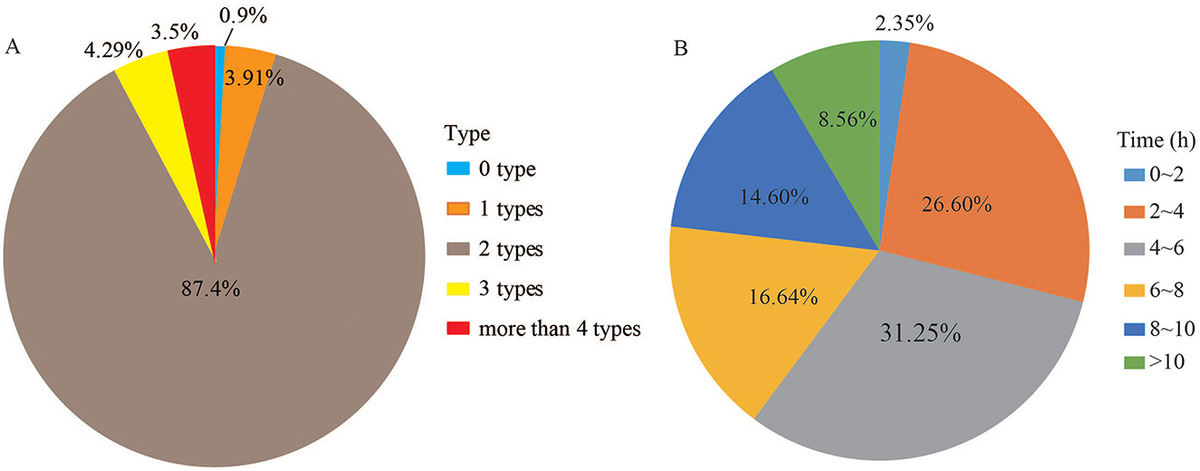
A groundbreaking study conducted between September and December 2024 has shed new light on the mobile social media habits of college students in central China, revealing unprecedented levels of platform usage and dependence among young adults. The research, which surveyed 566 students across five universities in a provincial capital city, found that mobile social media platforms have become the primary channels for maintaining interpersonal relationships, with WeChat (95.17%), QQ (93.67%), and Douyin (80.22%) emerging as the dominant platforms. The study revealed that students check their phones not in structured intervals but in brief, intermittent bursts throughout the day—between classes, during meals, and even while waiting in line—demonstrating fragmented and habitual usage patterns. Most notably, 31.25% of students reported spending between 4 to 6 hours daily on these platforms, while an additional 39.8% used them for more than 6 hours each day. This pervasive integration of social media into daily life suggests that for contemporary college students, the digital and physical worlds have become inseparable.
Patterns of Usage and Platform Preferences
The investigation uncovered distinctive patterns in how students engage with different social media platforms based on their academic disciplines and personal needs. While instant messaging applications like WeChat and QQ were universally adopted across all majors, students in humanities, social sciences, and arts showed significantly higher engagement with content-sharing platforms such as Weibo and WeChat Moments. In contrast, STEM and medical students gravitated toward platforms offering educational tools and academic support, including Bilibili and specialized study applications like Zuoyebang. The study revealed that 91.38% of participants used these platforms as substitutes for traditional phone calls to maintain connections with friends and family, while 67.23% regularly synchronized their content across two or more platforms. Additionally, 78.12% of posted content consisted primarily of personal status updates and emotional expressions, indicating that social media serves as a crucial space for self-presentation and identity construction. This content-sharing behavior was particularly pronounced among younger users, with 67.31% of students identifying these platforms as their primary sources for news and information access.
Gender Differences and Dependence Patterns
The research exposed nuanced gender-based differences in social media dependence and behavioral patterns. While no statistically significant differences emerged between males and females in terms of overall dependence, prominence, social gain, or withdrawal symptoms, distinct variations appeared in specific dimensions. Female students scored significantly higher in compulsion (P = 0.03) and conflict (P = 0.04) measures, indicating stronger uncontrollable urges to use mobile social media and more frequent conflicts between their digital habits and daily responsibilities. This suggests that women tend to engage in more in-depth and frequent social interactions, paying greater attention to likes, comments, and shares, while men view these platforms more functionally as tools for course group discussions, notifications, and file transmission. The female students’ stronger compulsion scores suggest they may experience more intense internal pressure to maintain social connections through these platforms, potentially leading to feelings of being constantly connected and unable to disconnect. This gender disparity in compulsion and conflict highlights the need for gender-sensitive intervention strategies in promoting healthier social media habits.
Grade-Level Variations in Social Media Engagement
The study revealed significant differences between lower-grade (first and second year) and higher-grade (third year and above) students in their social media usage patterns and dependence levels. Statistically significant differences emerged in social gain (P = 0.04), compulsion (P = 0.04), and withdrawal (P = 0.04) dimensions, while prominence and compulsion showed no significant variation across grade levels. Interestingly, the five participants who reported never using mobile social media were all first-year students, suggesting that platform adoption becomes increasingly universal as students progress through their academic careers. Lower-grade students showed higher usage of instant messaging (98.94% for WeChat) compared to their higher-grade counterparts (92.23%), while upper-level students demonstrated greater engagement with Douyin (88.34%), WeChat Moments (81.27%), and Weibo (80.92%) for self-presentation purposes. Higher-grade students also reported using more functional platforms like Bilibili and academic support tools for homework and thesis preparation, indicating that social media usage evolves to meet changing academic and social needs as students advance in their educational journey.
Academic Major Differences and Economic Impact
Disciplinary background emerged as a significant factor in social media dependence, with students in humanities, social sciences, and arts showing higher scores across multiple dependence dimensions. Statistically significant differences were observed between STEM students and those in humanities and social sciences or arts regarding social gain (P = 0.01), compulsion (P = 0.01), and conflict (P = 0.01). The study attributed this variation to the closer alignment between humanities and arts curricula and social media content creation, which naturally lends itself to greater engagement with platforms like Xiaohongshu and Douyin. The economic dimension revealed remarkably high rates of digital consumption, with nearly all students reporting paid purchases on these platforms. While 55.69% spent less than RMB¥50 annually, 23.60% spent between RMB¥50-100, and 20.71% exceeded RMB¥100 per year. These expenditures primarily involved games, videos, and online tools, demonstrating that mobile social media platforms have become significant channels for student spending, raising concerns about the financial implications of widespread platform adoption.
Impacts on Social Skills and Future Implications
The study’s most concerning revelation was the perceived negative impact of mobile social media on students’ real-world social competencies. An overwhelming 97.33% of students reported that mobile social media had significantly affected their lives, while 52.66% believed their social interaction abilities had decreased, sharply contrasting with only 32.75% who felt their social skills had improved. More than half of the respondents acknowledged that their dependence on these platforms had negatively affected their long-term and stable interpersonal relationships, citing experiences of loneliness, social detachment, and emptiness. These findings align with previous research connecting excessive social media use to anxiety, depression, and academic underperformance. The study’s author suggests that addressing this dependence requires targeted interventions to promote healthier digital habits, considering the gender, grade, and major-specific variations identified in the research. However, the study acknowledges limitations in its geographic scope and sample size, proposing future research to expand beyond a single provincial capital and examine how these psychosocial effects may evolve as platforms continue their rapid development. The findings provide crucial empirical support for developing scientific and effective intervention strategies to promote healthy social media usage among college students.