


Close Menu
DISADISA
  • Home
  • News
  • Social Media
  • Disinformation
  • Fake Information
  • Social Media Impact
Trending Now

HRF Refutes Minister Lokesh’s Claim of Deliberate Misinformation on AI Data Centres in Visakhapatnam

August 22, 2026

Misinformation Acceptance and Usage among Cebuano Voters in Digital-Era Elections.

August 22, 2026

The Threat of AI-Enhanced Disinformation to Democratic Governance and National Security

August 22, 2026
Facebook X (Twitter) Instagram
Facebook X (Twitter) Instagram YouTube
DISADISA
Newsletter
  • Home
  • News
  • Social Media
  • Disinformation
  • Fake Information
  • Social Media Impact
DISADISA
Home»News»Misinformation Surrounding Glyphosate Use in Canadian Forestry
News

Misinformation Surrounding Glyphosate Use in Canadian Forestry

Press RoomBy Press RoomSeptember 13, 2025No Comments
Facebook Twitter Pinterest LinkedIn Tumblr Email

Quebec’s Glyphosate Ban and the Misleading Narrative of Wildfire Causation

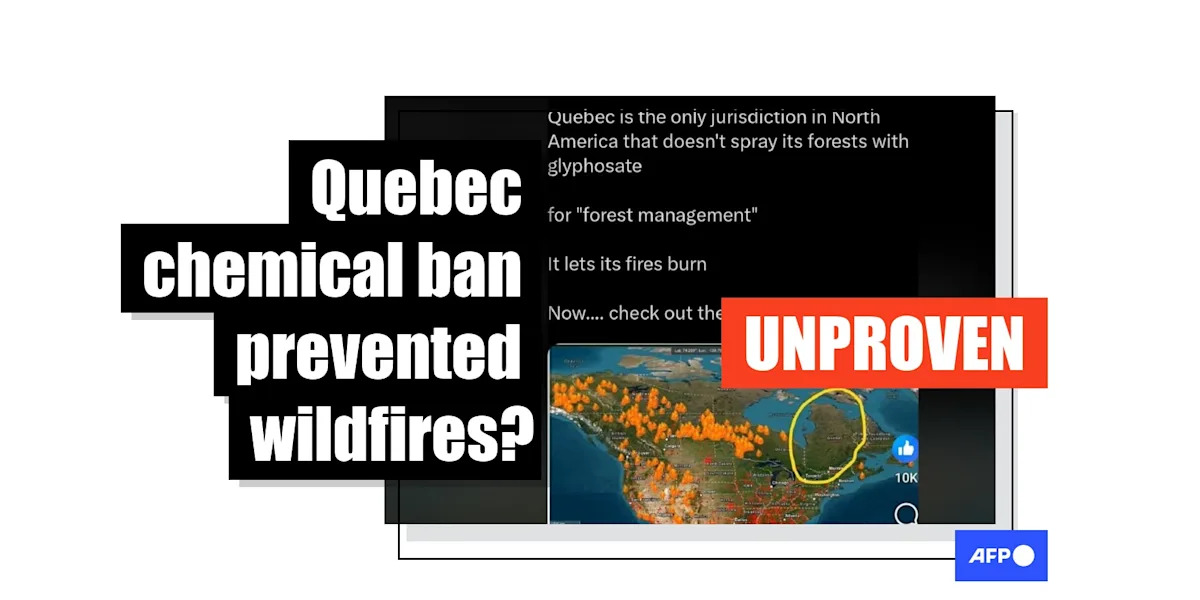
Social media has been ablaze with claims linking the use of the herbicide glyphosate to the devastating wildfires that have ravaged parts of Canada in 2025. A widely circulated satellite image contrasting a seemingly fire-free Quebec with burning landscapes in other provinces, coupled with Quebec’s ban on glyphosate use in forests, has fueled this narrative. However, experts unequivocally state that this connection is misleading and lacks scientific basis. While there are valid environmental and health concerns surrounding glyphosate usage, attributing wildfires solely to its application is an oversimplification of a complex issue.

Quebec’s unique position as the only North American jurisdiction to ban glyphosate spraying in forests has led to its portrayal as a haven protected from wildfires, ostensibly due to this prohibition. The circulating satellite image, while visually compelling, offers only a momentary snapshot of the fire season and fails to represent the long-term trends. Experts point out that Quebec has experienced significant variations in burned hectares over the years, despite the ban being in place since 2001, demonstrating that factors beyond glyphosate play a crucial role in wildfire occurrence.

The assertion that glyphosate is the primary driver of wildfires ignores the multifaceted nature of these events. Climate change, with its associated rise in temperatures and increased frequency of extreme weather events, is a significant contributor. Drier conditions and lightning strikes create a tinderbox-like environment, increasing the risk of wildfires regardless of glyphosate use. Furthermore, established forest management practices, such as the promotion of conifer-heavy monocultures, influence landscape flammability. Ironically, while glyphosate is sometimes used to control vegetation growth and reduce fire hazards, its application can also inadvertently hinder the regrowth of more fire-resistant species, exacerbating the issue in certain contexts.

The debate surrounding glyphosate’s impact extends beyond wildfire causation. While recognizing the legitimate health concerns related to the herbicide, experts emphasize the need to distinguish between correlation and causation. Linking glyphosate directly to wildfires overlooks the complexity of forest ecosystems and the interplay of multiple factors. This simplification not only misinforms the public but also hinders constructive dialogue about effective wildfire prevention and management strategies.

The 2025 fire season, particularly severe in Ontario, has reignited calls for a glyphosate ban in that province. However, experts warn against drawing hasty conclusions. While glyphosate use warrants careful scrutiny within broader forest management practices, attributing the 2025 fires solely to the herbicide is unsubstantiated. A comprehensive approach to wildfire management requires addressing multiple factors, including climate change, forest composition, and human activities.

In conclusion, the narrative linking glyphosate to wildfires, while gaining traction on social media, lacks scientific foundation. While the herbicide’s ecological and health impacts deserve ongoing evaluation, simplifying the complex issue of wildfires to a single cause is misleading and counterproductive. Addressing the increasing threat of wildfires requires a nuanced understanding of the interplay between climate change, forest management practices, and human activities, moving beyond simplistic explanations and embracing evidence-based solutions. The circulating satellite image, while visually striking, represents a narrow perspective and ignores the historical data and expert analysis that contradict the simplistic claim. The focus should be on comprehensive strategies that address the root causes of wildfires, rather than assigning blame to a single factor.

Share. Facebook Twitter Pinterest LinkedIn WhatsApp Reddit Tumblr Email

Read More

HRF Refutes Minister Lokesh’s Claim of Deliberate Misinformation on AI Data Centres in Visakhapatnam

August 22, 2026

Here are a few formal options, each with a slightly different emphasis:

Option 1 (Comprehensive and direct) “The Role of Partisan Bias in Misinformation Assessment: A Conflict Between Identity Defense and Differential Knowledge”

Option 2 (Focus on the mechanism) “Understanding Partisan Judgments of Misinformation: The Interplay of Identity Protection and Knowledge Asymmetry”

Option 3 (Concise and academic) “Partisan Bias in Misinformation Judgment: Identity Protection Versus Knowledge Disparity”

Option 4 (More mechanistic) “Assessing Misinformation Through a Partisan Lens: Mechanisms of Identity Preservation and Knowledge Gaps”

August 22, 2026

Here are a few options with a formal tone:

  1. SOTS and Candelora Accuse Each Other of Voter Misinformation
  2. SOTS, Candelora Trade Accusations of Voter Misinformation
  3. SOTS and Candelora Exchange Accusations of Misinformation

August 21, 2026
Add A Comment
Leave A Reply Cancel Reply

Our Picks

Misinformation Acceptance and Usage among Cebuano Voters in Digital-Era Elections.

August 22, 2026

The Threat of AI-Enhanced Disinformation to Democratic Governance and National Security

August 22, 2026

Here are a few formal options, each with a slightly different emphasis:

Option 1 (Comprehensive and direct) “The Role of Partisan Bias in Misinformation Assessment: A Conflict Between Identity Defense and Differential Knowledge”

Option 2 (Focus on the mechanism) “Understanding Partisan Judgments of Misinformation: The Interplay of Identity Protection and Knowledge Asymmetry”

Option 3 (Concise and academic) “Partisan Bias in Misinformation Judgment: Identity Protection Versus Knowledge Disparity”

Option 4 (More mechanistic) “Assessing Misinformation Through a Partisan Lens: Mechanisms of Identity Preservation and Knowledge Gaps”

August 22, 2026

Misinformation outlets exploit the alleged homicide of a teenager to drive online engagement.

August 22, 2026
Stay In Touch
  • Facebook
  • Twitter
  • Pinterest
  • Instagram
  • YouTube
  • Vimeo

Don't Miss

Disinformation

Here is a rewritten title in a formal tone:

Disinformation and Social Polarisation in the Context of Migration

By Press RoomAugust 21, 20260

The year 2003 marked the genesis of a term that would later define the digital…

Here are a few options with a formal tone:

  1. SOTS and Candelora Accuse Each Other of Voter Misinformation
  2. SOTS, Candelora Trade Accusations of Voter Misinformation
  3. SOTS and Candelora Exchange Accusations of Misinformation

August 21, 2026

Here is a single, formal title:

“Social Media Enhances Democratic Engagement, Yet the Pervasive Threat of Disinformation Persists”

August 21, 2026

Hookah Lounge Issues Statement Regarding West Chimes Street Gathering, Citing Misinformation as Basis for Blame

August 21, 2026
DISA
Facebook X (Twitter) Instagram Pinterest
  • Home
  • Privacy Policy
  • Terms of use
  • Contact
© 2026 DISA. All Rights Reserved.

Type above and press Enter to search. Press Esc to cancel.