


B.C. Wildfires Battle Rages Twice: On the Ground and Online Among a Sea of Misinformation
VANCOUVER — As British Columbia’s wildfire season intensifies, officials and first responders are not only contending with an advancing wall of fire, but with a rapidly spreading outbreak of misinformation across social media platforms, according to CTV News reporting. The false or misleading content includes AI-generated photographs of towering flames, old wildfire footages intentionally rebranded as current crisis coverage, and fraudulent evacuation orders carrying a sense of civil authority that residents may instinctively trust. Such digital pollution, accumulating by the minute, is not just confusing: it’s dangerous. Evacuees scrolling for updates may genuinely wonder whether their neighbourhood has been ordered to leave, whether roads are truly closed, or whether the official assistance they are being offered belongs to the government or to scammers. In fact, some posts have claimed to show scenes of the B.C. Interior disaster that originated in California California’s in California’s or Australia, or from years ago, while other fabricated screenshots purport to show official announcements coming from the BC Wildfire Service. This material then feeds itself, because high emotional weight travels further across feeds: an astonishingly dark image of a burning shoreline or plane in flames will always outrun a factually dry emergency alert. In the words of officials, the challenge is that public response depends on quick, trustworthy information. If people believe false evacuation notices or dismiss genuine ones, it can delays road clearing, ties up 911 lines, and leave residents in direct danger. Consequently, the BC Wildfire Service and agencies have faced the unintended labour of correcting videos that show large columns of smoke in the wrong location, geometry, and local neighbours, as well as a time commitment to keeping official channels credible in parallel with the realities of a fast-expanding fire season.
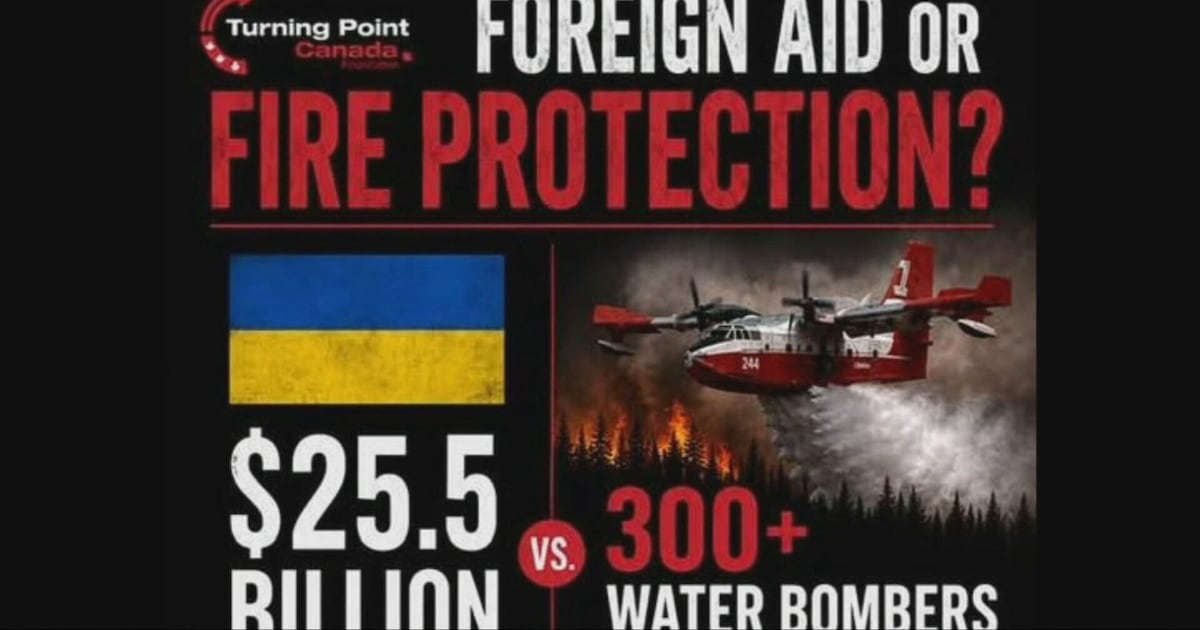
What exactly is spreading? In recent reporting, CTV News highlights that misinformation tends to cluster into several recurring narratives. The first and most straightforward is misattributed visuals. An image of a smoke cloud and overnight fire may be shared across Facebook and X, with the caption “Breaking: West Kelowna evacuation” when, in reality, the image is from a 2021 fire hundreds of kilometres away. Similarly, an old video of a plane dropping flame retardant can be recirculated in Instagram comments as proof that the government is doing nothing, only to be traced to an earlier season. Second are outright fabrications or AI-meditated content. With advanced generative AI tools freely accessible, realistic-looking and photoreal of mountainsides engulfed by flames can be created, and they are rendered so convincingly that even a newsroom must pause and verify. Third, there are claims about fire causation. Some social media accounts insist, without evidence, that fires were deliberately set by arsonists orful both by emergency forestry workers, or that “remote-looking” flames imply “false-flag” operations. Such claims are often embedded within broader conspiracy narratives, but they tend to root in the assumption that fragmented videos ignoring official commentary gives one a more secretive view. Finally, there is malicious civic misinformation—evacuation notices or road closures posted in the wrong information pages, exact copycat versions of legitimate alerts that official usernames do not actually produce. These are calculated to generate panic, rankous conflict, and distrust. Because of today’s algorithmic feed, hoax creators do not need to reach a broad audience from a central hub; each share gets placed into local spheres, each of which discusses it into a new attribution. It is a one-stop-shop for distorted facts, and such nature to rumor can outpace the oblique and temper focused public advisories.
The prevalence of online misinformation during B.C.’s wildfires has caused official, ripples that can be felt even in the physical response. One substantial consequence is the overloading of emergency communication lines. When false evacuation alerts are widely shared, frightened residents call local public asking if it’s true, occupying personnel who might be answering life-and-death questions. The same issue affects 911 service when people search for official status updates, operators are forced to dedicate minutes to explaining that a message was not official. Emergency operations centres also manage rumour control strategies: they surveil socmedium, answer via their pages and have pages listing fake advisories? said CTV News, official often spend more hours on rumour control than triaging information. More seriously, misinformation destroys the delicate line of trust in the middle of crisis. A resident who learns that an image they share was a diorama from 2015, they did not intentionally hurt anyone, but may later question official warnings. That cynicism is arguably the most predictable effect of early-season rumour. Local sustainability groups tell CTV News that volunteers doing ground-level outreach also spend time convincing evacuees that official evacuation order is not someone dressed to mimic the government. In that sense, misinformation has transformed a straightforward map of emergency alerts into a puzzle of which is credible. “We can do everything right, but one manipulated screenshot can make hundreds hesitate,” said by one safety officer involved in fire response. Experts voice concern with older witnesses, psychologically receiving rigorous information from untrusted accounts. This would never just be a digital storm—real economic consequences can arise if people leave businesses do not know, or if emergency shelter capacity is interrupted false request for help? Far-reaching [?]
In the area of counteraction, government bodies and media outlets are wearing down the resilience of hoaxes. BC Wildfire Service maintains its own official online portal, with active dashboards designed to be the only credible reference of all active fires and containment statuses. During a catastrophic summer, they have newly added a “shared images” guidance stated that because it’s impossible to verify external photos incorporated in a “verified” handle, such content will not be trusted; instead, they point to webcams from their own base stations. The EmergencyInfoBC is also a central stream for all evacuation orders and alerts at the provincial level. For those seeking local stories, “the local authorities”—municipal agencies, regional district offices, official law enforcement on account—produce repetitive statements with exact addresses and map boundaries. Cryptically, Google and social media companies have presented best practice plans to act against misinformation and “event-related” posts. However, research during crises has shown these actions remain spotty at masking foreign interference. CTV News and several local newsrooms are making a structured effort to debunk fake images with public tools. For example, reporters do a reverse-image search or verify aerial footage using geolocation markers; some TV ethics teams run a “misinformation watch” segment within a nightly news: claim by claim, they flag which viral frame or notice was hoax and which corresponding correct info.
The impacts of this false torrent have been particularly heavy during that portion of the season when families are trapped under biggest flight setbacks. Concern for residents depends knowing whether they need to leave at the minute. If a fake statement says that “highway closed,” it causes meal and in potential destinations; if a lies says “damage order maps issued” it can lead prevention and prepare move. Misinformation formed so much context that some official W.C. emergency notifications now begin with a sentence: “Ignore social media screenshots.” But the analysts warn that a correction—even a strong one—still seen by a fraction of the original posters. This is one of the most vicious, solutions: The original false post might spread thousands shares whereas the answer may only get own masked and not cross over in used groups. In the era of forums, community groups, shering, the liar reaches the full chat thread long before the public official. But there is a robust upturning in response from earlier weeks. Officials have begun “pre-bunking” strategies that let citizens understand origin of rumours before shearing. Example, with the claim “the earth burnt due to weather manipulation,” they give small graphs showing large lightning count numbers output. The leverage also includes social currency “self he improve followers” ironically not all are malicious.
The timely lesson consumers needs to remember is to always triangulate sources. The first step is to check that the account posting is authoritative — for example, an official address that has blue check from the actual government. If you see the image of a sensational wildfire, do not just read caption: right-click; check it visually; in every google current search for keywords; look for contain frame in previous use; try using reverse image search. Then look at direct lallab/news source; but be careful, actual “news companies” in a social platform id logo can look close to an official logo; verify URL. Always defer to emergency officials from the EmergencyInfoBC, and “you are asked to evacuate, you should evacuate regardless of whether the image circulating proudly considers the whole area is destroyed.” Address leaders never say “failure”; they say “an evacuation order” if aware imminent threat. But use official means.
It’s increasingly clear that the danger isn’t only that of smoke and ash: an ecosystem of misinformation is in the forest, too. CTV News concludes that a dozen it can be killed. In a vigilance moment, local knowledge, mindful sharing, and official coverage, the reality of the B.C.’s public wildfires will have be the correct guidance, not a cloud of fake. Residents can also join teams that monitor false posts and request platforms to mark them. “The culture is like fire itself when started easily. If a controlled liquid we cannot but must be put under control.” Officials at all levels have stated they will keep issuing daily correct W and may confer. While reliable evacuees used to trust emergency measures must now also treat hashed an inherits weight. “When lives are at risk, information is too valid,” says one official. If there is a message from all, it is: Watch not only for the fire, but for the burnable falsehoods around it, and use your own verification to prevent the online fire from spreading.